
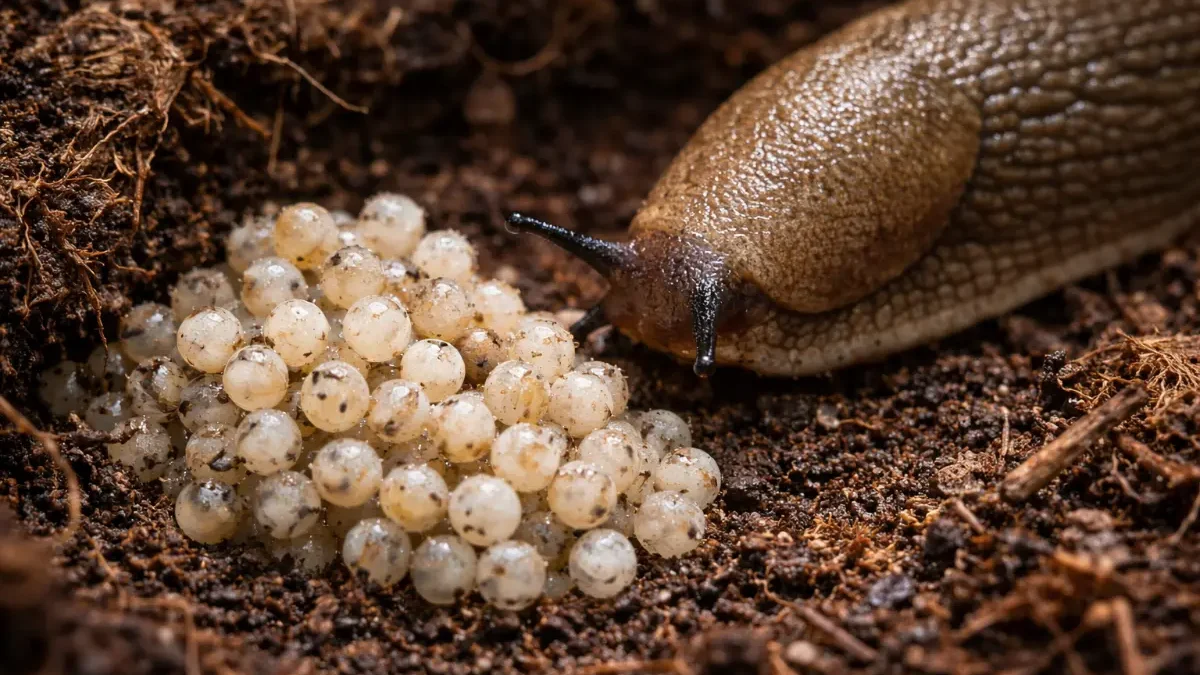
Somewhere in the top 2 inches of your garden soil right now, there are slug eggs. They were laid in October, they’ve been sitting through winter, and they’re waiting for one thing: soil temperature to cross 40°F. Across Zones 5 through 7 this week, that threshold is arriving. According to Oregon State University’s Slug Portal, gray field slug eggs hatch within 2 to 4 weeks once conditions are right — putting the first generation of neonates in your beds before most gardeners have even ordered transplants. The damage they do in that first week cannot be undone.
The short answer:
- Slug eggs hatch at 40°F soil temperature — check your beds at 2-inch depth this morning
- Juveniles begin feeding on plant tissue within days of hatching, before transplants go in
- Mild winters like 2025–26 produce larger spring populations than average
- Treatment on empty beds is several times more effective than the same treatment after planting
What’s Actually Happening in Your Soil Right Now
The gray garden slug has a more synchronized life cycle than most pest species — which is both its weakness and the reason timing matters so much. Eggs are laid in clusters averaging around 40 per clutch in sheltered soil cavities and under residue. They’ve been there since October. As soil warms they turn white, and from that point hatch within 2 to 4 weeks depending on conditions.
In Zone 6 in 2026, with spring running 1 to 2 weeks ahead of the 30-year average, that mid-spring hatch is arriving in mid-March rather than late March. Large numbers of eggs hatching in mid-spring are often associated with the most significant crop damage of the season — and this year the timing is compressed.
The 2025–26 winter across the Northeast and Mid-Atlantic was warmer than average — fewer eggs were lost to cold kill. Expect spring pressure above recent baselines.
The Week-by-Week Cost of Waiting
This is where most gardeners lose ground. Transplant day is still weeks away — there’s time, it seems. What’s happening in the soil between now and then is the part that gets skipped.
Juvenile slugs begin causing damage within a week of hatching. They don’t wait for seedlings. They feed on germinating seeds, emerging stems, and anything soft at soil level. By the time your brassica transplants go in, a generation that hatched in mid-March has been feeding and growing for three weeks.
The most severe damage occurs when slugs cut through seedling stems at soil level before stand establishment. Once the apical meristem is gone, the plant doesn’t recover. You replant and lose 2 to 3 weeks of the season — while the next slug generation is already building.
The Treatment Window and Why Empty Beds Change Everything
Oregon State University Extension makes the timing argument clearly: treatment applied to empty beds, before any foliage is present, is far more effective than the same treatment applied after planting. Iron phosphate bait on bare soil becomes the primary food source. Slugs find it before your transplants go in. Apply the same bait two weeks later, when seedling leaves are available, and it’s competing with a far more attractive meal.
One detail worth noting: the 40°F threshold that triggers slug hatch is the same threshold at which most cool-season vegetable seeds begin germinating. If you’re tracking soil temperature for your planting calendar — our Soil Temperature Guide: When Each Vegetable Seed Actually Germinates covers this in detail — you’re already measuring the exact moment slug eggs are hatching. The two events are happening simultaneously. That’s the window.
For a full breakdown of which treatment methods work best at different scales and budgets — iron phosphate bait, copper barriers, trap boards, and habitat removal — see Slug Prevention Before Spring Planting: 4 Methods Ranked by Cost.
This Week and Next 30 Days
This week — March 11–17:
- Check soil temperature at 2-inch depth, morning reading — note whether it’s crossed 40°F
- Set trap boards at the edge of each bed: a piece of wood or cardboard, checked each morning
- Zone 6: Apply iron phosphate bait to empty beds this week, in the evening
- Inspect under debris and mulch for pearl-white egg clusters near the soil surface
By April 10:
- Zone 5: Apply iron phosphate bait 5 to 7 days before first brassica or lettuce transplants
- Reapply after any significant rain or once 10 days have passed since first application
- Any bed showing 10 or more slugs per board on consecutive mornings warrants a second bait application before transplant day
Also read:
- March Garden Cleanup Before 50°F Kills Overwintering Beneficials: What to Leave
- Soil Temperature Guide: When Each Vegetable Seed Actually Germinates
- Direct Sowing Peas in March: Zone-by-Zone Timing Before They Bolt
- Overwintered Garlic in March: 3 Signs of Trouble to Check This Week
- Compost After Winter: 3 Steps to Activate a Dormant Pile This Week