
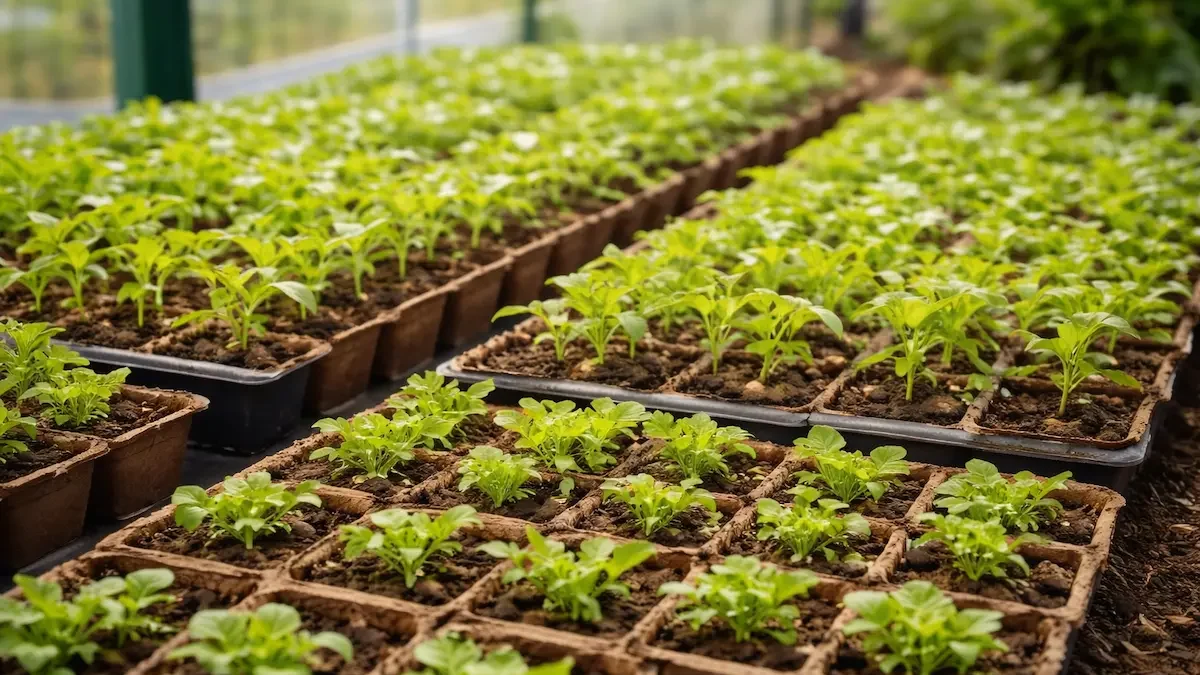
Mid-March is the last call for tomatoes and peppers in Zones 5 and 6. Miss this window and seedlings won’t have enough time indoors before transplant day — and a younger plant rushed to the garden in June will never fully catch up to one started on schedule. According to Penn State Extension, tomatoes need 6–8 weeks indoors before transplanting, peppers 8–10 weeks. Count backward from your last frost date and the math is clear: the trays should already be out.
The short answer:
- Zone 5 (last frost May 7–15): tomatoes in trays by March 20–April 3, peppers should already be up
- Zone 6 (last frost April 15–30): tomato window is March 15–30, peppers started by March 1
- Zone 7 (last frost March 30–April 15): tomatoes and peppers started — focus shifts to hardening off
- Soil temperature at germination matters more than room temperature — peppers need 80–85°F soil, not air
Start Dates by Zone and Crop
| Crop | Weeks Before Last Frost | Zone 5 Start | Zone 6 Start |
|---|---|---|---|
| Peppers (hot) | 10–12 weeks | Feb 20 – Mar 6 | Feb 6 – Mar 1 |
| Peppers (bell) | 8–10 weeks | Mar 6–20 | Feb 20 – Mar 15 |
| Tomatoes | 6–8 weeks | Mar 20 – Apr 3 | Mar 15–30 |
| Eggplant | 8–10 weeks | Mar 6–20 | Feb 20 – Mar 15 |
| Broccoli, cabbage | 4–6 weeks | Apr 3–17 | Mar 15–30 |
| Cucumbers, squash | 3–4 weeks | Apr 17 – May 1 | Apr 1–15 |
The Mistake That Costs a Full Season
Most failures come down to two things: starting too early, or ignoring soil temperature. A tomato started 12 weeks before last frost will be root-bound by transplant day. A 6-week-old seedling started on schedule outperforms a 10-week root-bound plant within a month outdoors. If you haven’t started in Zone 5 or 6 yet, start this week.
Soil Temperature: What Actually Drives Germination
Room temperature and soil temperature are not the same. A grow space at 68°F with trays on a cold concrete floor can have soil at 55–58°F inside the cells. At that temperature, pepper seeds don’t move.
Germination temperature targets:
- Tomatoes: 75–85°F soil — 5–7 days at 80°F, up to 14 days at 65°F
- Peppers: 80–85°F soil — 7–8 days at 85°F, 3+ weeks below 70°F
- Brassicas: 65–75°F — 5–10 days, more forgiving than warm-season crops
A seedling heat mat raises soil temperature 10–20°F above ambient. Once seed leaves emerge, move trays off the mat — sustained heat after germination stresses developing roots. For the full picture of soil temperature thresholds across all vegetable crops, see the Soil Temperature Guide: When Each Vegetable Seed Actually Germinates.
Light and Air Movement
Seedlings without adequate light become leggy — long, thin stems that can’t support the plant at transplant. Keep grow lights 2–4 inches above seedling tops, run them 14–16 hours per day, and run a small fan across trays for 1–2 hours daily to strengthen stem tissue. Basic LED shop lights work well — expensive full-spectrum fixtures are not required.
Hardening Off: The Step That Determines What Happens After Transplant
Seedlings moved directly from 68°F indoor conditions to a spring garden will show stress within 48 hours — even when air temperatures look fine on paper. Wind, UV exposure, and temperature swings are the variables that matter, not the thermometer reading.
Standard protocol from University of Maryland Extension: start with 1–2 hours in full shade, add 1–2 hours daily, reach full-day exposure by day 7–9. Bring trays in if overnight temperatures drop below 45°F. By day 14, plants are ready to stay out.
Never transplant on a hot sunny afternoon — overcast or late afternoon reduces stress. For tomatoes: bury the stem up to the lowest true leaves. Roots form along the buried stem and produce a stronger plant.
What Not to Do
❌ Starting tomatoes in January in Zone 5–6 — a 14-week-old seedling is root-bound before last frost arrives. The extra weeks indoors don’t add growth; they add stress. Start at 6–8 weeks before last frost and not a day sooner.
❌ Relying on a cold windowsill for pepper germination — peppers need 80–85°F soil. A north- or east-facing March windowsill provides neither sufficient light nor sufficient warmth. Heat mat plus supplemental lighting is the correct setup.
This Week and Next 30 Days
This week — March 11–17:
- Zone 5: Start tomatoes now if not already done — March 20 is the practical deadline for a May 15 last frost
- Zone 6: Tomato trays should be going in this week; check pepper germination daily
- All zones: Set up supplemental lighting if seedlings show any stretching toward the window
- Check soil temperature inside trays with a thermometer — confirm peppers are at 80°F+
By April 10:
- Zone 6: Begin hardening off tomato and brassica seedlings — last frost is 3–4 weeks out
- Zone 5: Brassica transplants can go out by April 15–20 with row cover
- All zones: Check if any seedlings are root-bound and need potting up before transplant
Also read:
- March Garden Cleanup Before 50°F Kills Overwintering Beneficials: What to Leave
- Soil Temperature Guide: When Each Vegetable Seed Actually Germinates
- Direct Sowing Peas in March: Zone-by-Zone Timing Before They Bolt
- Overwintered Garlic in March: 3 Signs of Trouble to Check This Week
- Compost After Winter: 3 Steps to Activate a Dormant Pile This Week