
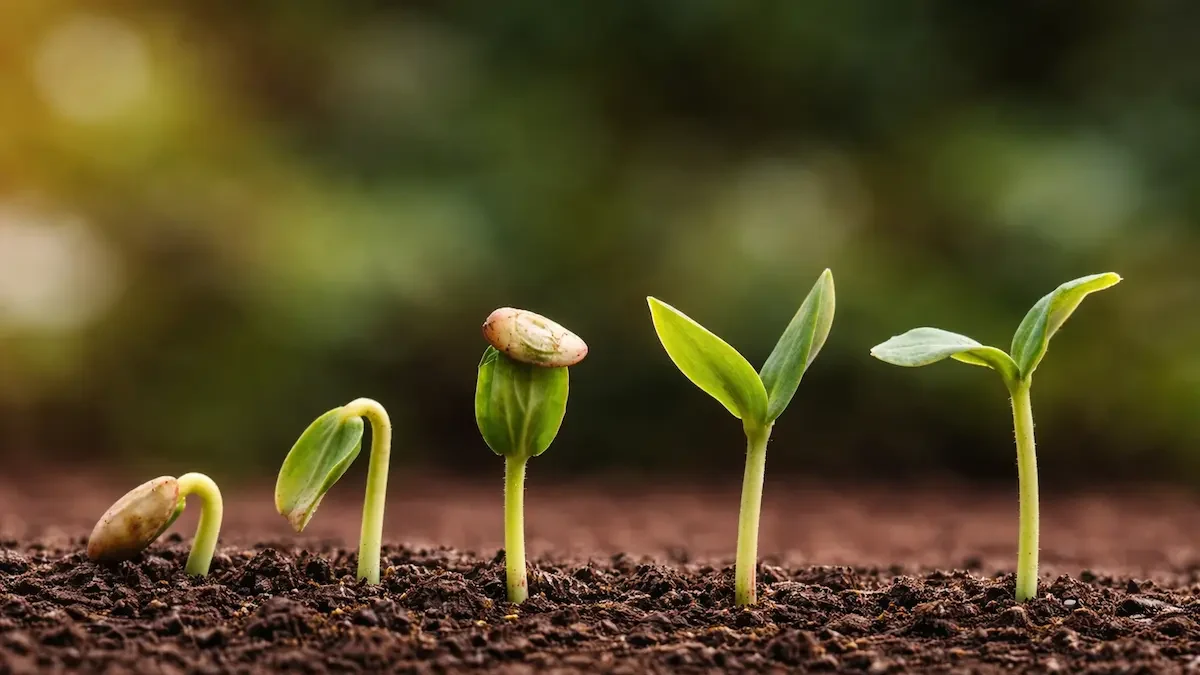
Early spring is one of the most exciting times for gardeners. Seeds begin to sprout, young plants appear in garden beds, and the growing season seems to be starting well. However, many gardeners notice a frustrating problem: seedlings that initially grow well suddenly stop developing.
This sudden slowdown is often not caused by poor seeds or watering mistakes. Instead, the problem frequently lies in early spring soil conditions that limit root development and nutrient uptake.
Understanding these hidden causes can help gardeners restore healthy growth and protect their crops.
Cold Soil Slows Root Development
One of the most common reasons seedlings stop growing in early spring is low soil temperature.
Even if daytime air temperatures feel warm, the soil can remain cold after winter. Roots grow much slower in cold soil, which prevents seedlings from absorbing enough water and nutrients.
According to research from the University of Minnesota Extension, many vegetable crops require soil temperatures of at least 10–15°C (50–60°F) for normal root growth.
When soil stays colder than this range, seedlings may appear healthy but stop producing new leaves.
Compacted Soil Restricts Root Expansion
Another hidden cause is soil compaction. During winter, heavy rain, snow, and foot traffic can compress garden soil, making it harder for roots to expand.
Compacted soil reduces oxygen around the roots and limits water movement through the soil.
The Royal Horticultural Society explains that loosening soil before planting greatly improves early root development and plant growth.
Gardeners can improve compacted soil by gently loosening it and adding organic matter such as compost.
Nutrient Availability in Cool Soil
Even when soil contains enough nutrients, cold conditions can prevent plants from accessing them.
Microbial activity in soil is responsible for breaking down organic matter and releasing nutrients. In early spring, microbial activity is slower due to low temperatures.
Because of this, nutrients such as nitrogen and phosphorus may not become available to seedlings quickly enough.
This can cause plants to pause growth temporarily until the soil warms.
Excess Moisture After Winter
Spring soil often holds large amounts of moisture due to snowmelt and seasonal rainfall. While water is essential for plant growth, excess moisture can reduce oxygen in the soil.
Roots require oxygen to function properly. When soil becomes waterlogged, roots struggle to absorb nutrients and growth slows down.
The Old Farmer’s Almanac gardening guides recommend ensuring good drainage in early spring planting beds to prevent root stress.
Raised beds and well-drained soil mixes can help prevent this issue.
Poor Light Conditions
Seedlings that grow outdoors early in the season may still receive limited sunlight, especially if trees, buildings, or fences create shade.
Young plants require consistent light to support photosynthesis and energy production.
If light levels are too low, seedlings often pause growth even when soil conditions are good.
How to Encourage Seedlings to Start Growing Again
Fortunately, seedlings that stop growing can often recover once conditions improve.
Gardeners can help plants restart growth by:
- loosening compacted soil
- improving drainage if soil is too wet
- adding compost to support soil biology
- waiting until soil warms before planting sensitive crops
- ensuring plants receive enough sunlight
In many cases, seedlings begin growing normally again once soil temperatures rise and root systems establish properly.
Final Thoughts
Seedlings that suddenly stop growing are often responding to environmental stress rather than permanent damage. Early spring soil can be cold, compacted, or overly wet, all of which limit root development.
By improving soil conditions and giving plants time to adapt, gardeners can help seedlings recover and continue growing throughout the season.
Healthy soil preparation early in spring is one of the most effective ways to ensure strong vegetable growth and a productive garden harvest.