
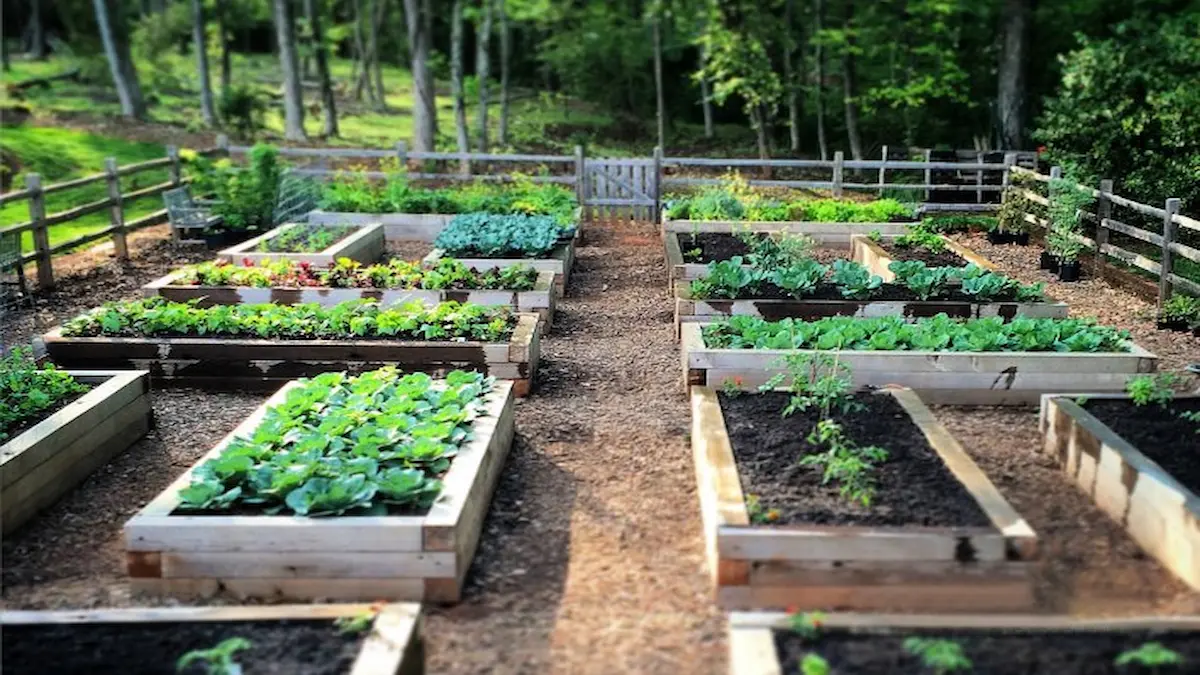
Raised beds do warm faster in spring — but not primarily because they’re elevated. The real mechanism is drainage. Waterlogged soil holds cold; well-drained soil warms rapidly. Here’s how the advantage works, how much earlier it lets you plant, and what actually amplifies it.
Quick Answer
Why raised beds warm faster: faster drainage removes cold water from the soil profile, reducing thermal mass and allowing solar warming to work more quickly. Elevated soil also has more surface area exposed to warming air, and better-structured growing medium retains heat more efficiently than compacted garden soil.
How much faster: raised beds can run 8–13°F warmer than surrounding ground in early spring under good conditions. The practical effect is 2–4 weeks of earlier sowing for most cool-season crops.
How to maximise it: south-facing orientation; dark soil mix with compost; cover with black plastic for 1–2 weeks before sowing; add a cold frame or cloche on top.
According to University of Minnesota Extension, raised beds give gardeners a head start on spring by warming up the soil earlier in the season — and the primary reason is drainage. Missouri Extension’s raised bed guide is precise on the mechanism: better drainage speeds soil warming, allowing earlier spring planting. Water has a much higher heat capacity than soil or air — it absorbs solar energy without warming up quickly. A waterlogged bed in early spring takes significantly longer to reach germination temperature than a well-drained raised bed sitting in the same sunlight. The elevation itself matters less than what that elevation makes possible: free drainage.
The Physics of Faster Warming
Three factors combine to give raised beds their spring temperature advantage. The first is drainage. The second is soil mix: compost-rich, open-structured growing media has lower thermal mass than compacted native soil — it responds more quickly to solar energy, warming faster on a sunny day and (the trade-off) cooling faster overnight. In spring, the net effect is positive: sunny days outweigh cold nights by the time you’re planting.
The third factor is surface exposure. A raised bed with walls has its south-facing side absorbing direct sunlight all day — warming the soil from the side as well as from above. FarmstandApp’s soil temperature guide recommends positioning beds with their long sides facing south to capture maximum sunlight and warm soil faster in spring. Dark-coloured walls amplify this further. Metal beds conduct heat from the wall directly into adjacent soil — with measurements showing soil against metal walls running up to 8°F warmer than soil at the bed centre.
Raised Beds vs. Ground Level — Spring Comparison
| Factor | Raised Bed | Ground Level |
|---|---|---|
| Drainage after rain | Drains freely; soil dries faster | Can stay waterlogged for days in clay or compacted soil |
| Thermal mass | Lower — warms faster in sun | Higher — slower to warm, but also slower to cool |
| Side warming | South-facing walls add heat input from sides | No side exposure — only top surface receives solar radiation |
| Frost sensitivity | Cools faster overnight — more frost risk in late season | Thermal mass of earth buffer retains heat longer at night |
| Spring planting window | 2–4 weeks earlier for most cool-season crops | Must wait for ground to thaw and drain |
How to Amplify the Spring Advantage
✓ Maximise Spring Warming in a Raised Bed
- Orient the long side to face south— maximises solar input from first light to late afternoon. Even a slightly south-facing aspect increases soil temperature measurably over east–west orientation.
- Use dark compost-rich soil mix— dark surfaces absorb more solar radiation. High-compost mix also has lower thermal mass, responding faster to warming days.
- Cover with black plastic 1–2 weeks before sowing— absorbs solar radiation and transfers heat to soil. Remove before sowing or cut planting slits through it.
- Add a cloche or cold frame on top— the combination of raised bed plus cold frame outperforms either alone.UMN Extension notesraised beds can be fitted with hoops and row cover to create a greenhouse effect.
- Avoid thick mulch in early spring— mulch insulates in both directions. Applied too early, it slows solar warming. Wait until soil is at target temperature before mulching.
→ The Trade-Off to Know
- Raised beds cool faster overnight — the spring warming advantage is most valuable when it matters most: for seeds and new transplants. By midsummer, the thermal difference is largely irrelevant.
- The trade-off in autumn: faster cooling may reduce the end-of-season extension. Weeks gained in spring usually outweigh days lost in autumn, but it’s worth knowing.
- No sun = no advantage — a raised bed in shade doesn’t warm faster. Without 6+ hours of direct spring sun, the thermal benefit largely disappears.
📅 Right Now in March
- Lay black plastic over beds 1–2 weeks before planned sowing
- Check soil temperature daily at 2 inches — target 40°F for peas, 50°F for carrots
- Position a cold frame or cloche over beds you plan to sow first
- Avoid mulching until soil reaches target temperature
📆 Sowing Window
- Sow cool-season crops 2–3 weeks earlier than ground-level beds
- Remove black plastic before sowing; leave cold frame until germination
- Mulch after seedlings emerge — then it insulates rather than delays
- Reserve ground-level beds for warm-season crops sown after last frost