
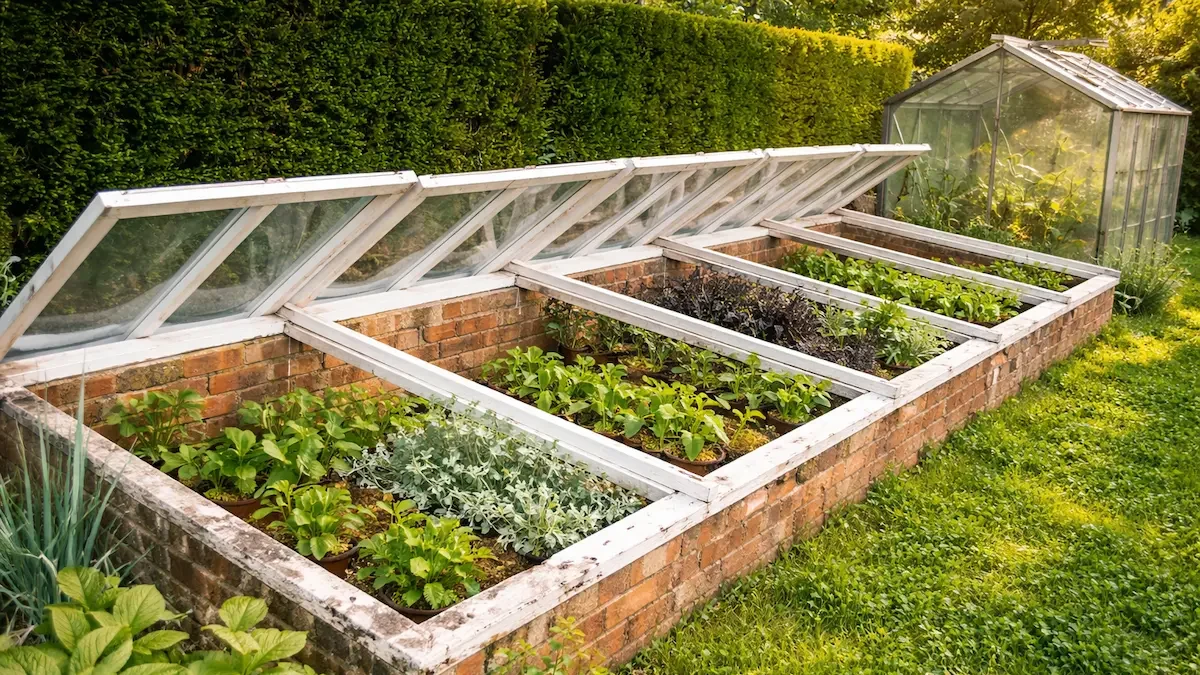
A season extension setup does not need to cost much. Fleece over wire hoops, black plastic on bare soil, an old window on a brick frame, and a handful of hardy crops all work together to push the effective start of the growing season 4–6 weeks earlier than bare-ground planting.
Quick Answer
Fastest gain: black plastic mulch laid over bare soil 1–2 weeks before sowing raises soil temperature by 5–8°F and allows sowing 2–3 weeks earlier than uncovered ground.
Best all-round method: horticultural fleece over wire hoops — protects from frost, wind, and cold rain; can be left on for weeks; adds approximately 2–4°C inside the cover.
The 5°F rule: each layer of protection adds roughly 5°F of cold tolerance. Fleece alone = 5°F. Fleece over a cold frame = 10°F. Two layers of fleece inside a cold frame = 15°F. Stack methods for maximum gain.
According to University of Minnesota Extension’s season extension guide, tunnels, cold frames, hot caps, and floating row covers all allow gardeners to start early and continue harvesting later in the year — and the most effective setups combine soil-warming mulches with plant covers rather than relying on either alone. The underlying principle is the same across all low-cost methods: the goal is to raise soil temperature to the minimum germination threshold for the specific crop being planted, and to protect that soil and plant from the temperature fluctuations that make early spring unreliable without intervention.
Four Methods — What Each Costs and What Each Does
Horticultural Fleece
- Cost: £5–15 for a 10-metre roll — reusable for 2–3 seasons
- Adds 2–4°C inside the cover on still nights
- Lets light, moisture, and air through
- Use over wire hoops — never let it touch foliage in frost
- Anchor edges; loose fleece in wind does nothing
↑Season gain: 3–4 weeks earlier
Black Plastic Mulch
- Cost: free if reusing bin bags; otherwise low
- Raises soil temperature 5–8°F in 1–2 weeks
- Suppresses weeds; retains moisture
- Lay flat on prepared bed, weight edges
- Cut planting slits or remove before sowing
↑Season gain: 2–3 weeks earlier sowing
DIY Cold Frame
- Cost: free if using scrap wood + old window or perspex
- Interior 5–10°C warmer than outside air
- Prop lid open on sunny days — overheating kills seedlings
- South-facing, sheltered from wind
- Most effective for hardening off and early brassicas
↑Season gain: 4–6 weeks earlier
Water-Filled Containers
- Cost: free — 2-litre bottles filled with water
- Absorb heat during the day; release overnight
- Place around individual transplants or inside cold frames
- Effective for small-scale protection of valued plants
- Dark bottles absorb more heat than clear
↑Season gain: 1–2 weeks for individual plants
Which Crops Benefit Most — and How Much Earlier to Sow
| Crop | Min Soil Temp to Sow | Unprotected Sow Date (Zone 6) | With Fleece or Cold Frame |
|---|---|---|---|
| Lettuce, spinach, radishes | 40°F (4°C) | Late March | +3–4 weeks — early-to-mid February |
| Peas, broad beans | 40–45°F (4–7°C) | Late March | +2–3 weeks — early March |
| Carrots, beetroot | 45–50°F (7–10°C) | April | +2–3 weeks — mid-March (with black plastic pre-warming) |
| Courgettes, cucumbers (transplants) | 60°F (15°C) | After last frost | +2 weeks — set out under fleece 2 weeks before last frost date |
| Tomatoes (transplants) | 60°F (15°C) | After last frost | +1–2 weeks with cold frame hardening |
The One Timing Mistake That Wastes Season Extension
K-State Extension horticulture agent Anthony Reardon (2025) identifies the most common failure: using protective structures without monitoring what happens inside them. In spring, rapid temperature swings are the main hazard — not cold alone. When internal temperature under a cover reaches 75°F (24°C), plants can be scorched or cooked within hours on a sunny day, even when outdoor temperatures are moderate. A cold frame or tunnel cloche must be vented by propping open the lid or rolling back the fleece before 10am on any day where outdoor temperatures are expected to reach above 10°C. More season extension failures come from overheating than from cold.
✗ Season Extension Mistakes
- Leaving covers sealed on a bright spring morning— temperatures inside plastic or glass covers can exceed 40°C (104°F) within two hours of sunrise on a clear day. Ventilate before 10am
- Not anchoring fleece at all edges— fleece lifted by wind provides no frost protection and can abrade tender transplants. Bury or weight edges completely around the perimeter
- Using black plastic without removing it before sowing— black plastic warms the soil but also blocks light. Cut planting slits carefully or remove it before sowing; leaving it as a mulch around transplants is appropriate, but solid cover over seeds prevents germination
- Expecting covers to work in advective frost (wind + cold)— see the frost protection article: wind-driven cold replaces the air inside covers rapidly. Covers are most effective on still, calm, clear nights
This Week and Next 30 Days
Right Now
- Lay black plastic on beds you plan to sow first
- Set up cold frame in a south-facing sheltered spot
- Sow spinach, lettuce, and radishes under fleece now
- Check soil temp at 2 inches before sowing each crop
This Month
- Vent covers daily on sunny days from 9–10am
- Begin hardening off indoor seedlings in cold frame
- Stack methods for maximum gain: black plastic + fleece together
- Watch for overheating — it kills faster than frost in spring