
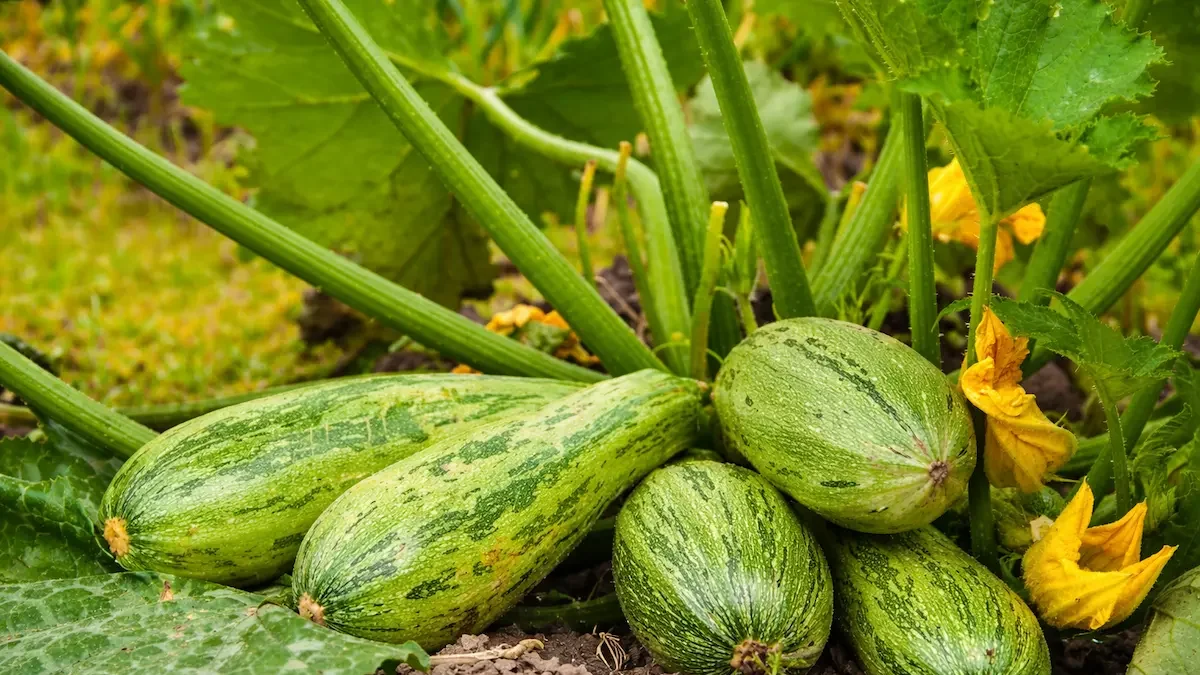
Courgettes produce separate male and female flowers on the same plant. The female is only open and fertile for one day. If a bee does not transfer pollen from a male to a female flower within that window, the small fruit behind the female flower turns yellow and drops off. This is the cause of the majority of courgette fruit-setting failures.
Quick Answer
Only male flowers, no fruit: normal in early season. Courgettes produce male flowers first — sometimes for 1–2 weeks before any female flowers appear. Wait.
Both male and female flowers, but no fruit: pollination failure. Either bees are not visiting, or the weather is too cold or wet for them to be active. Hand pollinate using a dry paintbrush or by removing a male flower and rolling its pollen onto the stigma of an open female flower — do this before 10am.
Tiny fruits forming then yellowing and dropping: incomplete pollination. The pollen was transferred but insufficient to fertilise all the seeds. Hand pollinate again and apply pollen from multiple male flowers.
According to University of Maryland Extension’s pollination problems guide, cucurbit crops — courgettes, cucumbers, squash, pumpkins — require cross-pollination to produce fruit. Separate male and female flowers are produced on the same plant, and pollinator insects must move pollen from male to female for fruit to develop. Blooms are only open for one day, and unpollinated female flowers drop entirely. Low bee activity due to cool or wet weather, and pesticide sprays, are the primary causes of failure in gardens that appear otherwise healthy.
How to Tell Male from Female Flowers
The distinction is easy once you know what to look for. University of New Hampshire Extension explains: female flowers have a small immature courgette attached at their base, below the petals. Male flowers grow on thin stems with no swelling at the base. If all your flowers lack the swollen base, they are all male — normal early in the season, resolving within 1–2 weeks as female flowers develop.
All the Reasons Fruit Fails to Set
| What You See | Cause | Fix |
|---|---|---|
| Flowers only, no fruit forming | All flowers are male — normal in first 1–2 weeks. Or: both sexes present but pollinators absent | Wait for female flowers. If both are open and nothing is setting, hand pollinate before 10am |
| Small fruits forming then yellowing and dropping | Incomplete pollination — female was pollinated but not fully fertilised | Hand pollinate using pollen from multiple male flowers onto the same female in one session |
| No flowers at all, or very few | Too much nitrogen causing leafy growth. Or: plant too young, too stressed, or planted before soil was warm | Switch to tomato feed (high potassium). Ensure soil temperature above 15°C |
| Misshapen or partial fruit | Incomplete pollination — only part of the flower was fertilised | Hand pollinate more thoroughly; improve bee activity by planting pollinator-friendly flowers nearby |
| Flowers but no bee visits observed | Urban garden, pesticide use nearby, or morning overhead watering discouraging bees | Stop overhead morning watering. Switch to base watering in afternoon. Plant bee-attracting flowers |
How to Hand Pollinate
Hand pollination is simple and takes under a minute. Go to the plant before 10am, when flowers are fully open. Identify an open male and an open female flower. Take a small dry paintbrush and collect pollen from the anther at the centre of the male flower — yellow powder should be visible on the bristles. Transfer this to the stigma at the centre of the female flower. Alternatively, remove the male flower entirely and gently rub its anther against the female stigma. Use pollen from two or three different males if available: UMD Extension notes that squash require multiple pollinator visits for full fruit development. If successful, the base of the female flower will begin to swell and green within 48 hours.
What to Do
- Confirm female flowers are present— only females set fruit. If all flowers lack a swollen base, wait 1–2 weeks
- Hand pollinate daily during poor weather— cool or wet mornings reduce bee activity sharply. Hand pollinate every open female before 10am
- Switch to tomato feed once flowering begins— high-potassium feed supports fruit. High-nitrogen at this stage encourages leaves at the expense of flowers
- Water at the base, not overhead, in the morning— wet flowers discourage bee visits and wash away pollen
- Plant pollinator flowers nearby— borage, calendula, and phacelia attract bees and grow well alongside courgettes
Common Mistakes
- Spraying insecticide during flowering— even organic sprays harm visiting pollinators. Never spray while flowers are open
- Assuming all flowers should set fruit— male flowers always outnumber females. Seeing flowers drop is normal; only females need to set
- Discarding the plant after early failures— pollination often improves as temperatures rise and bee populations increase. Give the plant 2–3 weeks before giving up
Right Now
- Check for female flowers — look for swelling at the base
- Hand pollinate every open female before 10am
- Switch from general feed to tomato feed (high potassium)
- Stop overhead watering in the morning
Ongoing
- Hand pollinate during wet or cool weather spells
- Plant borage or calendula beside courgette beds
- Harvest fruits promptly — leaving large fruits on the plant suppresses new female flower production
- Remove any yellowed or failed fruits to redirect plant energy