
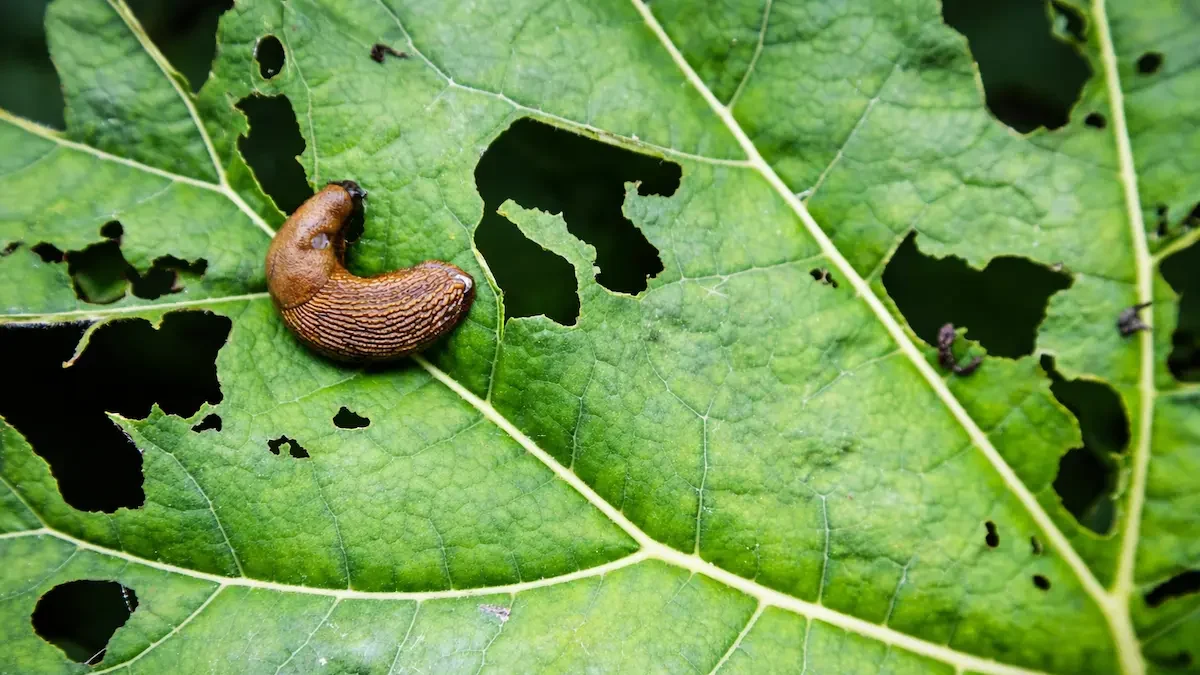
Slugs do most of their feeding between dusk and 2am and are rarely seen during daylight. By the time you notice the damage, the feeding has already happened — often for several nights. Identifying the signs early, and knowing where slugs hide during the day, is the difference between managing the problem and losing transplants entirely.
Quick Answer
Early damage looks like: small irregular holes (1–3mm) in leaves with ragged, not clean, edges. Silvery dried slime trails on leaves or soil, visible in the morning. Seedlings that disappear entirely overnight — slugs can consume a young transplant completely in one feeding session.
Where to find them during the day: under boards, stones, dense mulch, pots, and in the top inch of soil near the plant base. On cool, overcast days they may remain active into the morning and be found on leaf undersides.
The highest-risk window: the first 2 weeks after transplanting outdoors. Young transplants have thin stems and leaves with no established defence — a single slug can destroy several plants in one night.
According to University of Maryland Extension, recently planted crops are at highest risk from slug damage during wet and cool spring weather — precisely the conditions that characterise the transplanting window for most vegetable gardens. Cool, moist soil and crop residue provide the ideal environment for slug activity and egg hatching. University of Minnesota Extension notes that slugs are most active at night and on dark, cloudy days — you may only see their damage, not the slugs themselves. Confirming slugs as the cause requires knowing what to look for.
How to Tell Slug Damage from Other Pests
The signs specifically indicating slugs are the combination of irregular ragged holes and dried silvery slime trails. Caterpillar damage also produces ragged holes but without slime. Earwig damage tends to appear at leaf margins rather than leaf centres. Flea beetle damage — common on brassicas — produces many small, round, clean-edged holes; slug holes are irregular and larger. Checking for slime trails on the soil surface and leaf undersides early in the morning confirms slugs. The dried slime is iridescent and easily visible before it evaporates completely.
Which Transplants Are Most at Risk
| Crop | Risk Level | Why |
|---|---|---|
| Lettuce, salad leaves, spinach | Very high | Soft, tender leaves; low stem — slug can consume an entire young plant in one feeding session |
| Courgettes, cucumbers (transplants) | High | Large, soft leaves; damage to the growing tip or stem at soil level can kill the plant even when leaves appear relatively intact |
| Brassica transplants (cabbage, kale, broccoli) | High in first 2 weeks | Young brassica transplants have thin stems vulnerable to severing. Established plants tolerate more defoliation |
| Beans (French and runner) | High at emergence | Emerging bean shoots at soil level are a primary target. Damage often occurs below the surface or just as the shoot emerges |
| Tomatoes, peppers (established) | Lower once established | Thicker stems and tougher foliage are less preferred. Most vulnerable at transplant stage and during wet spells |
| Carrots, beetroot (direct sown) | High at seedling stage | Soil-level feeding on emerging seedlings can remove cotyledons entirely, leaving bare soil where germination occurred |
What to Do
Effective Controls
- Torch inspection at dusk— the most effective monitoring tool. Walk the garden 1–2 hours after dark with a torch and collect slugs by hand into a bucket of salty water. Concentrate on the area around newly transplanted plants and the undersides of low leaves
- Refuge traps— lay boards, damp sacking, or upturned grapefruit halves near vulnerable plants. Slugs shelter under them during the day. Check each morning and destroy those found.Penn State Extension uses refuge trapsas the standard monitoring method for slug populations in managed crops
- Ferric phosphate slug pellets— the form approved for organic growing. Effective, breaks down naturally in the soil, and is safe for hedgehogs, birds, and other wildlife that feed on slugs. Scatter sparingly around the base of transplants after rain
- Remove shelter— clear crop debris, thick mulch, and any boards or flat materials from around vulnerable beds before transplanting. Slugs require shelter to survive the day; removing it reduces local populations
- Water in the morning, not evening— moist soil at night dramatically increases slug activity. Morning watering leaves the soil drier at the prime feeding time
What Does Not Work Reliably
- Copper tape— widely sold but inconsistent results in field conditions. Slugs cross copper barriers regularly in practice, particularly when the barrier becomes soiled or wet
- Eggshells or grit barriers— no reliable research evidence that dry barriers prevent slug movement. Slugs cross abrasive surfaces without consistent deterrence
- Salt applied directly— kills individual slugs on contact but damages soil chemistry and surrounding plant roots. Not a practical garden treatment
- Metaldehyde pellets— highly toxic to hedgehogs, dogs, and birds. Banned for garden use in the UK and restricted in many other regions. Ferric phosphate is the evidence-based alternative
Right Now
- Check transplants for slime trails each morning
- Set refuge traps near vulnerable plants
- Do a torch inspection tonight if conditions are damp
- Remove mulch and debris from around new transplants
Ongoing
- Apply ferric phosphate pellets after rain and before planting out
- Water in the morning to reduce evening soil moisture
- Check under refuge traps each morning during spring
- Protect highest-risk crops (lettuce, courgettes) for the first 2 weeks after transplanting