
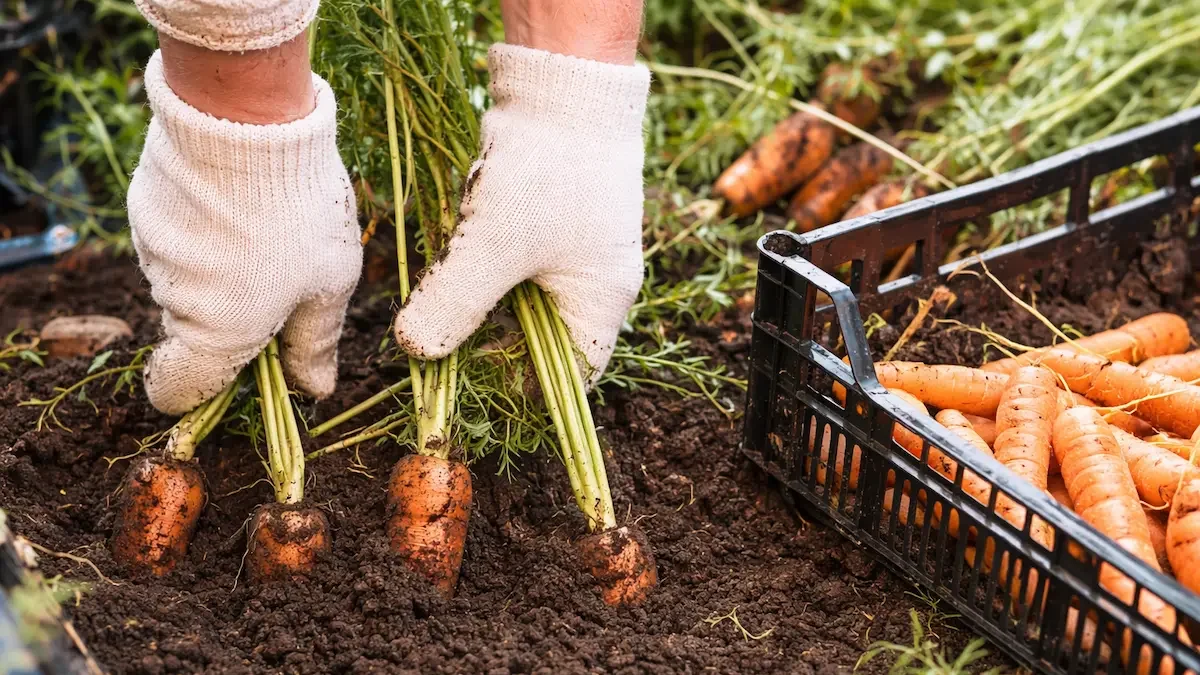
Research published in Plants, People, Planet provides the first long-term evidence that growing your own food is associated with eating more fruit and vegetables and wasting less. The reduction is not incidental — it follows directly from the practical experience of growing food.
Quick Answer
The evidence: a University of Sheffield long-term study (Gulyas and Edmondson, 2023) found that grow-your-own households both consumed more fruit and vegetables and wasted less compared to non-growing households. A 2025 food waste analysis (Emerald Insight) found that lower amounts of avoidable food waste were associated with households that had access to gardens and home food self-provisioning.
Why it works: growing food creates direct psychological investment in each crop. When produce has required weeks of effort to produce, the willingness to waste it falls sharply. The same dynamic affects purchasing decisions — growers tend to buy more carefully around what they are already producing.
The practical factor: home growers can harvest on demand rather than buying in advance. This removes the main cause of household food waste — purchasing more than is needed before knowing when it will actually be used.
According to the University of Sheffield study by Gulyas and Edmondson in Plants, People, Planet (2023), this research provides the first long-term evidence that household food production promotes healthier diets through self-sufficiency — with grow-your-own households eating more fruit and vegetables and wasting less. A separate 2025 study in the British Food Journal found lower avoidable food waste in households with access to gardens and home food self-provisioning, noting that urban planning should support community gardens and local food networks as a waste reduction measure.
Why Growing Food Changes How People Treat It
The mechanism is partly behavioural and partly logistical. A 2025 systematic review of household food waste behaviour in PMC identifies perceived behavioural control as a key factor in reducing waste — the sense that one’s own actions meaningfully affect whether food is used or wasted. Growing food strengthens this sense directly: the person who grew a courgette, watered it for six weeks, and lifted it themselves relates to it differently from one who bought it pre-packaged. Discarding it has a different felt cost — sometimes called the “labour effect” in behavioural economics — and this reduces waste not through rules, but through a changed relationship between person and food.
The logistical factor is equally important. Most household food waste originates from produce that was purchased with good intentions and not used in time. Home growers can harvest on demand — cutting exactly what is needed for a meal, leaving the rest in the ground or on the plant. This removes the primary driver of vegetable waste in non-growing households: the gap between purchase and use.
Six Mechanisms That Reduce Waste in Growing Households
| Mechanism | How It Works | Example |
|---|---|---|
| Harvest on demand | Vegetables remain in the ground until needed — there is no time-limited purchase window | Cut-and-come-again lettuce harvested for each meal rather than a pre-bagged head that ages in the fridge |
| Labour investment effect | Effort invested in growing a crop increases the psychological cost of wasting it | A courgette grown from seed over six weeks is far less likely to be discarded than one bought on impulse |
| Flexible use of imperfect produce | Home growers use misshapen, small, or blemished produce that retail would reject | Forked carrots, split tomatoes, and small beets all eaten without concern for appearance |
| Reduced impulse purchasing | Growers buy produce more purposefully, knowing what they already have available | No buying spinach at the supermarket when there is spinach in the garden |
| Surplus prompts preservation | A crop glut motivates freezing, pickling, or fermentation — converting waste into stored food | A bean glut results in frozen beans; a tomato surplus becomes passata |
| Understanding seasonality | Growers eat more seasonally and expect seasonal availability, reducing over-purchasing out-of-season produce | Growers do not expect strawberries in January and do not buy them |
What to Do
- Grow cut-and-come-again crops first— lettuce, spinach, chard, and rocket harvested leaf by leaf on demand directly replace the packaged salad leaves that account for the highest food waste volumes in most households
- Plan meals around what is ready to harvest— checking the garden before planning the week shifts purchasing decisions to support what is already available rather than buying speculatively
- Learn one or two preservation methods for common glut crops— blanching and freezing, quick pickles, and passata cover most situations and prevent the second major source of home-grower waste: vegetables left too long
- Share surplus rather than composting it— neighbours, food banks, and community refrigerators can use high-quality surplus that exceeds your own needs
This Week
- Check what is ready to harvest before planning meals
- Cut salad leaves as needed rather than harvesting whole heads
- Harvest courgettes and beans before they are oversize
- Identify any surplus before it becomes waste
Longer Term
- Grow cut-and-come-again crops as the backbone of the kitchen garden
- Develop one or two preservation habits for common surpluses
- Buy produce purposefully — around what you are not growing
- Connect with neighbours who can use surplus you cannot