
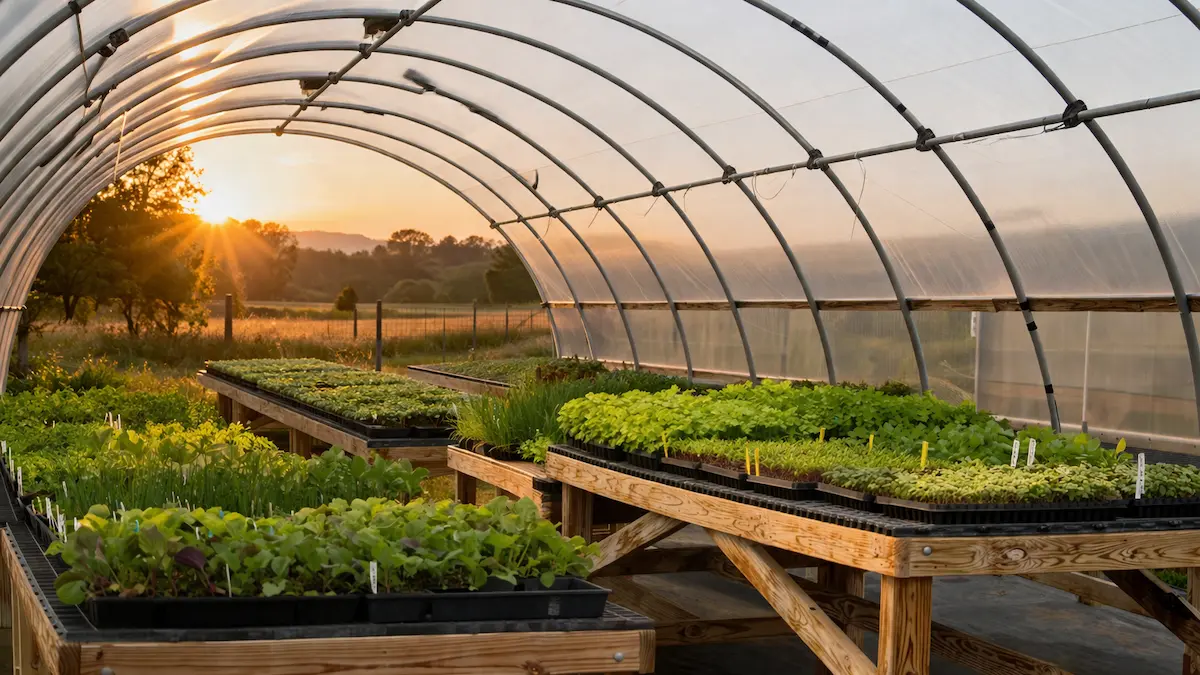
Hardening off is not an optional extra step. It changes the physical structure of the seedling — thickening cell walls, reducing the water content of plant tissue, and triggering additional root development. Skip it and you risk transplant shock, scorched leaves, stunted plants, and in the worst cases, total crop loss.
Quick Answer
How long does hardening off take? 7 to 14 days, depending on how tender the seedlings are and how different indoor conditions are from your outdoor environment. Start 10 days before your intended transplant date.
The basic method: begin with 2 hours outside in a shaded, sheltered spot. Add 1–2 hours of outdoor time each day, gradually moving plants into more direct sun. Bring them in each night for the first week. Leave them out overnight from day 7–10 once night temperatures are reliably above 10°C (50°F).
The most common mistake: putting seedlings straight into full sun on the first day. Indoor light — even under grow lights — is far weaker than outdoor sunlight. The first outdoor exposure must be shade, not sun.
According to Michigan State University Extension, hardening off is not simply about getting plants used to colder temperatures. The process triggers measurable physiological changes: cell walls thicken, the waxy cuticle on leaf surfaces develops more fully, tissue dry matter content increases — which reduces the amount of freeze-prone water in the plant — and root growth accelerates as the plant prepares for soil establishment. These changes transform soft, fragile greenhouse growth into sturdier, more resilient field tissue. MSU Extension notes that for crops such as cabbage, tomato, lettuce, and eggplant, the development of a pink or purple tinge in stems and leaf veins is a reliable visual signal that hardening is progressing well — the anthocyanins responsible for that colour are a physiological stress response that indicates the plant is adapting appropriately.
The 7-Day Process
Days 1–2: Shade and shelter, 2 hours outside
Choose a mild, calm day. Place seedlings in a shaded, wind-protected spot — beside a wall or under a tree. Bring them in before evening. The goal is gentle exposure to outdoor air temperature and humidity, not light. Avoid windy days entirely at this stage.
Days 3–4: Increase to 4–5 hours, introduce gentle morning sun
Move seedlings to a spot that receives morning sun but afternoon shade. Add 1–2 hours to outdoor time each day. Watch for wilting — if leaves begin to droop, move the tray into shade immediately and reduce exposure the following day.
Days 5–6: Full days outside, more direct sun
Leave seedlings outside for most of the day, bringing them in at night. Allow increasing direct sun — up to half a day. Water more frequently than you would indoors: outdoor conditions dry compost faster, and a wilted seedling at this stage sets back the whole process.
Days 7–10: Full sun all day, first nights outside
Once night temperatures are reliably above 10°C (50°F), begin leaving cool-season crops outside overnight. Warm-season crops — tomatoes, courgettes, peppers, basil — need nights above 13°C (55°F) before spending the night outside. UMD Extension notes that even cold-hardy plants will be damaged by frost before they are fully hardened.
Transplant day: choose overcast, water well
Transplant on a cloudy or overcast day if possible — this reduces the stress of being moved into a new environment while still exposed to strong sun. Water thoroughly after planting. South Dakota State University Extension recommends planting in the early morning or evening rather than midday.
Temperature Thresholds by Crop Type
| Crop Group | Examples | Min. Night Temp to Go Outside | Min. Night Temp to Stay Overnight |
|---|---|---|---|
| Hardy cool-season | Cabbage, kale, leeks, onions, broad beans | 5°C (40°F) | Can tolerate light frost once hardened |
| Semi-hardy cool-season | Lettuce, chard, spinach, beetroot | 7°C (45°F) | Above 3°C (37°F) once hardened |
| Tender warm-season | Tomatoes, courgettes, squash, cucumbers | 10°C (50°F) daytime; 13°C nights | Above 10°C (50°F) reliably |
| Very tender | Peppers, basil, aubergines, melons | 13°C (55°F) | Above 13°C; any cold check can stunt permanently |
Common Mistakes
- Day one in full sun— the most damaging single error. Indoor-grown leaves have an underdeveloped cuticle and will bleach, curl, or drop within hours in direct unfiltered sunlight. Start in shade, always
- Hardening too severely—UMD Extensionis explicit: if hardening stops plant growth entirely, some crops are permanently damaged. Cauliflower will produce thumb-sized heads and stall; cucumbers and melons may never recover. Reduce outdoor exposure, not water or nutrients
- Skipping the process for shop-bought transplants— nursery plants sold outdoors are already hardened. Seedlings grown on a windowsill or under lights at home are not, even if they look robust
- Forgetting wind— wind strips moisture from leaves faster than heat. A calm sheltered spot for the first 2–3 days is not optional — it is the difference between a productive plant and a stunted one
This Week
- Start with 2 hours in shade, no wind — days 1 and 2
- Add 1–2 hours per day from day 3 onwards
- Watch for wilting — if it happens, reduce exposure
- Water more often than indoors — outdoor air dries compost fast
Next 2 Weeks
- Full days outside by days 5–6; first nights out by day 7–8
- Pink stem tinge = good sign — hardening is working
- Transplant on a cloudy day, morning or evening
- Water in well; protect from frost for 1–2 weeks after planting