
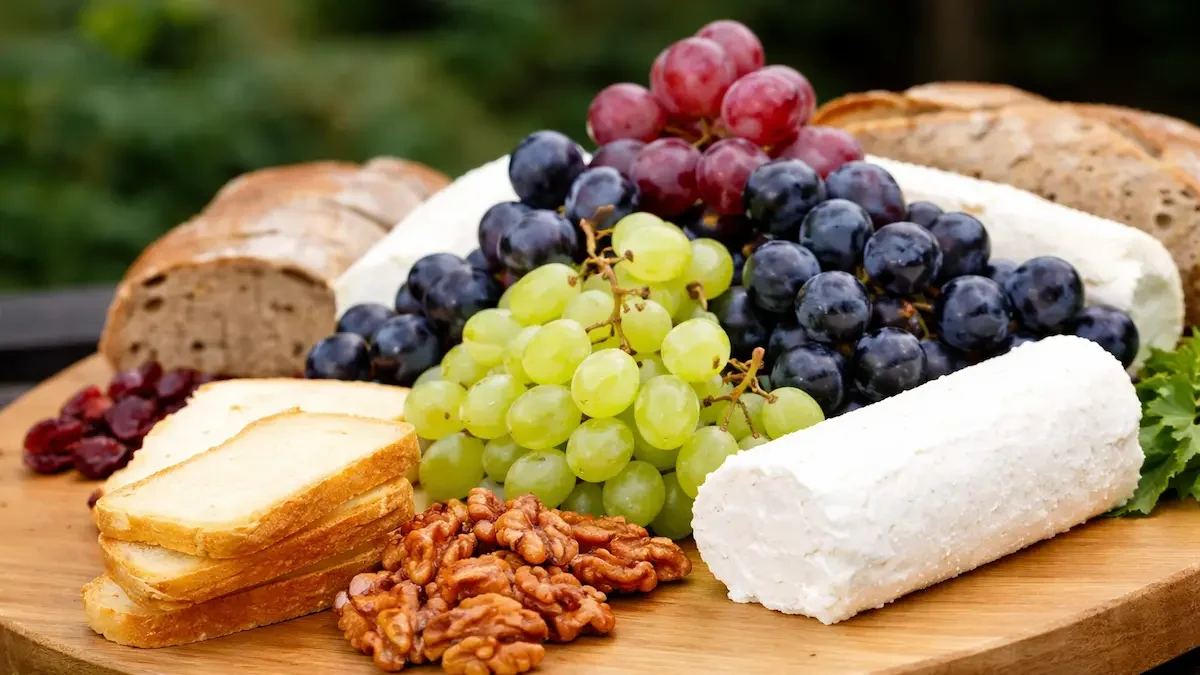
Fruit cheese is one of the oldest British preserves — a firm, sliceable paste that stores for a year and uses the crops most difficult to deal with any other way. Damsons, crab apples, quinces, and cooking plums all produce outstanding fruit cheeses. The method is simple, the ratio is fixed, and the result keeps without refrigeration.
Quick Answer
What is fruit cheese? A dense, firm preserve made from strained fruit pulp cooked with sugar until it sets solid. Unlike jam, which spreads, fruit cheese can be turned out of a mould and sliced. It is the English equivalent of Spanish membrillo — traditionally served with strong cheeses, game, and cold meats.
The universal ratio: 450g (1 lb) sugar to every 600ml (1 pint) of strained fruit pulp. This ratio produces a set that is firm enough to slice when cold. Do not reduce the sugar significantly — sugar is both the setting agent and the preservative in this recipe.
The set test: drag a wooden spoon across the bottom of the pan. If the mixture parts and holds clear for 2–3 seconds before flowing back, it is ready. Alternatively, drop a teaspoon onto a chilled saucer — if it wrinkles when pushed with a fingertip after one minute, the set is correct.
According to the National Center for Home Food Preservation’s jam and jelly guide, fruit cheeses and butters are among the safest home preserves to make because their high sugar and low moisture content creates an environment in which spoilage organisms cannot grow. A correctly made fruit cheese — cooked to the right consistency and stored in sterilised jars — will keep for up to a year in a cool, dark cupboard. The key to both food safety and the right texture is cooking the mixture long enough: undercooked fruit cheese will not set and will have a shorter shelf life.
Which Fruits Work Best
| Fruit | Pectin Level | Notes |
|---|---|---|
| Quince | Very high | The classic; sets firm and turns deep orange-red on long cooking; needs no added pectin or lemon |
| Damsons | High | Deep plummy flavour; stones must be removed after cooking and before sieving; mix with apple for extra pectin if needed |
| Crab apples | Very high | Excellent setting fruit; also used to add pectin to low-pectin cheeses; tart and aromatic |
| Cooking plums, greengages | Medium-high | Good results alone; adding a cooking apple improves the set |
| Blackberries | Medium | Work better when combined with apple (50:50); alone they produce a softer result |
| Strawberries, raspberries | Low | Not recommended for cheese without added pectin or commercial pectin; better made as jam |
The Full Method
Cook the fruit to a pulp
Wash fruit; roughly chop if large (no need to peel or core — skins and cores add pectin). Place in a heavy pan with just enough water to prevent burning — roughly 150–300ml per kilo of fruit. Simmer until completely soft and falling apart: 20–40 minutes depending on fruit. Damsons and plums: simmer until stones float free.
Sieve the pulp
Press the cooked fruit through a fine sieve or mouli using the back of a spoon or a ladle. Discard skins, seeds, and cores. Measure the resulting pulp by volume into a jug — you need to know the exact amount to calculate the sugar.
Add sugar and cook to set
Return pulp to a clean pan. Add 450g sugar per 600ml pulp. Stir over low heat until sugar dissolves completely. Raise heat and cook at a steady boil, stirring frequently — the mixture spits as it thickens, so use a long-handled spoon. Cook for 45 minutes to 1.5 hours until the spoon-drag test shows a clean trail. The mixture will darken, thicken, and reduce noticeably.
Pot or mould
For sliceable cheese: pour into lightly oiled moulds (small pudding basins, loaf tins, or ceramic ramekins) and leave overnight to set completely before unmoulding. For jar storage: pour directly into warm sterilised jars, leave a small headspace, seal immediately. Label with fruit type and date.
What to Do
- Use high-pectin fruit for best results— quince, crab apple, damson, and cooking plum all set reliably without added commercial pectin; lower-pectin fruits like blackberries work better mixed 50:50 with cooking apple
- Do not reduce the sugar below the ratio— 450g per 600ml is both the setting formula and the preservation formula; lower sugar produces a softer product with a shorter shelf life
- Stir constantly in the final stage— the high sugar content makes the mixture scorch easily once thickened; keep the heat moderate and the spoon moving; a heavy-bottomed pan significantly reduces burning risk
- Oil moulds lightly before filling— even a thin smear of neutral oil allows clean unmoulding once the cheese has set firm; omit this and the cheese sticks
- Store jars in a cool, dark cupboard for up to one year— NCHFP confirms that correctly made high-sugar fruit preserves are shelf stable at room temperature when stored in sterilised sealed jars
Common Mistakes
- Undercooking— the most common error; fruit cheese that has not reached the spoon-drag set point will not firm up in the mould and will have poor keeping quality; cook until it is unmistakably thick
- Not sterilising jars— any moisture or residue in the jar creates a site for mould; wash in hot soapy water, rinse, then dry in the oven at 110°C for 15 minutes before filling
- Using low-pectin fruit alone— strawberries, raspberries, and elderberries do not set as a cheese without added pectin; use them in jam rather than attempting a cheese