
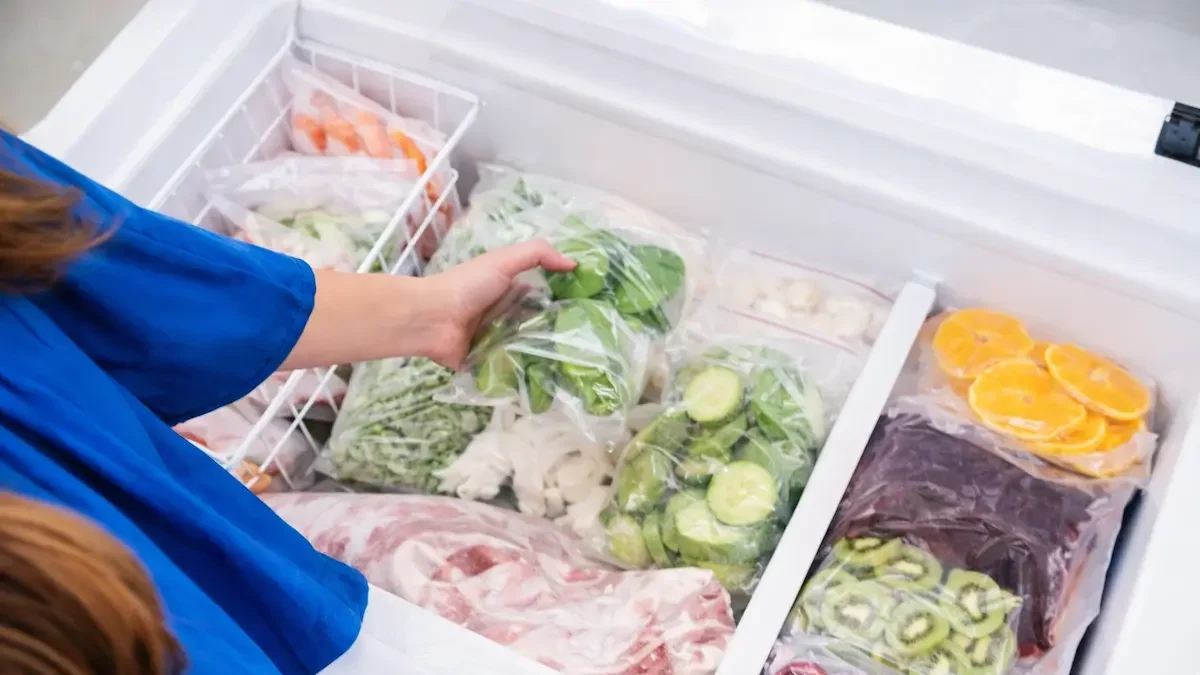
A chest freezer is the single most useful piece of equipment for a home grower with a productive garden. It is also easy to misuse — overloaded, disorganised, and full of produce that freezes slowly and emerges with poor texture. Three rules determine whether it works or wastes produce.
Quick Answer
The loading limit: add no more than 2–3 pounds (900g–1.4kg) of unfrozen produce per cubic foot of freezer capacity in any 24-hour period. A standard 100-litre (3.5 cubic foot) chest freezer can freeze approximately 7–10kg of produce per day. Exceeding this slows freezing, which forms large ice crystals that damage cell structure and produce mushy texture on thawing.
The tray-pack method: spread blanched, cooled, and dried produce in a single layer on a tray; freeze until solid (1–2 hours); then transfer to bags. Every piece freezes individually and remains loose in the bag — you can take out exactly what you need without defrosting the whole bag.
Keep a freezer log. A chest freezer fills from the top and it is easy to lose track of what is on the bottom. A simple handwritten log on the lid — crop, quantity, date frozen — takes 10 seconds to update and prevents the annual discovery of two-year-old beans at the back.
According to University of Minnesota Extension’s freezing guide, overloading a freezer with unfrozen produce results in a long, slow freeze and poor-quality product. The guideline is 2–3 pounds of vegetables per cubic foot of freezer space per 24 hours — adding more than this raises the internal temperature of the freezer and slows ice crystal formation. Slow freezing forms large ice crystals that rupture plant cell walls, producing the mushy texture that makes thawed vegetables unpleasant to eat. Fast freezing, achieved by not overloading the freezer and by spreading produce out across the coldest surface area, produces small ice crystals that do far less structural damage.
How to Organise a Chest Freezer for Year-Round Use
A chest freezer without a system becomes an archaeological dig by January. Northern Homestead’s chest freezer organisation guide recommends dividing the space into zones by crop type, using wire baskets or open-top crates to create vertical sections. Crops used frequently — peas, beans, leafy greens — go in the top basket where they are accessible without emptying the freezer. Bulk crops processed in large quantities — sweetcorn, passata, apple purée — go to the bottom once frozen, where they store undisturbed until needed. Bags should stand on end, not lie flat, which makes reading labels easier and prevents individual bags from freezing to adjacent ones.
Storage Times and What Loses Quality Fastest
| Produce | Recommended Storage | Notes |
|---|---|---|
| Peas, beans, sweetcorn | 8–12 months | Among the best freezing vegetables; retain texture and flavour well |
| Courgettes, summer squash | 3–6 months | High water content — grated and squeezed dry before freezing; use in cooked dishes only after thawing |
| Spinach, kale, chard | 10–12 months | Blanch, squeeze dry, freeze in portions; 1kg fresh produces around 200g frozen |
| Tomatoes (as passata) | 6–12 months | Roast and blend before freezing — far more useful than frozen raw tomatoes which go watery |
| Broccoli, cauliflower | 8–12 months | Blanch 3 minutes; tray-freeze before bagging to keep florets separate |
| Herbs (in oil) | 3–6 months | Blend with olive oil; freeze in ice cube trays; transfer to bags once solid |
| Fruit (berries, currants) | 10–12 months | Tray-freeze first to keep individual; no blanching needed for fruit |
What to Do
- Tray-freeze all produce before bagging— spread in a single layer on a tray, freeze until solid, then bag; this keeps every piece individual and prevents the bag becoming a solid frozen block you have to break apart to use
- Label every bag before filling— write the crop, date, and quantity on the bag before adding produce; it is almost impossible to write clearly on a frozen bag and easy to forget to label at all if you leave it until after
- Keep a freezer log on the lid— a simple running list of what is inside and when it was frozen prevents produce from being forgotten at the bottom; update it every time you add or remove a bag
- Do not exceed the 24-hour loading limit— UMN Extension’s 2–3 pounds per cubic foot guideline exists to protect quality; during a heavy harvest period, process and freeze in batches over several days rather than all at once
- Maintain temperature at or below -18°C (0°F)— USDA FSIS confirms food frozen at this temperature is indefinitely safe; quality degrades over time but safety does not; use a freezer thermometer to verify the actual temperature
Common Mistakes
- Overloading the freezer during a glut— piling in 20kg of fresh beans in one day raises the freezer temperature and produces slow-frozen, mushy produce; freeze in daily batches of 2–3 pounds per cubic foot
- Freezing produce wet— moisture on the surface of produce causes pieces to freeze together and promotes ice crystal damage; pat dry after blanching and cooling before freezing
- No labelling or log— Illinois Extension notes that without proper labelling, you may forget what is inside or miss the quality window; a chest freezer full of unlabelled mystery bags is almost useless by midwinter
Each Processing Session
- Stay within 2–3 lbs per cubic foot per day
- Blanch, cool, and dry before freezing
- Tray-freeze first; bag after 1–2 hours
- Label bag before filling; update freezer log
Ongoing Management
- Organise by crop type using baskets or crates
- Frequent crops in top basket; bulk at bottom
- Check log monthly — use oldest stock first
- Verify temperature with a thermometer — aim for -18°C