
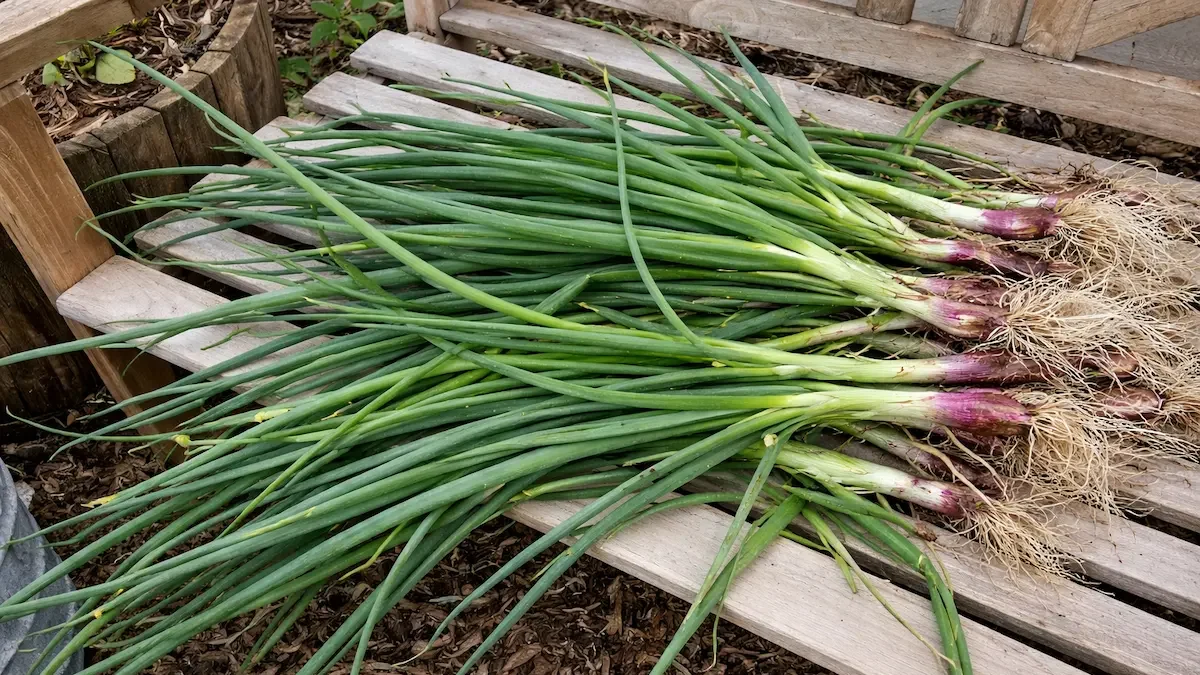
Onions are one of the most reliable crops on a smallholding — until they suddenly send up a flower stalk and stop developing properly. This process, known as bolting, is one of the most frustrating issues for growers because it often happens just as bulbs should be forming.
Once an onion bolts, the plant shifts its energy away from bulb growth and into seed production. The result is a smaller, tougher bulb that doesn’t store well. Understanding why this happens is the key to preventing it.
What Bolting Actually Means
Bolting is a natural survival response. The plant “believes” it has gone through a full seasonal cycle — from growth to winter to a second year — and switches to reproduction mode.
Onions are technically biennial plants. In their natural cycle, they grow bulbs in the first year and produce seeds in the second. Bolting occurs when that second-year trigger is activated too early.
According to University of Minnesota onion growing guide, temperature fluctuations — especially cold exposure early in the plant’s life — are the most common cause.
The Real Cause: Cold Stress
The biggest trigger for bolting is exposure to low temperatures after planting. If young onion plants experience a period of cold (usually below 10°C / 50°F), they can interpret it as having gone through winter.
This is especially common when:
- Onion sets are planted too early
- A warm period is followed by a sudden cold snap
- Seedlings are started too early and transplanted into cold soil
Once this “vernalisation” process is triggered, the plant is effectively programmed to bolt — even if conditions improve later.
Why Onion Sets Bolt More Often
Many beginners prefer onion sets (small bulbs) because they are easy to plant. However, sets are more prone to bolting than seeds or transplants.
This happens because:
- Sets are already in their second stage of growth
- They are more sensitive to temperature changes
- Larger sets are especially likely to bolt
Smaller sets are generally safer, but even they can bolt under the wrong conditions.
Day Length and Variety Matter
Onions are highly sensitive to daylight hours, and using the wrong variety for your region increases stress on the plant.
There are three main types:
- Short-day onions
- Intermediate-day onions
- Long-day onions
If the variety does not match your latitude, the plant may struggle to form bulbs properly and become more likely to bolt.
The Texas A&M AgriLife onion production guide emphasises that selecting the correct day-length variety is essential for stable growth.
Stress Beyond Temperature
While cold is the main trigger, other stress factors can contribute:
Irregular watering, poor soil conditions, overcrowding, or nutrient imbalance all increase the likelihood of bolting. A stressed plant is more likely to switch to reproduction early.
This is why two identical plantings can behave differently depending on how stable their growing conditions are.
What to Do If Your Onions Start Bolting
Once an onion sends up a flower stalk, the process cannot be reversed. However, you can still manage the situation.
The best approach is to harvest bolting onions early. They are still edible, but they won’t store well, so they should be used fresh.
Cutting off the flower stalk does not restore bulb growth. It may slightly slow decline, but the plant has already shifted its energy.
Bolted onions are ideal for:
- Immediate cooking
- Fresh use
- Chopping and freezing
Trying to store them long-term usually leads to spoilage.
How to Prevent Bolting Next Season
Preventing bolting is about reducing stress and avoiding false seasonal signals.
Start by adjusting planting timing. Avoid planting too early when soil is still cold. It is better to plant slightly later into stable conditions than risk early cold exposure.
If using sets, choose smaller ones. Large sets have a much higher tendency to bolt because they are closer to maturity.
Consider switching to seed-grown onions or transplants. These are generally more stable and less prone to bolting, especially in unpredictable climates.
Maintaining consistent growth conditions is equally important. Onions prefer steady moisture, good drainage, and fertile soil. Avoid sudden changes in watering or nutrient availability.
A More Reliable Strategy
One of the most effective approaches is to align your entire onion system with local conditions rather than forcing early production.
This means:
- Choosing the correct day-length variety
- Planting based on soil temperature, not calendar date
- Avoiding unnecessary stress during early growth
Over time, this creates a much more predictable crop with fewer losses.
A Different Way to Look at the Problem
Bolting is often seen as a failure, but it is really a signal. It tells you that the plant experienced conditions it interpreted as a full seasonal cycle.
Instead of reacting to bolting, the better approach is to prevent the signal entirely.
Stable conditions, correct timing, and appropriate varieties remove the triggers that cause onions to switch into reproductive mode.
Long-Term Perspective
Once you dial in the timing and variety for your location, bolting becomes much less common. Experienced growers rarely eliminate it completely, but they reduce it to a small percentage of the crop.
That’s the goal — not perfection, but consistency.
A well-managed onion crop grows steadily, forms strong bulbs, and stores reliably. When that happens, bolting becomes the exception rather than the rule.