
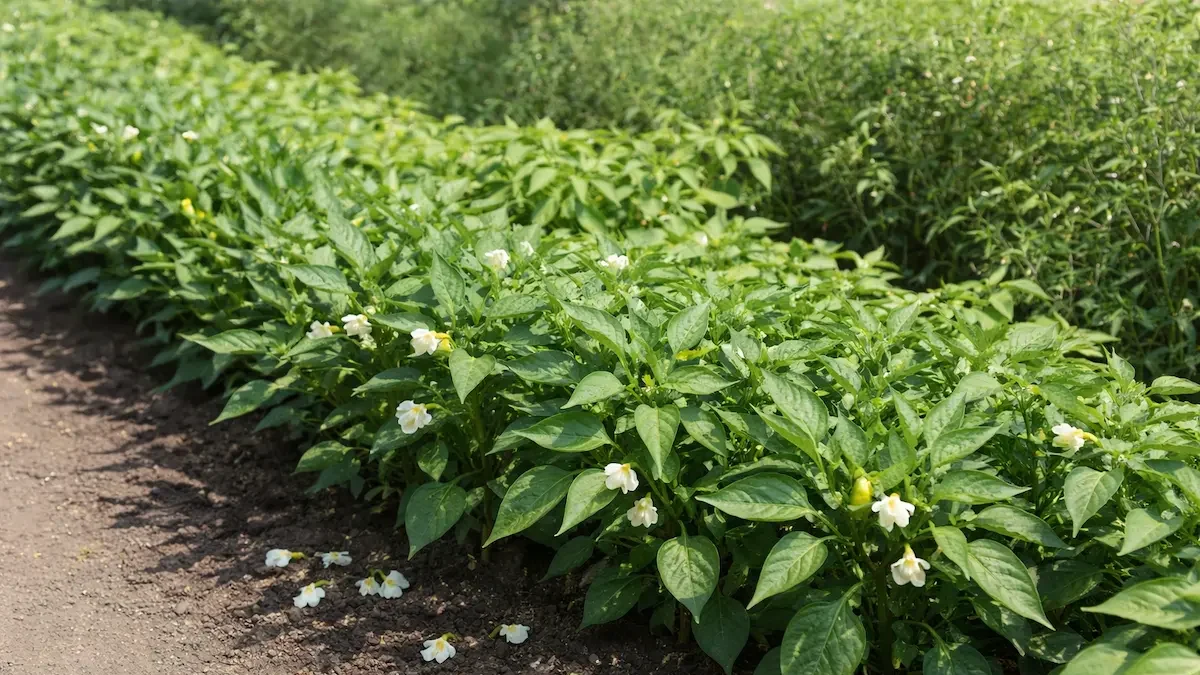
Pepper plants can look strong, green, and full of flowers — yet produce little to no fruit. This is one of the most frustrating problems for growers because everything appears healthy on the surface. The issue is rarely a single mistake. Instead, it’s usually a mismatch between what the plant needs to set fruit and the conditions it’s actually getting.
Once you understand those conditions, the problem becomes predictable — and fixable.
The Key Issue: Flowers Without Pollination
Peppers are self-pollinating, but that doesn’t mean pollination happens automatically. Each flower still needs movement — usually from wind or insects — to transfer pollen.
In protected environments like greenhouses, balconies, or still weather, this often doesn’t happen effectively. Flowers form, but they drop without setting fruit.
According to University of Minnesota pepper growing guide, poor pollination is one of the most common reasons for low fruit set, especially in controlled environments.
A simple shake of the plant or brushing flowers by hand can dramatically improve results.
Temperature Is the Biggest Hidden Factor
Peppers are extremely sensitive to temperature — more than most growers realise.
Fruit set happens within a narrow range:
- Below ~15°C → flowers drop
- Above ~30°C → pollen becomes non-viable
This means even short periods of heat or cold can interrupt production.
In hot weather, plants may look vigorous but fail to set fruit because the pollen is effectively sterile. In cooler conditions, flowers may never develop properly.
This is why peppers often struggle early in the season and during heatwaves.
Too Much Nitrogen, Not Enough Fruit
A very common mistake is overfeeding, especially with nitrogen-rich fertilisers.
This leads to:
- Large, lush plants
- Dark green leaves
- Lots of growth — but few fruits
The plant prioritises vegetative growth instead of reproduction.
Switching to a more balanced or potassium-rich feed once flowering begins helps redirect energy into fruit production.
Inconsistent Watering Disrupts Fruit Set
Peppers prefer steady, consistent moisture. When watering fluctuates — too dry, then too wet — the plant experiences stress.
This stress often results in:
- Flower drop
- Poor fruit development
- Misshapen peppers
Containers make this worse because they dry out quickly. The goal is not frequent watering, but stable moisture levels.
Lack of Light Limits Production
Peppers are sun-loving plants. Without enough light, they struggle to support fruit development.
Even if flowers form, the plant may not have enough energy to carry them through to fruit.
Minimum requirement:
- 6–8 hours of direct sunlight per day
In lower light conditions, the plant prioritises survival over reproduction — meaning fewer fruits.
Plant Maturity Matters
Another overlooked factor is timing.
Young pepper plants often produce flowers before they are strong enough to support fruit. These early flowers are usually dropped.
This is normal. Once the plant reaches sufficient size and strength, fruit set becomes more reliable.
Trying to force early fruiting often reduces long-term yield.
Humidity and Air Movement
Humidity plays a subtle but important role.
- Too high → pollen becomes sticky and ineffective
- Too low → pollen dries out
Combined with poor airflow, this reduces pollination success.
In greenhouses or indoor setups, this is a frequent issue. Increasing airflow — even slightly — can make a noticeable difference.
What Actually Works
When peppers fail to set fruit, the solution is usually not one change, but alignment.
You’re aiming for:
- Stable temperatures
- Consistent watering
- Good airflow
- Adequate sunlight
- Balanced feeding
Once these conditions align, fruit set improves quickly.
A More Useful Way to Think About It
Peppers don’t fail randomly. If flowers are dropping, the plant is responding to stress or unsuitable conditions.
Instead of asking “What’s wrong?”, ask:
“What condition is preventing fruit from forming right now?”
That shift makes troubleshooting much more effective.
Long-Term Perspective
Once you dial in the right conditions, peppers become highly productive and reliable. Most experienced growers don’t struggle with fruit set — not because they do more, but because their environment is stable.
That’s the real goal.
A healthy pepper plant doesn’t need forcing. When conditions are right, it sets fruit naturally — and consistently.