
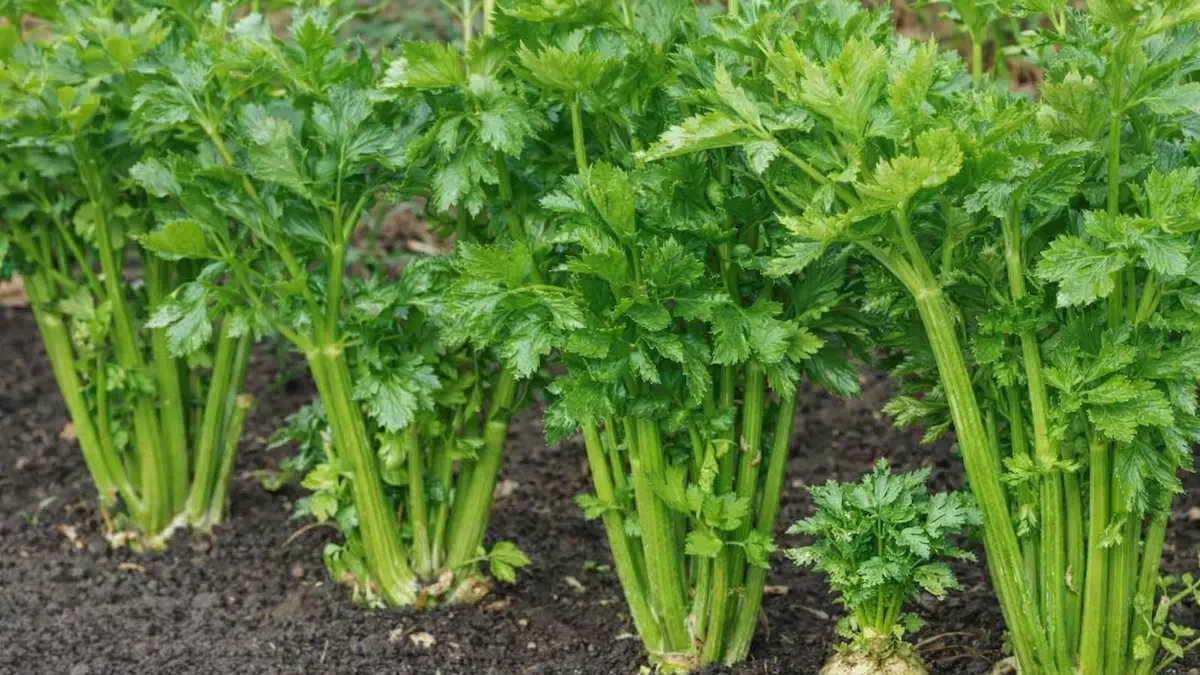
Celery and celeriac are often considered difficult crops, but the difficulty comes from misunderstanding their needs rather than any real complexity. Both are slow-growing, moisture-loving plants that require steady conditions from start to finish. Once you get that right, they become reliable — and highly productive.
The key difference is what you harvest. Celery is grown for its stalks, while celeriac is grown for its swollen root. But the growing process is almost identical, especially in the early stages.
Why They’re Seen as Difficult
Most problems come from three factors: slow germination, inconsistent moisture, and poor timing. These crops take longer than most vegetables to establish, and any early stress affects the entire season.
According to Royal Horticultural Society celery growing guide, celery requires a long growing season with consistent moisture and fertile soil to develop properly.
If those conditions aren’t met, plants remain small, stringy, or fail to form usable stems or roots.
Starting From Seed: The Critical Stage
Celery and celeriac must be started early indoors because of their long growing time.
Seeds are very small and should not be buried deeply. Instead, sow them on the surface of moist compost and press them lightly into place. They need light to germinate.
Germination can take 2–3 weeks, sometimes longer. During this time, the most important factor is consistency:
- Keep soil evenly moist (not wet)
- Maintain temperatures around 18–21°C
- Provide good light as soon as seedlings appear
Drying out at this stage can stop germination completely.
Early Growth: Slow but Important
Seedlings grow slowly at first. This is normal, but it often leads beginners to overwater or overfeed.
What matters here is stability:
- Gentle watering
- Good airflow
- Strong light
Once seedlings develop a few true leaves, they can be pricked out into individual modules or pots to continue growing.
Transplanting: Timing Matters
Celery and celeriac are sensitive to cold. Transplanting too early is one of the most common mistakes.
If young plants are exposed to low temperatures, they can bolt later in the season instead of forming proper stems or roots.
Wait until:
- Frost risk has passed
- Soil has warmed
- Plants are well established
According to University of Minnesota celery production guide, cold stress early in development can trigger premature flowering, reducing yield significantly.
Soil and Feeding: Heavy Feeders
These crops require rich, fertile soil. They perform best in ground that has been heavily amended with compost or well-rotted manure.
Unlike many vegetables, celery and celeriac do not tolerate poor soil.
They need:
- High organic matter
- Consistent nutrients
- Good water retention
Feeding during the season helps maintain steady growth, especially for celery where continuous stem development is essential.
Water: The Non-Negotiable Factor
If there is one rule for growing celery successfully, it is this: never let it dry out.
Inconsistent watering leads to:
- Stringy celery
- Small celeriac roots
- Bitter flavour
These plants evolved in marsh-like conditions. They perform best when soil stays consistently moist.
Mulching helps retain moisture and stabilise conditions, especially during warm periods.
Light and Position
Both crops prefer full sun but will tolerate partial shade better than most vegetables. In hotter climates, some shade can actually improve results by reducing stress.
Sheltered positions are ideal. Strong wind can slow growth and dry out soil more quickly.
The Key Difference: Celery vs Celeriac
While they grow similarly, the focus changes mid-season.
Celery needs steady growth to produce thick, tender stems. Some growers blanch celery (excluding light) to reduce bitterness, though modern varieties often don’t require it.
Celeriac, on the other hand, needs space for the root to expand. Avoid crowding plants, and ensure soil remains loose to allow proper development.
Removing some outer leaves during growth can help direct energy into the root.
Common Mistakes
The most frequent issue is letting soil dry out even briefly. This sets the plant back and affects final quality.
Starting seeds too late is another problem. These crops need a long season, and late starts result in underdeveloped plants.
Transplanting into cold conditions can trigger bolting, especially in celery.
Finally, growing in poor soil almost always leads to disappointing results. These are not low-input crops.
A Better Way to Think About It
Celery and celeriac are not difficult — they are demanding of consistency.
They don’t tolerate extremes. They respond to steady, predictable conditions.
If you provide:
- Constant moisture
- Rich soil
- Stable temperatures
they reward you with strong, high-quality crops.
Long-Term Perspective
Once you understand their rhythm, these crops become much easier. Many experienced growers include them every year because of their reliability under the right conditions.
They also store well — especially celeriac — making them valuable for extending harvests into winter.
The difference between failure and success is rarely effort. It’s consistency. Maintain the conditions, and the plants will do the rest.