
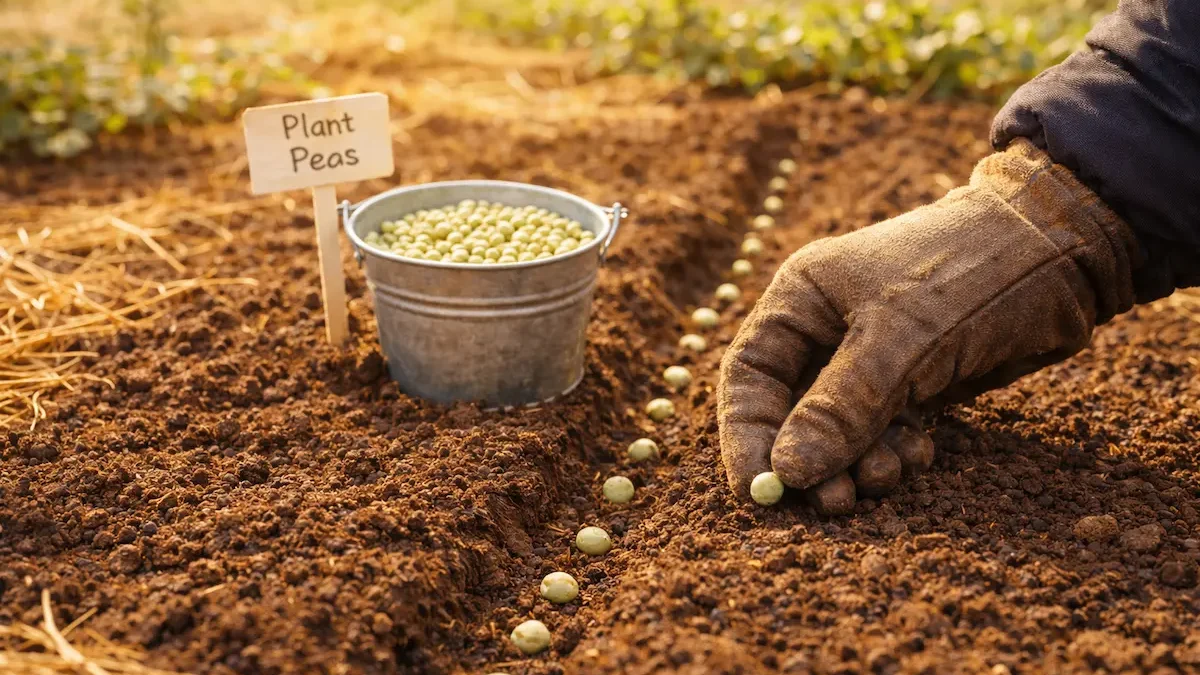
Peas germinate in soil as cold as 40°F but stop producing once air temperatures exceed 85°F. That narrow window makes the sowing date the single biggest factor in harvest size — and for Zones 5–7, that date is this week.
St. Patrick’s Day has been the traditional American pea-planting date for generations, and the timing holds up. Across USDA Zones 5 through 7, mid-March puts seeds in the ground 4–6 weeks before the last spring frost — exactly the window recommended by the University of Minnesota Extension for optimal pea production. According to Penn State Extension, pea seeds germinate across a wide soil temperature range of 40–85°F, but the crop itself cannot tolerate summer heat. Most varieties need about 60 days to reach harvest. Delay sowing by even two weeks in Zones 5–6, and the crop matures in June heat instead of cool late-spring conditions — producing fewer pods with starchy, tough peas.
The short answer:
- Zones 4–5 (last frost mid-May): Sow peas as soon as soil is workable, typically mid- to late March
- Zone 6 (last frost late April): Sow now through March 20
- Zone 7 (last frost mid-April): Sow immediately if not already in the ground
- Plant 1 inch deep, 2 inches apart, directly in the garden — peas do not transplant well
Why Peas Go in First
Peas are legumes. Their roots host nitrogen-fixing bacteria (Rhizobium) that convert atmospheric nitrogen into plant-available forms, which means they need little to no nitrogen fertilizer. Excess nitrogen actually hurts production by pushing foliage growth at the expense of pods.
More importantly, peas are one of the few vegetable crops that germinate and grow in cold soil. The University of Maryland Extension confirms that pea seed germinates at soil temperatures as low as 40°F, though germination is slow at that temperature — up to 5 weeks. At 60°F, the same seeds emerge in 7–10 days. At 75°F, emergence drops to under a week. This means seeds planted in cold March soil will still germinate; they just take longer to emerge. Seeds planted two or three weeks later in warmer soil often catch up to early-sown peas within days.
The critical constraint is not cold. The constraint is heat. According to UMN Extension, peas stop flowering and producing pods once air temperatures consistently exceed 85°F. In most of Zones 5–7, that threshold arrives in mid- to late June. Every day of delayed planting in March is a day of lost production at the end of the season.
What to Do Now
Check soil readiness. Squeeze a handful of garden soil. If water drips out or the soil holds a tight ball, it is too wet to work. Wait 3–5 days and test again. Working saturated soil destroys structure and creates compaction that pea roots cannot penetrate.
Sow directly. Plant seeds 1 inch deep, 2 inches apart, in rows 18–24 inches apart. Peas resent root disturbance and do not transplant well. Direct sowing is the standard method recommended by every major Extension program.
Soak seeds overnight before planting. This speeds germination by 3–5 days, particularly in cold soil. Do not soak longer than 24 hours — seeds can rot.
Install supports at planting time. Bush varieties (18–30 inches tall) benefit from twiggy sticks or short trellises. Pole varieties (4–6 feet) require netting, chicken wire, or string trellis. Install supports now, not after plants establish — inserting stakes later damages shallow pea roots. The Old Farmer’s Almanac recommends thin tree branches or wire mesh anchored before seedlings emerge.
Skip nitrogen fertilizer. Peas fix their own nitrogen. Apply phosphorus and potassium based on a soil test if needed, but adding nitrogen encourages leafy growth and reduces pod set.
Plan succession. Sow a second round 2 weeks after the first to extend the harvest window.
What NOT to Do
❌ Starting peas indoors and transplanting — Pea roots are fragile and do not recover well from transplant disturbance. Direct sowing produces stronger plants with better yields. If the ground is genuinely unworkable, use biodegradable pots that go into the soil whole.
❌ Waiting for warm soil — Unlike tomatoes and peppers, peas do not need warm soil. Waiting for 70°F soil means the harvest window shrinks. According to Oklahoma State University Extension, the best time to direct-sow peas is mid-February through mid-March in most zones. In Zones 5–6, the window extends to early April at the latest.
❌ Planting in the same spot as last year’s peas or beans — Legumes should rotate on a 4-year cycle. Replanting in the same bed builds soilborne disease pressure, especially root rots and fusarium.
This Week (March 10–16)
- Test soil readiness with the squeeze test
- Soak pea seeds overnight before sowing
- Direct sow 1 inch deep, 2 inches apart
- Install trellis or support stakes at planting time
By April 10
- Sow a second succession round if first sowing is up and growing
- Thin any clumps but avoid disturbing roots of established plants
- Monitor for powdery mildew on lower leaves — improve airflow if spotted
- Begin planning warm-season transplants: the March indoor timing guide for tomatoes and peppers covers zone-by-zone sowing dates
If the compost pile needs restarting before bed prep, the 3-step spring reactivation guide covers the full process. And for anyone with fall-planted garlic now emerging, the overwintered garlic troubleshooting guide identifies the three problems to check for this week.