
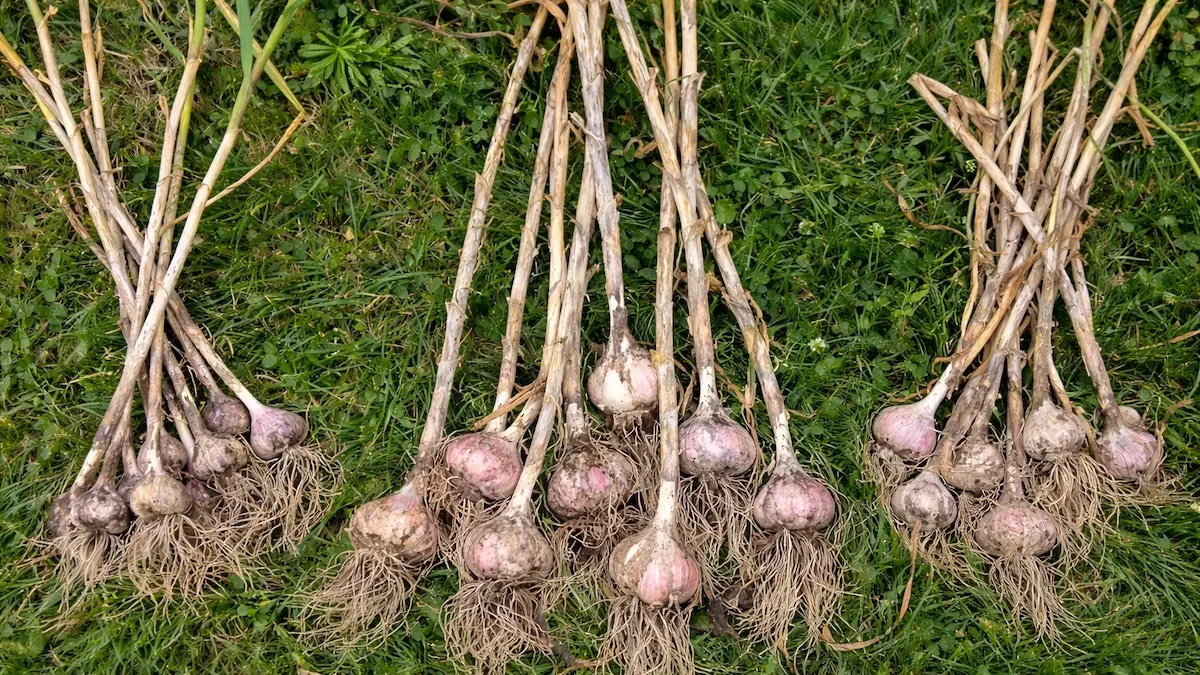
Garlic is one of those crops where the difference between homegrown and shop-bought becomes obvious over time. Fresh bulbs from your own garden can last six months or more with minimal loss in quality, while supermarket garlic often begins to soften, sprout, or deteriorate within weeks.
This isn’t accidental. It comes down to how garlic is grown, harvested, processed, and stored.
It Starts With Variety — Not All Garlic Is Equal
One of the biggest differences is variety selection.
Most supermarket garlic is grown for:
- High yield
- Uniform size
- Transport durability
Not for storage life.
Home growers, on the other hand, often choose varieties specifically known for keeping quality. Softneck garlic, in particular, is prized for long storage — often lasting 6–8 months or more under good conditions.
Commercial growers may prioritise speed and scale over longevity, which directly affects how long the bulbs last after purchase.
Freshness Makes a Bigger Difference Than People Realise
Shop-bought garlic is rarely fresh.
By the time it reaches you, it may have:
- Been harvested months earlier
- Stored in bulk warehouses
- Transported long distances
- Sat on shelves under warm lighting
According to University of California post-harvest garlic guide, storage time before sale significantly affects garlic quality and shelf life.
Homegrown garlic, by contrast, goes straight from the ground into your storage space. That alone can add months to its usable life.
Proper Curing Is Often Better at Home Scale
Curing is what determines whether garlic stores well or fails early.
At home, garlic is usually:
- Dried slowly
- Kept in well-ventilated spaces
- Handled in small batches
This allows for more consistent curing.
Commercial garlic is often cured quickly and in large volumes, sometimes with forced air systems. While efficient, this can lead to uneven drying — especially in the neck, where moisture causes early rot.
A properly cured bulb has:
- Fully dry outer skins
- Tight, sealed neck
- No internal moisture
Home growers tend to achieve this more reliably simply because of scale and attention.
No Chemical Sprout Inhibitors — But That’s Not Always a Disadvantage
Many commercial garlic supplies are treated to prevent sprouting.
Ironically, this doesn’t always improve storage for the consumer.
While sprouting may be delayed, overall bulb quality can still decline due to:
- Age
- Storage conditions
- Handling
Homegrown garlic is untreated, but because it’s fresher and better cured, it often stores longer anyway.
Storage Conditions Are More Stable at Home
Supermarket garlic is exposed to fluctuating conditions:
- Temperature changes
- Artificial lighting
- Humidity variation
These fluctuations trigger:
- Sprouting
- Moisture loss
- Breakdown of cloves
At home, garlic is usually stored in:
- Cool
- Dark
- Dry
- Well-ventilated spaces
This stability is one of the biggest reasons it lasts longer.
Harvest Timing Matters More Than You Think
Garlic harvested too early or too late doesn’t store well.
Home growers can time harvest precisely:
- When lower leaves begin to dry
- Before bulbs split
This produces tight, intact bulbs ideal for storage.
Commercial harvesting is often done mechanically and on schedule, which may not perfectly match ideal maturity for every field.
Small timing differences can reduce storage life significantly.
Handling Damage Is Minimal
Every stage of handling affects garlic.
Shop-bought garlic may be:
- Mechanically harvested
- Processed in bulk
- Transported repeatedly
This increases:
- Bruising
- Micro-damage
- Entry points for rot
Homegrown garlic is handled gently and minimally, preserving its structure.
The Role of Soil and Growing Conditions
Garlic grown in healthy soil tends to produce stronger bulbs.
Home gardens often have:
- Better soil structure
- Organic matter
- Lower chemical input
This leads to:
- Denser cloves
- Stronger skins
- Better natural storage ability
It’s not just post-harvest — it starts in the soil.
A More Practical Way to Think About It
Homegrown garlic lasts longer because everything about it is optimised for quality, not logistics.
It’s:
- Fresher
- Better cured
- Less handled
- Stored more consistently
Each of these adds a small advantage. Together, they make a significant difference.
How Long It Should Last
Under good conditions:
- Softneck garlic: 6–8 months
- Hardneck garlic: 3–5 months
If your homegrown garlic is failing early, the issue is usually:
- Poor curing
- High humidity
- Temperature fluctuations
Why It Matters for a Smallholding
Garlic is one of the easiest crops to store well — but only if handled correctly.
Once you grow and store your own, you stop relying on short-lived supermarket bulbs and gain a stable, long-lasting ingredient that carries through winter.
It’s a small change, but it improves both self-sufficiency and food quality in a very practical way.