
Freezing herbs is one of the simplest ways to preserve a garden surplus, but it’s also one of the easiest to get wrong. Many people end up with dark, limp, flavourless herbs because they treat freezing as a storage step rather than a processing step. Done properly, frozen herbs can retain most of their aroma and be far more useful than dried ones.
The key difference comes down to how quickly the herbs freeze and how much air and moisture they are exposed to beforehand. According to University of Minnesota Extension freezing herbs guide, preserving flavour depends on limiting enzyme activity and preventing slow freezing, which damages plant tissue.
Why Herbs Lose Flavour in the Freezer
Fresh herbs are mostly water, held inside delicate cell walls. When they freeze slowly, large ice crystals form and rupture those cells. Once thawed, the structure collapses, and with it goes much of the aroma.
Air exposure is the second problem. Oxygen degrades essential oils — the compounds responsible for flavour. That’s why a loosely packed bag of herbs quickly turns dull and lifeless.
Freezing well is really about controlling these two things: speed and exposure.
The Best Method — Fast Freezing in Portions
The most reliable way to freeze herbs is to prepare them as if you were about to cook with them. Wash them gently, dry them thoroughly, and remove thick stems where necessary. Moisture left on the leaves is one of the biggest causes of clumping and ice damage.
Once dry, chop the herbs to the size you would normally use in cooking. This step matters more than people think. Frozen herbs become soft when thawed, so cutting them beforehand makes them immediately usable.
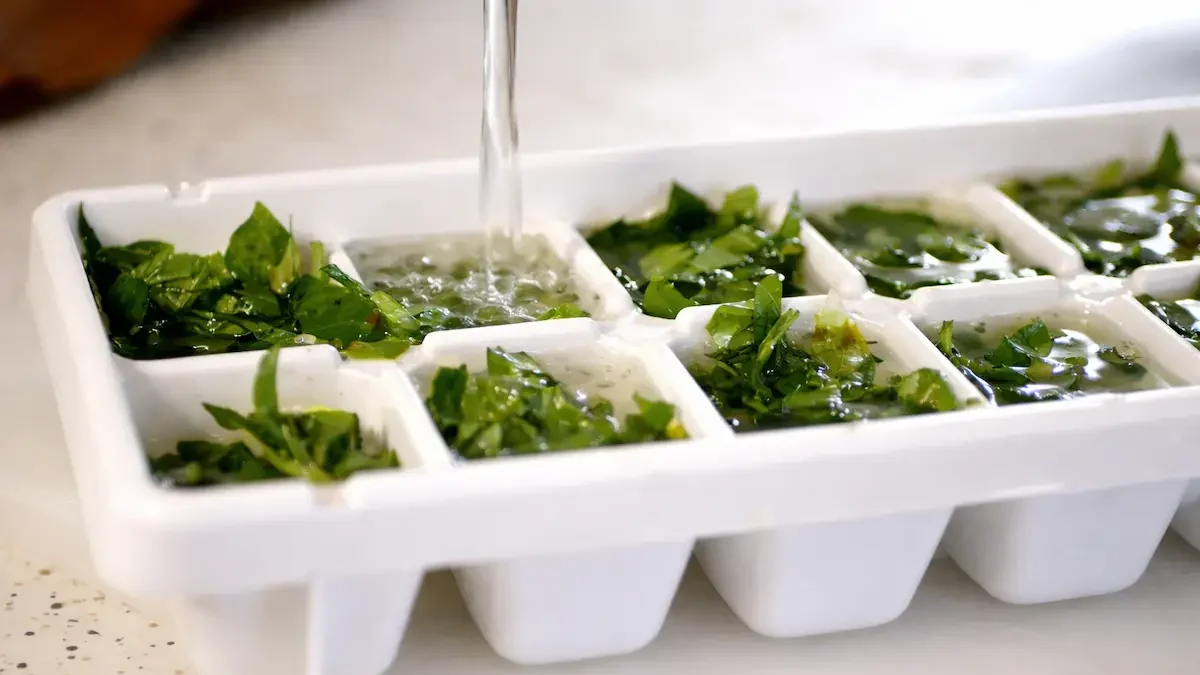
Pack the chopped herbs into small portions. Ice cube trays work well because they create consistent amounts. Add a small amount of water or oil to cover them. Oil works especially well for herbs like basil, parsley, and coriander because it protects flavour compounds from air exposure.
Place the tray in the coldest part of the freezer so it freezes as quickly as possible. Once solid, transfer the cubes into airtight bags or containers.
An Alternative — Tray Freezing Whole Leaves
If you prefer to keep herbs whole, the tray method is more effective. Spread clean, dry leaves in a single layer on a tray and freeze them quickly. Once frozen, transfer them into bags.
This prevents clumping and allows you to take small amounts as needed. However, whole frozen herbs are more fragile and usually best suited for cooking rather than garnishing.
What Works Best — and What Doesn’t
Soft herbs like basil, parsley, chives, and dill freeze well because they are used in cooked dishes where texture matters less. Woody herbs like rosemary and thyme can also be frozen, but they often hold their structure better even when simply stored fresh.
One common mistake is trying to freeze herbs in large bunches. This slows down freezing and creates uneven results — some parts freeze well, others degrade.
Another mistake is skipping the drying step. Even small amounts of surface water turn into ice that binds leaves together and damages texture.
A More Practical Way to Think About It
Freezing herbs isn’t about keeping them identical to fresh — that’s not possible. It’s about preserving flavour in a form that’s still useful in the kitchen.
If you freeze herbs in ready-to-use portions, you remove friction from cooking. Instead of dealing with wilted bunches in the fridge, you have consistent, measured flavour available at any time.
Storage and Use
Once frozen properly, herbs keep good flavour for around 6–12 months. After that, they’re still usable but gradually lose intensity.
Use them directly from frozen. There’s no need to thaw — in fact, thawing often makes them limp and harder to handle.
Why It’s Worth Doing
Freezing herbs well changes how you use your garden. Instead of wasting surplus or relying on dried herbs with weaker flavour, you keep something much closer to fresh.
It turns a short harvest window into a year-round supply — and once you get the method right, it becomes one of the most efficient preservation techniques you can use.