
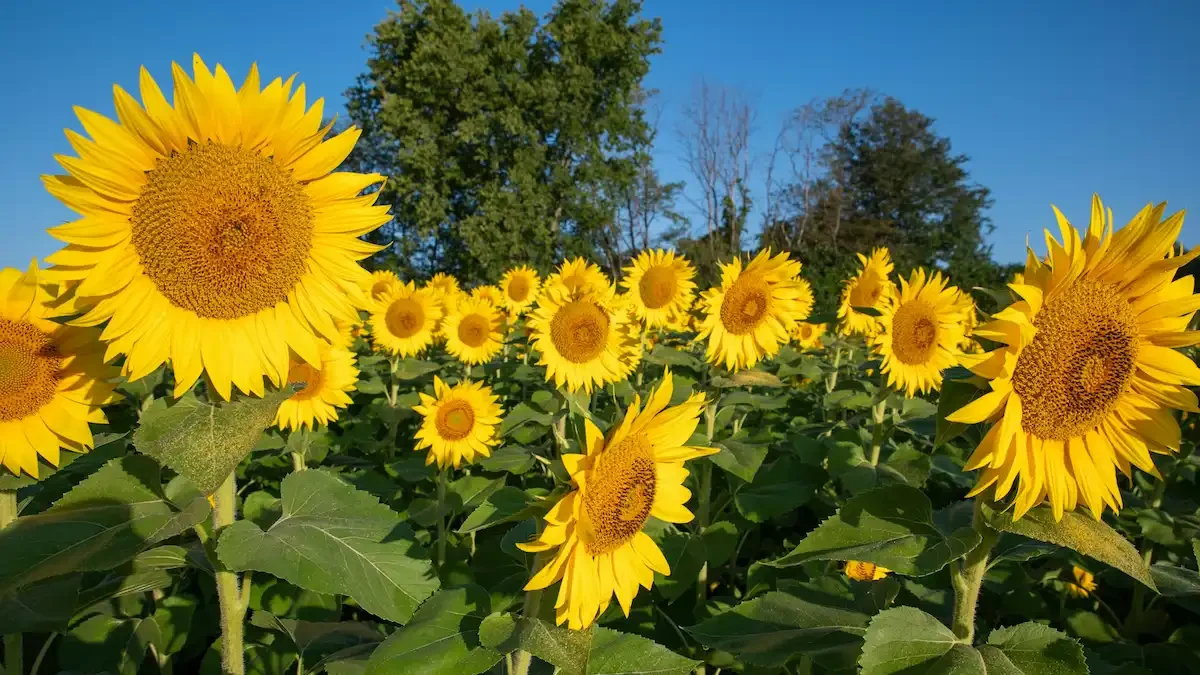
Giant sunflower varieties that top out at 3–4 feet instead of 8–12 are not defective. Something went wrong during establishment — and in most cases, it happened in the first 3 weeks after planting.
Every season, gardeners who planted mammoth or giant sunflower seed expect towering 8- to 12-foot stalks with dinner plate-sized heads. Instead, the plants flower at waist height with blooms barely 4–5 inches across. The seed packet is rarely to blame. According to North Dakota State University’s Sunflower Diagnostic Series, stunted sunflower growth traces back to five specific problems — all of which occur before the plant reaches the budding stage. By the time the head forms, the damage is locked in. Identifying the cause now means avoiding the same outcome next season.
The short answer:
- Transplant root damage is the most common cause in home gardens
- Nitrogen deficiency limits both stem height and head diameter
- Cold snaps in the first two weeks permanently stunt growth
- Overcrowding forces early flowering at reduced size
- Saved seed may carry genetics from shorter cross-pollinated varieties
Cause 1: Root Damage from Transplanting
Sunflowers develop a deep taproot within the first two weeks of growth. Starting seeds in small pots and transplanting later — especially after 4–5 weeks indoors — damages or restricts this taproot. The plant survives but never develops the root system needed to support a tall stalk.
Direct sowing produces the tallest, strongest plants. Penn State Plant Village recommends planting sunflower seeds 1–2 inches deep directly in the garden after the last frost, when soil temperature reaches at least 50°F. If starting indoors is necessary due to a short growing season, use deep peat or paper pots and transplant within 2 weeks of germination — before the taproot hits the bottom of the container.
Cause 2: Nitrogen Deficiency
Sunflowers are heavy feeders, particularly during the vegetative phase before budding. Nitrogen drives leaf production, stem thickness, and height. A plant starved of nitrogen in the first 6 weeks produces fewer, smaller leaves and a shorter, thinner stem — and the head that forms on that stem is proportionally small.
According to NDSU’s nutritional diagnostic guide, sulfur deficiency produces similar symptoms: stunting and spindly growth with chlorotic leaves. A soil test before planting distinguishes between the two. Apply a balanced fertilizer (10-10-10) at planting, then side-dress with a nitrogen-heavy feed (such as blood meal or a 20-10-10 blend) when plants reach 12 inches tall. Stop nitrogen application once the bud forms — late nitrogen delays seed filling.
Cause 3: Early Cold Damage
Sunflowers are frost-tender. Seedlings that survive a late cold snap — even one that does not kill the plant — often sustain invisible damage to the apical meristem (the growing tip). The plant continues to grow but at a reduced rate, flowering earlier and shorter than undamaged plants.
Sow sunflowers only after the last frost date for the zone. In Zones 5–6, that typically means late May. In Zone 7, mid-to-late April. A soil temperature of 50°F at 2-inch depth is the minimum for reliable germination. Check the soil temperature guide for measurement method. If a late frost threatens after emergence, cover seedlings with row cover or cloches overnight.
Cause 4: Overcrowding
Sunflowers competing for light, water, and nutrients flower earlier and at shorter heights. This is a survival response: the plant rushes to produce seed before resources run out.
For tall varieties (mammoth, giant, Russian), space plants 24–36 inches apart. According to University of Maryland Extension, compacted or cloddy soil compounds the problem — restricted root growth combined with tight spacing produces the shortest plants. Thin seedlings to final spacing when they reach 6 inches tall. Pulling rather than cutting avoids leaving decaying root material that attracts soil pathogens.
Cause 5: Cross-Pollinated Saved Seed
Sunflowers are open-pollinated by bees and other insects. Seed saved from a garden where multiple sunflower varieties grew within 1/2 mile may carry genetics from shorter varieties. The result: planting “giant” seed that produces 3–4-foot plants because the parent was cross-pollinated with a dwarf or medium-height variety.
The fix is straightforward. Purchase fresh, certified seed each season. Isolating giant varieties by 1/2 mile from other sunflowers when saving seed is impractical for most home gardens — buy new seed annually for reliable 8–12-foot plants.
What NOT to Do
❌ Starting giant sunflowers in small cups and transplanting at 5+ weeks — The taproot is already compromised. Direct sow or transplant within 14 days of germination in deep containers.
❌ Planting before soil reaches 50°F — Seeds sit in cold soil, germinate slowly, and emerging seedlings are vulnerable to any remaining frost. Every cold event during the first two weeks reduces final height.
❌ Applying high-nitrogen fertilizer after the bud forms — Late nitrogen pushes foliage at the expense of seed development. It does not increase head size at that stage. Switch to a low-nitrogen, higher-phosphorus feed once the bud is visible.
Checklist for Tall Sunflowers Next Season
- Purchase fresh giant variety seed — do not rely on saved seed unless isolation distance was maintained
- Direct sow after last frost when soil is 50°F+ at 2-inch depth
- Space plants 24–36 inches apart for maximum height
- Apply balanced fertilizer at planting, then nitrogen side-dress at 12 inches tall
- Stop nitrogen once the bud forms and switch to phosphorus/potassium feed
- Prepare beds with compost before planting — the compost reactivation guide covers spring pile management