
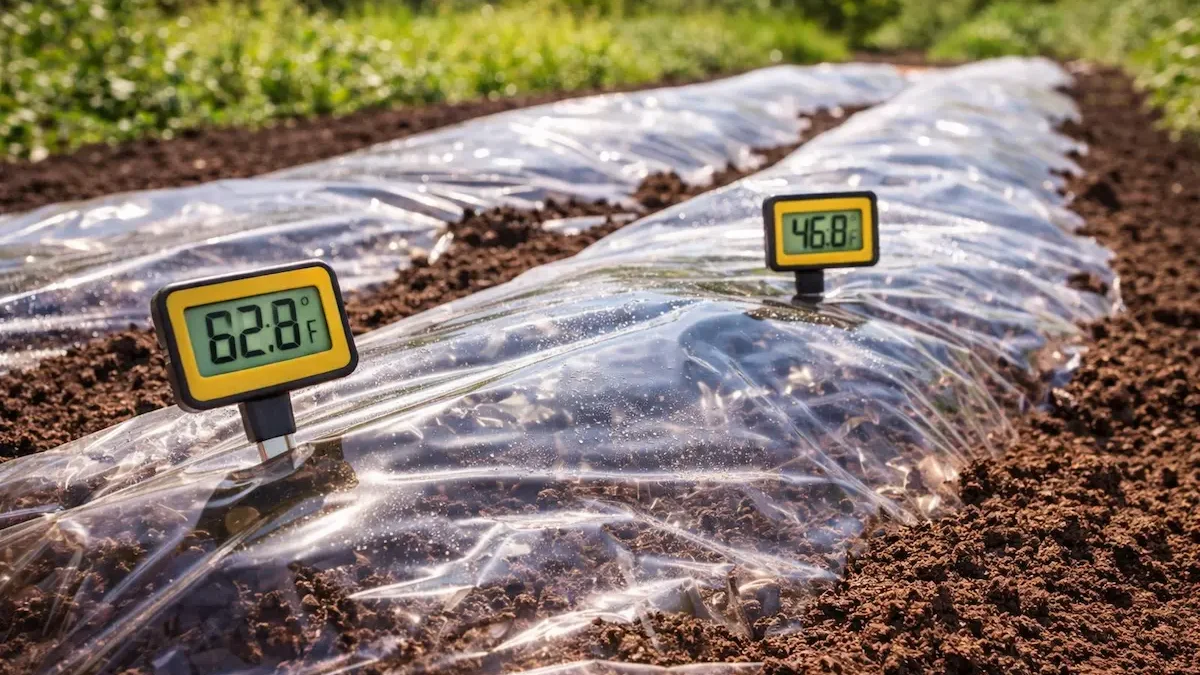
Soil temperatures across USDA Zones 5 through 7 hover between 36°F and 44°F at 2-inch depth through mid-March — below the 45°F minimum for radish germination and well below the 50°F threshold needed for reliable spinach emergence. According to University of Missouri Extension research on plastic mulch systems, clear polyethylene transmits solar radiation directly to the soil surface and traps the resulting heat beneath the film, raising temperatures at 2-inch depth by up to 16°F on a clear day — a gain that black plastic, which absorbs heat on its surface and transfers it by conduction, cannot match in early spring conditions. A bed still sitting at 38°F on March 20 can reach the 50°F spinach threshold within five to seven sunny days under properly applied clear plastic. Leave that same bed uncovered and it will not hit 50°F until the first week of April in most Zone 5 and 6 gardens.
The short answer:
- Lay 2–4 mil clear polyethylene directly on moist, raked soil at least 7–10 days before the target planting date
- Bury or weight all edges — any gap breaks the greenhouse effect and loses 50% of the warming gain
- Remove clear plastic before sowing or the day seeds germinate, whichever comes first; seedlings under clear plastic will overheat above 85°F air temperature
- Black plastic is appropriate for weed suppression through the season, not for pre-season soil warming — it raises temperatures roughly 3–5°F versus clear plastic’s 10–20°F
Why Clear Outperforms Black in Spring
Black plastic absorbs sunlight and warms up, then conducts heat to the soil — but only where the film contacts the soil directly. Loose contact, common on beds with any texture or clods, creates insulating air pockets that block heat transfer. Clear plastic works differently: solar radiation passes through the film and is absorbed by the soil surface itself. The longer-wave heat that radiates back from the warmed soil cannot escape through the plastic — the same principle that drives greenhouse heating. The result is direct, deep soil warming rather than surface conduction.
University of Missouri Extension’s analysis of plastic mulch colors confirms clear polyethylene produces the largest measured soil temperature increase of any mulch color at 2-inch depth. NC State Cooperative Extension observes the same mechanism: clear plastic creates a greenhouse effect beneath the film, while black plastic primarily heats its own surface and transfers that heat only where tight soil contact exists.
The limitation of clear plastic is weed germination. Weed seeds in the top 2 inches receive the same warmth as crop seeds, and most will germinate before the film comes off. This is not a problem for the pre-season warming window — the plastic comes off before planting — but it means clear plastic is not a long-season mulch option. After removal, hoe off germinated weeds, then sow or transplant into the warmed soil immediately.
How to Apply It
Prepare the bed first. Remove any standing crop debris and rake the surface level. Clods prevent film contact and reduce warming. Water thoroughly if the soil is dry — moist soil conducts heat significantly better than dry soil, and moisture under the film creates the humidity that intensifies the warming effect.
Select the right thickness. Use 2–4 mil clear polyethylene. Thinner film (1 mil) tears easily in wind and breaks down within one season outdoors. Thicker film (6 mil) reduces light transmission slightly and costs more without proportional benefit for spring warming. A single 25-by-5-foot roll covers a standard 4-by-20-foot raised bed with overlap for edge burial.
Lay it flat and seal every edge. Pull the film taut across the bed surface with no sag, then bury the edges 3–4 inches into the soil on all four sides, or weight them with bricks spaced no more than 12 inches apart. Any gap allows air circulation that vents the trapped heat. On raised beds in Zones 4–5, secure the edges under the bed frame lip rather than burying them in the soil — the frame height already eliminates most air infiltration from the sides.
Set the timing by zone.
- Zones 4–5: Lay plastic 14 days before target planting date. March soil temperatures typically range from 33°F to 40°F, requiring the longer warming window to reach germination thresholds.
- Zones 6–7: 10 days is usually sufficient. March soil temperatures of 42–48°F start closer to the target range.
- Zone 8: 5–7 days for cool-season crops. Soil is often already above 50°F by early March; plastic primarily maintains temperature and prevents rain compaction before planting.
Verify with a soil thermometer. Check at 2-inch depth in the morning before the day’s solar gain. Peas germinate reliably at 45°F; spinach, lettuce, and arugula at 40–50°F. According to Harvest to Table’s soil temperature guide, at 50°F peas emerge in two weeks; at 60°F only nine days. Carrots need 50°F for reasonable germination speed — below that, germination drops below 50% and seedling emergence time doubles. Check temperature readings on three or four consecutive mornings before declaring the bed ready. A single warm day does not hold overnight in Zones 4–5.
When to Remove It
Remove clear plastic on the day of sowing, before seeds go in. Do not leave it on after sowing. Seeds require consistent soil moisture, and clear plastic in spring sunlight can raise the surface temperature past 130°F on a warm, clear afternoon — well above the point at which seed coat proteins denature and germination fails.
If covering a bed after sowing for frost protection, switch to floating row cover (spunbonded fabric), not clear plastic. Row cover admits air exchange and caps the temperature rise at roughly 4–8°F above ambient, which protects seeds from frost without overheating them during the day.
For gardeners who want to carry clear plastic further into the season — to warm soil for tomato or pepper transplants in May — apply it over already-established transplants only if daytime temperatures will remain below 70°F. Above that threshold, the sub-plastic soil temperature at 2-inch depth can exceed 90°F, which stresses root development. In Zones 6–8 after mid-April, black plastic is the safer long-season option for warm-season crops because it does not generate the same extreme daytime peaks.
What NOT to Do
❌ Using black plastic for pre-season warming — Black plastic raises soil temperature by roughly 3–5°F by conduction, compared to clear plastic’s 10–20°F by direct solar transmission. In early spring, when beds may be 10–12°F below the germination threshold, the difference determines whether the technique works at all within a useful timeframe.
❌ Leaving clear plastic on after germination — Seedlings under clear plastic on a sunny 65°F day experience soil temperatures above 100°F. The stems of newly germinated seedlings are particularly vulnerable to heat necrosis at the soil line. Remove the film the moment cotyledons are visible.
❌ Skipping edge burial on raised beds — Film loosely weighted with rocks at the center still allows air movement at the edges, which vents heat continuously. Consistent soil temperatures throughout the bed require sealed edges, not just anchored center points.
❌ Applying to dry soil — Dry soil has low heat conductivity and low heat retention. A bed with less than 50% field capacity will warm 30–40% more slowly under plastic than a properly moistened bed. Water the night before laying the film.
Next 7 Days / Next 30 Days
This week (March 17–24):
- Check soil temperature at 2-inch depth on three consecutive mornings — note the baseline before plastic goes down
- Rake and level target beds; remove any winter mulch or debris
- Water beds thoroughly the day before laying plastic
- Lay clear plastic and seal all edges; mark the date
By April 14:
- Verify soil temperature has reached 45°F (peas, spinach, radish) or 50°F (carrots, lettuce) at 2-inch depth on three consecutive mornings
- Remove plastic the morning of sowing
- Hoe off germinated weed seedlings immediately before sowing into the cleared bed
- Transplant cool-season seedlings started indoors into the pre-warmed bed (see our spring soil preparation guide)
- Monitor overnight temperatures — if a hard frost (below 28°F) is forecast within 10 days of transplanting, cover beds with row cover fabric, not clear plastic
Related reading: