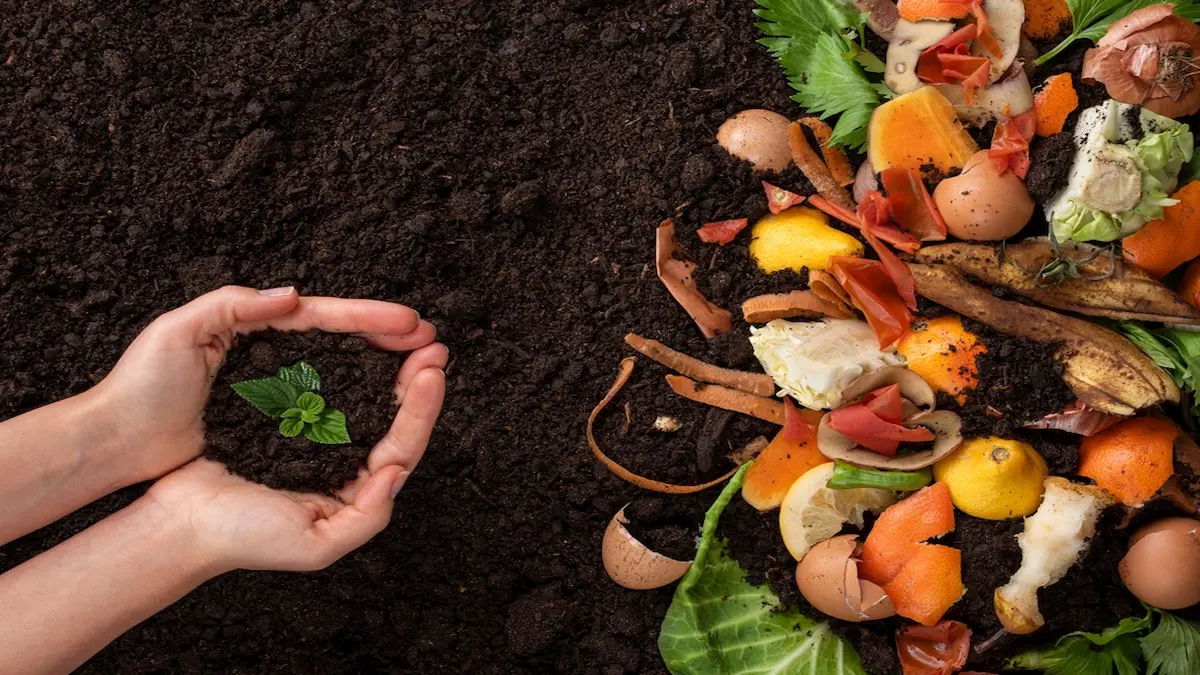
Many households throw away food scraps every day without realizing that these materials can become a valuable resource for the garden. Composting is a simple process that transforms organic waste—such as vegetable peels, coffee grounds, and yard trimmings—into nutrient-rich soil known as compost.
For home gardeners, compost is one of the best natural fertilizers available. It improves soil structure, helps plants grow stronger, and reduces the amount of waste sent to landfills. According to guidance from the U.S. Environmental Protection Agency, composting at home can significantly reduce household waste while benefiting gardens and soil health.
What Composting Is
Composting is a natural process where microorganisms break down organic materials into a dark, soil-like substance rich in nutrients. This process occurs when bacteria, fungi, and other organisms decompose plant matter over time.
The finished compost contains nutrients that help plants grow, including nitrogen, phosphorus, and potassium. It also improves the structure of garden soil by increasing its ability to hold moisture and nutrients.
Gardening experts from the U.S. Department of Agriculture note that compost improves soil fertility and supports beneficial soil organisms that help plants absorb nutrients more efficiently.
Why Composting Is Good for Your Garden
Compost offers several benefits for both plants and soil. One of the most important advantages is improved soil health. When compost is added to garden beds, it enriches the soil with organic matter.
Healthy soil helps plants develop stronger roots and grow more efficiently. Compost also improves water retention, which means soil stays moist longer and requires less frequent watering.
Another benefit is reduced reliance on chemical fertilizers. Compost provides nutrients naturally and releases them slowly, which supports steady plant growth.
According to the Natural Resources Conservation Service, adding organic matter like compost can significantly improve soil structure and reduce erosion.
What Materials Can Be Composted
Successful composting depends on combining the right types of organic materials. These materials are often divided into two categories: green materials and brown materials.
Green materials provide nitrogen, which helps microorganisms break down organic matter. Common green materials include:
- fruit and vegetable scraps
- coffee grounds
- tea leaves
- grass clippings
Brown materials provide carbon and help balance the compost mixture. Examples include:
- dry leaves
- cardboard
- shredded paper
- straw or small branches
A balanced mixture of green and brown materials allows the compost pile to break down efficiently.
What Should Not Go Into Compost
While many organic materials can be composted, some items should be avoided in home compost piles.
These include:
- meat and fish scraps
- dairy products
- oily foods
- pet waste
These materials can attract pests and create unpleasant odors. For most home compost systems, it is best to stick with plant-based materials and yard waste.
The Environmental Protection Agency recommends avoiding these items to maintain a healthy compost pile.
How to Start a Compost Pile
Starting a compost pile is easier than many people expect. It can be done in a backyard, garden corner, or even in a compost bin.
The first step is choosing a location with good drainage and partial shade. Compost piles should be placed directly on soil whenever possible, which allows beneficial organisms like earthworms to enter the pile.
Next, begin layering materials. A common method is to alternate layers of green materials and brown materials.
For example:
- a layer of dry leaves
- a layer of vegetable scraps
- another layer of leaves or cardboard
Keeping the pile slightly moist helps microorganisms break down the materials more effectively.
Turning the Compost
Air is an important part of the composting process. Turning the compost pile occasionally helps introduce oxygen and speeds up decomposition.
Gardeners often turn compost with a shovel or pitchfork every one or two weeks. This mixes the materials and prevents the pile from becoming compacted.
When the compost is active, the pile may become warm as microorganisms break down organic matter.
Over time, the materials gradually transform into dark, crumbly compost that smells like fresh soil.
When Compost Is Ready to Use
Depending on the size of the pile and environmental conditions, compost may take several weeks to several months to fully develop.
Finished compost typically has a dark color and earthy smell. Most original materials should no longer be recognizable.
At this stage, compost can be mixed into garden soil, added to planting holes, or spread on top of garden beds as a natural fertilizer.
Many gardeners apply compost at the beginning of each planting season to improve soil fertility.
The Bottom Line
Composting is one of the easiest ways to turn everyday kitchen waste into a valuable resource for the garden. By recycling organic materials such as vegetable scraps and yard waste, gardeners can create nutrient-rich soil that supports healthy plant growth.
According to the U.S. Environmental Protection Agency, home composting reduces waste, improves soil health, and helps create more sustainable gardens.
For beginner gardeners, starting a compost pile is a simple step that can greatly improve the productivity and health of any garden.