Unsupported peas lose 30–40% of harvestable pods to ground rot and pest damage. Here are three proven support methods, ranked by performance, with setup instructions for March and April planting.
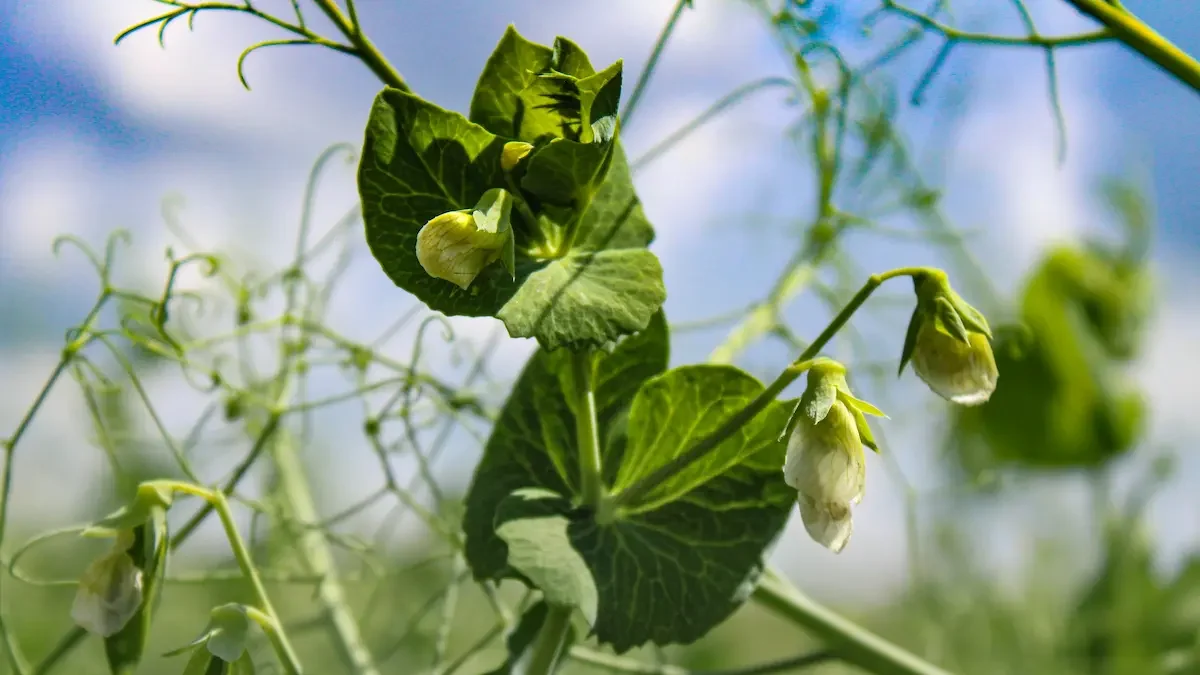
Pea tendrils begin reaching for support within 10–14 days of emergence. Without a structure in place at sowing time, vines collapse under their own weight by the 4-leaf stage, and pods touching wet soil develop gray mold (Botrytis cinerea) within 48 hours of sustained moisture. According to Cornell Cooperative Extension, trellised peas produce 25–40% more harvestable pods than unsupported plants in the same bed.
Quick Answer
Use welded wire mesh (4–6 inch openings) secured to bamboo or metal stakes for any pea variety over 3 feet tall. Install the support before or at sowing, not after. Tendrils damaged during late trellis installation reduce overall pod set.
Three Support Methods, Ranked
1. Welded Wire Mesh on Stakes — Best Overall
Best for: Tall varieties (4–6 ft) like ‘Alderman,’ ‘Blauwschokker,’ and ‘Telephone.’
Materials: One 5-foot section of welded wire mesh (2×4 inch or 4×4 inch openings), three to four bamboo canes or metal T-posts (6 ft), garden wire or zip ties.
Setup:
Cut wire mesh to match the row length. Thread one stake through the mesh at each end, plus one every 3–4 feet along the run. Leave 8–10 inches of bare stake below the mesh bottom — this is the anchor depth pushed into soil. Push stakes in firmly, pulling mesh taut as each stake goes in. Secure mesh to stakes with short lengths of garden wire at top, middle, and bottom attachment points.
Why it works: Welded wire resists wind loads that topple netting-based systems. The rigid grid gives tendrils multiple grip points per vine, distributing weight evenly. Unlike plastic netting, wire mesh does not entangle wild birds — a meaningful advantage in gardens near hedgerows or woodland edges.
Wind rating: Withstands sustained 35+ mph gusts when stakes are set 8–10 inches deep.
2. Pea Sticks (Brushwood) — Best for Short Varieties
Best for: Dwarf and semi-dwarf peas (18–36 inches) like ‘Little Marvel,’ ‘Green Arrow,’ and ‘Kelvedon Wonder.’
Materials: Branching hardwood prunings (hazel, birch, or maple), 3–4 feet tall, pushed 4–6 inches into soil every 8–12 inches along the row.
Setup:
Collect well-branched sticks from winter pruning. Strip any remaining leaves. Push sticks firmly into soil on one or both sides of the row immediately after sowing. Angle sticks slightly inward so branches interlock, forming a continuous brushwood wall.
Why it works: Dense branching provides hundreds of micro-grip points for small tendrils. Free material if pruning is done in winter. Decomposes into mulch at season end.
Limitation: Cannot support varieties over 3 feet or heavy-podded cultivars without supplemental staking. Collapses in winds above 25 mph.
3. String or Netting Trellis — Budget Option
Best for: Gardeners working with limited materials. Suitable for medium varieties (3–4 ft).
Materials: Two end stakes (sturdy — T-posts or thick bamboo), garden twine or pea netting, horizontal support string at 12-inch intervals.
Setup:
Drive end stakes 10–12 inches deep. Tie a horizontal string at 12, 24, 36, and 48 inches from ground level. Weave vertical strings every 6–8 inches between horizontals. Alternatively, attach pea netting between end stakes and pull taut.
Limitation: Netting sags under heavy crops. Plastic netting traps birds — use jute or cotton netting where wildlife is present. Netting tangles during removal, making it a single-season material in most cases.
What Not to Do
Do not wait until vines are 6+ inches tall to install support. Pea tendrils harden within hours of contact with a surface. Handling established vines to thread them onto a late trellis breaks tendrils and tears developing flowers. Install support at sowing or within 5 days of emergence.
Do not use single unsupported stakes. A lone bamboo cane with string wrapped around it cannot distribute the wind load of a full pea row. The first strong spring storm pulls the entire structure out of the ground.
Do not use chicken wire with openings smaller than 2 inches. Harvesting through tight mesh is slow and damages vines. Pods hidden behind small-gauge wire go unpicked, reducing the plant’s signal to keep producing.
Installation Checklist — Before or At Sowing
- Day of sowing: Cut mesh or gather sticks to match row length
- Day of sowing: Drive stakes 8–10 inches into soil at each end and every 3–4 ft
- Day of sowing: Attach mesh and pull taut; secure at 3 points per stake
- Day 7–10 after emergence: Check that first tendrils are contacting support; redirect any strays by hand
- Day 21: Inspect base of trellis for wind loosening; re-firm stakes if soil has settled after rain
- Ongoing: Harvest peas every 2–3 days once pods reach full size to keep plants producing
- End of season: Remove wire mesh, roll for storage; add spent pea vines to compost
Zone-Specific Timing
| USDA Zone | Sow Peas | Install Support |
|---|---|---|
| Zone 4 | Late April–early May | Same day as sowing |
| Zone 5 | Mid-April | Same day as sowing |
| Zone 6 | Late March–early April | Same day as sowing |
| Zone 7 | Early–mid March | Same day as sowing |
| Zone 8 | Late February–early March | Same day as sowing |
Soil temperature at sowing depth (1–2 inches) should read at least 40°F (4°C). Peas germinate fastest at 60–75°F (15–24°C) soil temperature but tolerate cooler conditions. Check soil temperature this week before direct sowing to confirm readiness.