
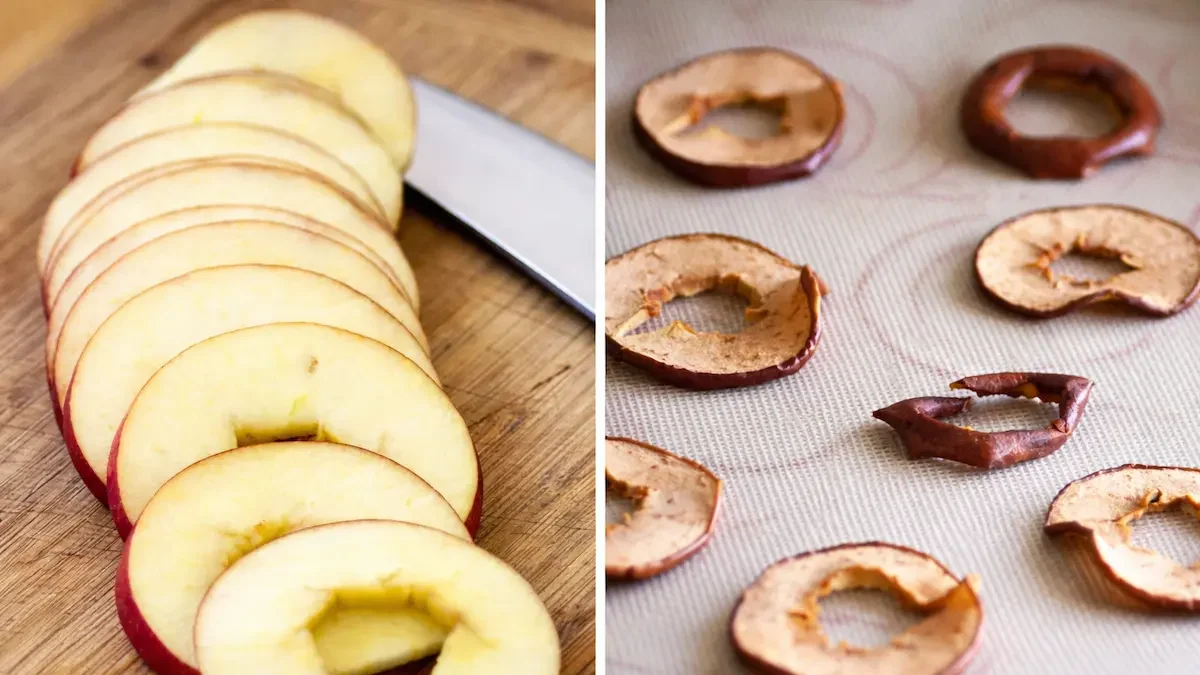
A dedicated food dehydrator does one thing well. An oven, an air fryer with temperature control, or several days of dry summer weather can do the same thing using equipment you already own. The method changes; the principle does not — remove moisture slowly at low heat, and the vegetable stores for months.
Quick Answer
The temperature range that works: 50–60°C (125–135°F) for most vegetables. Below this, drying takes too long and bacteria can grow in the moist interior. Above 70°C (160°F), you are cooking the vegetable rather than drying it — the outside sets before the interior is dry, trapping moisture inside.
The doneness test: a correctly dehydrated vegetable is leathery, brittle, or crisp depending on the crop — no soft or moist patches remain. Snap a piece in two: if it bends rather than snaps, it needs more time. Cool a piece to room temperature before testing — warm food always feels drier than it is.
Blanching first: NCHFP recommends blanching most vegetables for 2–5 minutes in boiling water before dehydrating. It destroys enzymes that continue to degrade colour, texture, and flavour during storage and shortens drying time. Tomatoes, peppers, onions, and garlic are the main exceptions — they do not require blanching.
According to the National Center for Home Food Preservation’s vegetable drying guide, drying is one of the oldest methods of food preservation. The goal is to reduce moisture content to the point where bacteria, yeasts, and moulds cannot grow — typically below 10 percent water content for vegetables. The safe temperature window for doing this is 50–60°C (125–135°F). This range is low enough to preserve colour and nutrients but high enough to remove moisture efficiently without leaving pockets of dampness inside that lead to mould during storage.
Three Methods — Which to Use
| Method | Temperature | Time | Best For | Key Requirement |
|---|---|---|---|---|
| Oven (lowest setting) | 50–65°C (120–150°F) — check with thermometer | 4–12 hours depending on vegetable | All vegetables; large batches | Door propped ajar 5–10cm to allow moisture to escape; fan-assisted mode if available |
| Air fryer | Must reach 50–65°C; many models start at 80°C — check specs | 2–6 hours for most vegetables | Small batches; courgettes, tomatoes, kale chips, peppers | Model must have temperature control low enough; single layer only; check and rotate every hour |
| Sun drying | Ambient (above 35°C / 95°F ideally) | 2–4 days | Tomatoes, peppers, herbs in dry sunny spells | UK weather unreliable; requires mesh cover against insects; bring in before evening dew |
Preparation — The Step That Determines the Result
Uniform slicing is the single most important preparation step. Pieces of unequal thickness dry at different rates — the thin ones over-dry and become brittle before the thick ones have finished. NCHFP recommends slicing vegetables to 6mm (¼ inch) thickness as a standard. Blanch most vegetables in boiling water for 2–5 minutes, then plunge into ice water to stop cooking — this halts enzyme activity that would otherwise degrade colour and flavour during storage. Spread pieces in a single layer with no overlapping. Overlapping prevents airflow and produces damp patches that develop mould in storage.
Times and Temperatures by Crop
| Vegetable | Preparation | Blanch? | Oven Time at 55°C | Done When |
|---|---|---|---|---|
| Courgettes | Slice 6mm rounds | No | 8–11 hours | Leathery to crisp; no moist patches |
| Tomatoes | Halve or slice 6mm; remove seeds | No | 6–10 hours | Leathery, pliable; slightly sticky but not wet |
| Peppers | Remove seeds; slice 6mm strips | No | 4–8 hours | Leathery to brittle depending on variety |
| Kale / chard | Remove thick stems; tear into pieces | No | 4–6 hours | Crisp and crumbly; zero flexibility |
| Carrots | Slice 3mm rounds or shred | Yes — 3 min | 6–8 hours | Leathery or brittle; no soft centre |
| Beetroot | Cook fully, peel, slice 6mm | Fully cooked first | 4–6 hours | Brittle, dark chips; no give when bent |
| Onions / garlic | Slice 3mm rings or chop finely | No | 6–8 hours | Crisp, brittle; snaps cleanly |
What to Do
- Check your oven temperature with a thermometer before starting— most ovens run 10–20°C hotter than indicated at low settings; you need to know the actual temperature, not the dial setting
- Prop the oven door open 5–10cm— this allows moisture vapour to escape; without an opening, the oven fills with steam and vegetables steam rather than dry
- Blanch root vegetables and brassicas before drying— NCHFP is explicit: enzyme activity continues during storage in unblanched vegetables, degrading colour and flavour even after drying is complete
- Cool completely before testing for doneness— warm pieces always feel softer and more pliable than cold ones; cool to room temperature before deciding whether more drying time is needed
- Store in airtight glass containers in a dark, cool place— correctly dehydrated vegetables stored this way last 6–12 months; exposure to light or moisture reduces shelf life significantly
Common Mistakes
- Not propping the oven door open— steam cannot escape a sealed oven; the vegetables will cook unevenly and remain damp in the centre regardless of time
- Testing doneness while warm— this is the most reliable route to under-dried vegetables that mould in storage; always cool before testing
- Overlapping pieces on the tray— any overlap creates a contact point where moisture is trapped; pieces must be in a single layer with visible gaps between them
- Storing before fully cool— residual warmth in a sealed jar creates condensation inside; let dehydrated vegetables cool completely — at least 30 minutes — before sealing
Before You Start
- Check oven temperature with a thermometer
- Slice all pieces to even 6mm thickness
- Blanch root veg and brassicas 2–5 min first
- Lay in a single layer — no overlapping
After Drying
- Cool completely before testing — 30+ minutes
- Snap test: should break, not bend
- Store in airtight glass, away from light
- Use within 6–12 months for best quality