
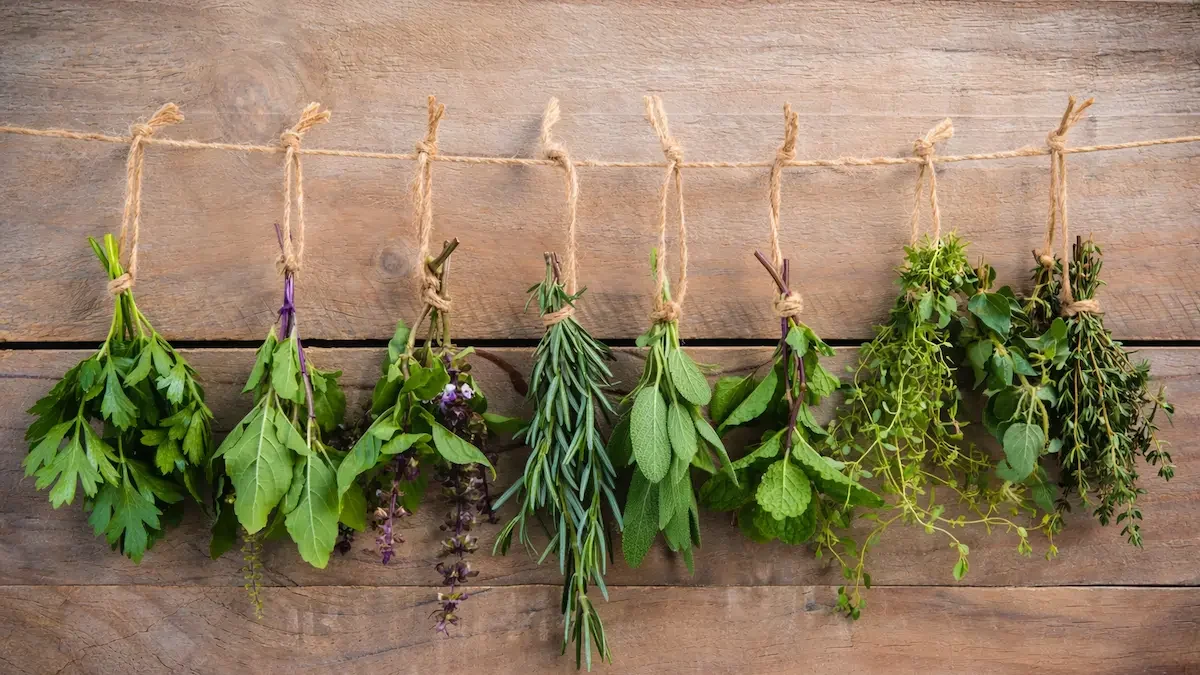
The flavour in herbs comes from volatile oils stored in the plant’s trichomes — tiny glands on the leaf surface. Heat drives those oils off before the moisture leaves. Keep the temperature below 38°C (100°F) and the oils stay. Exceed it and you dry the plant while losing most of what you were trying to preserve.
Quick Answer
The temperature limit: keep drying temperature below 38°C (100°F). Above this the volatile essential oils that give herbs their flavour and aroma evaporate before drying is complete. Most home ovens at their lowest setting run too hot for herb drying — check with a thermometer before using one.
Best time to harvest: in the morning, after the dew has dried but before the heat of the day drives off volatile oils. Pick just before the plant flowers — this is when oil content is highest in most culinary herbs. Flowers trigger the plant to redistribute resources away from the leaves.
Dried herbs are 3 to 4 times more potent than fresh. When substituting in a recipe calling for fresh, use one quarter to one third of the fresh amount specified. Store in airtight glass containers, away from light and heat, for up to one year.
According to the National Center for Home Food Preservation, the easiest method of preserving herbs is drying — exposing leaves, flowers, or seeds to warm, dry air until moisture evaporates. Oregon State University Extension is explicit on the key constraint: keep the temperature below 100°F (38°C). High temperatures cause flavour loss because the essential oils responsible for flavour volatilise — they leave the plant as vapour before the water does. Sun drying is not recommended for the same reason: direct solar radiation raises leaf surface temperatures well above safe thresholds, bleaching colour and driving off aroma.
Two Categories of Herb — and Why They Need Different Approaches
NCHFP distinguishes two herb types for drying. Less tender herbs — rosemary, sage, thyme, summer savory, and parsley — have lower moisture content and dry well as tied bundles hung in a warm, airy, shaded space. Tender-leaf herbs — basil, oregano, tarragon, lemon balm, and mints — have high moisture content and will mould if not dried quickly. Hanging these inside paper bags with holes torn in the sides for airflow prevents mould while collecting fallen leaves. Never dry large bundles of tender herbs — the interior stays moist too long and mould develops before the outside is dry.
Method by Method — What Each Approach Offers
| Method | Best For | Temperature | Time | Notes |
|---|---|---|---|---|
| Air drying (bundles) | Rosemary, thyme, sage, parsley — sturdy low-moisture herbs | Ambient — shade only | 5–10 days | Hang in small bundles of 5–6 stems; good airflow essential; not outdoors in damp UK summers |
| Paper bag method | Basil, mint, oregano, lemon balm — high-moisture tender herbs | Ambient | 5–10 days | Small bundles inside bag with holes; catches fallen leaves; prevents mould on tender herbs |
| Food dehydrator | All herbs — especially tender ones in humid conditions | 32–38°C (90–100°F) | 1–4 hours | OSU Extension: best quality result; temperature control is the key advantage |
| Oven (lowest setting) | Sturdy herbs only — if oven goes low enough | Must stay below 38°C (100°F) | Overnight with door ajar | Check with thermometer first; most ovens are too hot; oven light alone may be sufficient |
| Microwave | Small quantities only — 1–2 cups maximum | Short bursts | 1–6 minutes | OSU: stir every 30 seconds after first minute; finish air-drying at room temperature; useful for parsley, chives, celery leaves |
Storage — Where Most Flavour Is Lost After Drying
Drying well and storing poorly produces the same result as drying badly. OSU Extension and NCHFP both specify airtight containers in a cool, dry, dark location. Light accelerates oxidation of the volatile oils responsible for flavour. Do not crush or grind before storage — whole leaves retain flavour far longer because grinding breaks the trichomes protecting the oils. Crumble immediately before use instead. Correctly stored dried herbs last up to one year; after that, flavour diminishes noticeably.
What to Do
- Harvest in the morning, just before the plant flowers— oil content is highest at this point; NCHFP specifies the bursting bud stage as the optimum harvest window for most herbs
- Keep drying temperature below 38°C (100°F) without exception— use a dehydrator with a thermostat, or air-dry in a shaded, airy space; do not use a hot oven or direct sun
- Dry tender herbs (basil, mint, oregano) in small bundles inside paper bags— the bag catches fallen leaves and allows airflow without exposing the herbs to humidity or light
- Store in airtight glass containers, away from light— dark glass or a cupboard away from the hob; keep whole and crumble as needed rather than pre-grinding
- Use one quarter of the fresh amount when substituting dried for fresh— dried herbs are 3 to 4 times more concentrated; adding the same volume as fresh will over-season the dish
Common Mistakes
- Sun drying— direct solar radiation drives off essential oils and bleaches colour; shade drying always produces a better result than sun drying
- Drying large bundles of tender herbs— the interior of a large bundle stays moist and mould develops before the outside dries; keep bundles to 5–6 stems maximum for tender herbs
- Grinding before storage— broken trichomes release and then rapidly oxidise the oils that carry flavour; grind or crumble only immediately before use
- Storing in transparent containers near the hob— light and heat are the fastest routes to flavour loss in stored dried herbs; opaque or dark containers in a cool cupboard extend shelf life significantly
At Harvest
- Pick in the morning after dew dries — before flowering
- Rinse in cool water; shake gently; discard bruised leaves
- Sturdy herbs: hang bundles in shade with good airflow
- Tender herbs: use paper bag method or dehydrator
When Fully Dry
- Test: leaves crumble easily; stems snap cleanly
- Store whole in airtight dark glass containers
- Label with herb name and date
- Use within one year; grind only just before use