
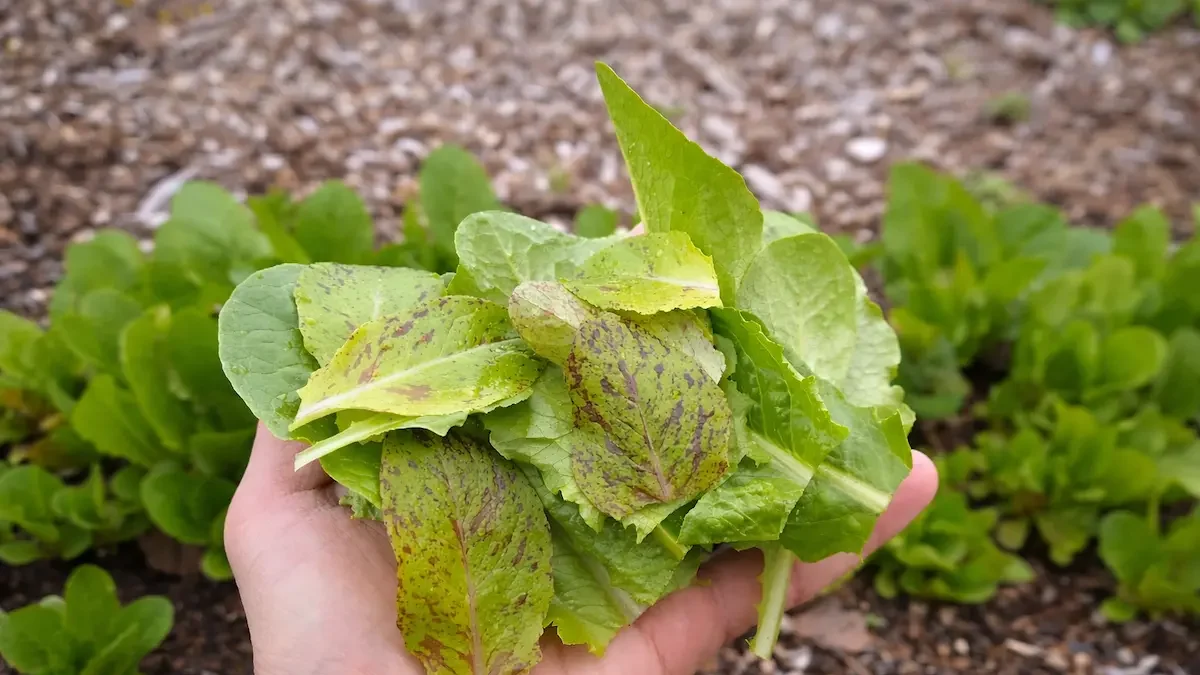
A single small bed of mixed salad leaves, harvested correctly and resown every two weeks, can supply fresh leaves from March to November without any gaps. The system takes ten minutes to set up and ten minutes to maintain. The common failure is treating it as a one-off planting rather than a running system.
Quick Answer
How to harvest correctly: cut 3–4cm above the crown of the plant — not at soil level, and not by pulling individual leaves. Leave the growing point intact. University of Maryland Extension notes that plants cut at 6–10 inches tall will regrow and be ready to cut again in 2–3 weeks, provided they are watered and lightly fed after cutting.
The succession rule: sow a new tray or row every two weeks from March to late August. When you take the first cut from one tray, sow the next. RHS advises sowing small batches every two weeks to ensure the longest, steadiest supply of young leaves throughout the season.
The summer gap and how to avoid it: most lettuce bolts in July–August heat. Sow heat-tolerant varieties (Little Gem, Flashy Trout’s Back) in shadier spots in June, and switch to chard, endive, and Asian leaves which tolerate heat better than lettuce.
According to University of Maryland Extension’s lettuce guide, cut-and-come-again harvesting works by cutting the entire planting right above ground level with sharp scissors, leaving the growing crown intact. The plant regrows within 2–3 weeks when watered and lightly fertilised after cutting. Each sowing typically gives 3–4 cuts before the plants exhaust themselves, turn bitter, or bolt. The key to keeping the system running is not growing better plants — it is sowing the next batch before the current one finishes.
Best Crops for Cut-and-Come-Again
| Crop | Season | Notes |
|---|---|---|
| Loose-leaf lettuce | March–June; Sept–Nov | Best spring and autumn performer; bolts in July heat — choose bolt-resistant varieties for summer |
| Rocket (arugula) | March–Oct | Fast — ready in 4 weeks; bolts in heat but regrows quickly; sow regularly for continuous supply |
| Spinach | March–May; Sept–Nov | Cool-season only; bolts rapidly in warm weather; excellent spring and autumn cut-and-come-again |
| Swiss chard / rainbow chard | April–Nov | One of the most heat-tolerant cut-and-come-again crops; keeps producing through summer when lettuce fails |
| Mizuna, mustard, pak choi | July–Oct (RHS advises mid-summer onwards) | Oriental leaves bolt if sown in spring; best from July for autumn and winter harvests |
| Kale (baby leaves) | April–Nov | Sow densely and cut as baby leaves; tougher than lettuce but productive and cold-hardy |
The Succession Sowing System
The simplest approach is to keep two or three containers or rows at different stages at all times. Sow the first in early March under fleece. When it reaches harvest size (4–6 weeks later), cut it and immediately sow the second. When the second is cut, sow the third — and by then the first has regrown for a second cut. This rolling system means there is always something to harvest and always something growing on. The interval between sowings shortens in warm weather — what takes three weeks in April takes ten days in June — so as the season progresses, sow more frequently rather than waiting the same fixed interval.
What to Do
- Sow every two weeks from March to late August— this single habit produces a continuous supply without gaps; stop sowing in September and the season ends by October
- Cut 3–4cm above the crown, never at soil level— removing the growing point kills the plant; leaving it means regrowth in 2–3 weeks
- Water and feed lightly immediately after cutting— UMD Extension is specific: plants that are not watered after cutting regrow slowly or not at all; a dilute liquid feed accelerates regrowth
- Switch to chard and Asian leaves for July and August— these tolerate heat better than lettuce; sow mizuna, mustard, and pak choi from mid-July for autumn leaves
- Harvest in the morning— RHS notes that leaves are at their freshest and most moisture-rich in the morning; harvesting then extends shelf life if storing in the fridge
Common Mistakes
- Cutting at soil level— removing the crown kills the plant; the cut should leave 3–4cm of stem with the growing point intact
- Sowing one large batch and expecting it to last the season— a single sowing gives 3–4 cuts before the plants bolt or exhaust themselves; succession sowing is the whole system
- Sowing oriental leaves (mizuna, pak choi) in spring— RHS is explicit that earlier sowings of these crops tend to produce flowers rather than leaves; wait until mid-summer
Start Now
- Sow first tray of loose-leaf mix under fleece — March
- Broadcast seed thinly; cover with 5mm compost
- Mark date — first cut ready in 4–6 weeks
- Set a reminder to sow the second tray in 2 weeks
Keep It Running
- Sow every 2 weeks — shorten to 10 days in summer
- Water and feed after every cut
- Switch to chard and Asian leaves in July
- Final sowing late August for November harvest