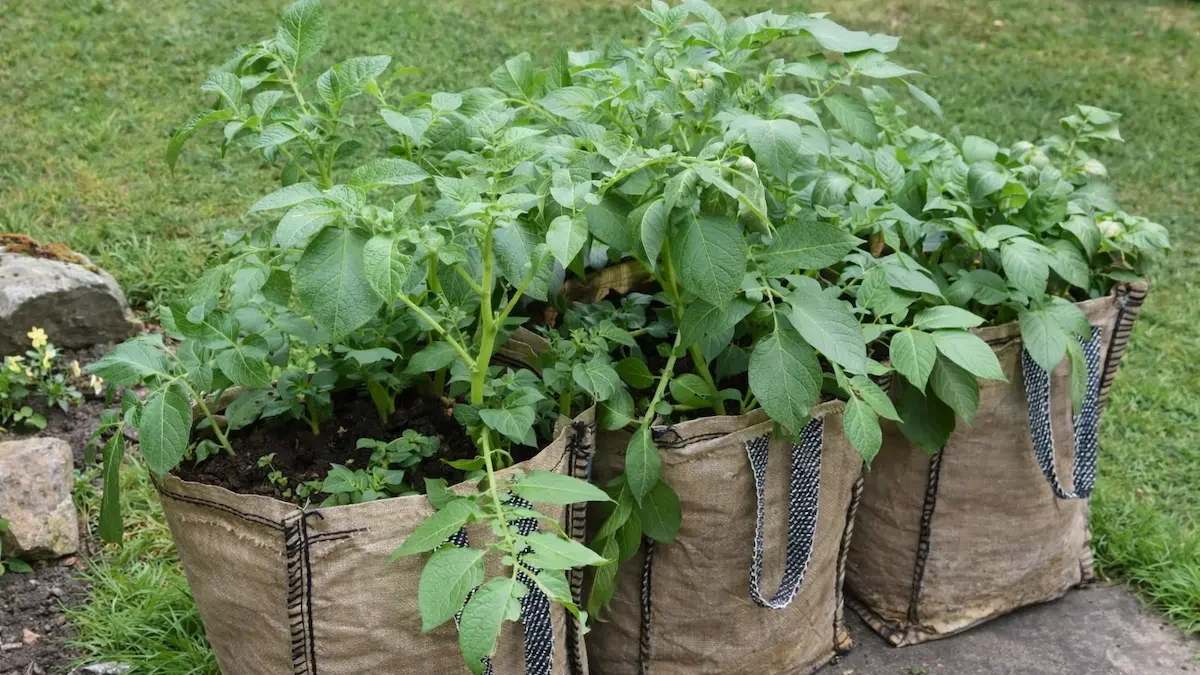
Growing potatoes in bags or containers is one of the simplest ways to produce a high-yield crop in a small space. It removes many of the common problems associated with traditional in-ground growing — poor soil, pests, and limited space — while making harvesting significantly easier.
What makes this method especially effective is control. You control the soil, the moisture, and the growing conditions from start to finish. Done properly, container-grown potatoes can match — and often exceed — the productivity of open-ground planting on a square metre basis.
Why Containers Work So Well
Potatoes grow by forming tubers along buried stems. In open ground, this limits how much vertical space you can use. In containers, you can build that space upward, encouraging more tuber formation as the plant grows.
This is why container growing often produces surprisingly good yields. Instead of a single layer of potatoes, you create multiple layers over time.
According to University of Minnesota potato growing guide, potatoes require loose, well-drained soil to develop properly — something containers provide consistently.
Choosing the Right Container
The container matters more than most beginners realise. Size, drainage, and material all affect results.
You don’t need anything expensive. Common options include:
- Fabric grow bags
- Old compost bags
- Buckets or bins with holes drilled
- Wooden boxes or crates
The key requirement is depth. A container should be at least 30–40 cm deep to allow proper layering. Drainage is equally important — waterlogged soil leads to rot quickly.
Fabric bags are often preferred because they allow better airflow and reduce the risk of overwatering.
Soil Mix: The Foundation of Yield
Potatoes are heavy feeders, but they also dislike compacted soil. The ideal mix is loose, fertile, and well-draining.
A reliable mix includes:
- Compost (for nutrients)
- General-purpose soil or garden soil
- A small amount of sand or perlite for drainage
Avoid dense, clay-heavy soil. Tubers need space to expand, and compact soil restricts growth.
Planting: Start Low, Build Up
The key technique in container growing is layering.
Start by adding about 10–15 cm of soil to the bottom of the container. Place your seed potatoes on top, spaced slightly apart, then cover them with another layer of soil.
As the plants grow and reach about 15–20 cm in height, add more soil around the stems, leaving the top leaves exposed. This process — often called “earthing up” — is repeated several times as the plant grows.
Each time you add soil, the plant produces more tubers along the buried stem.
Watering: Consistency Over Quantity
Watering is where most container growers go wrong. Containers dry out faster than open ground, but overwatering is just as damaging.
The goal is consistent moisture, not saturation.
- Soil should feel damp, not wet
- Allow slight drying between watering
- Increase frequency during hot weather
Irregular watering can lead to problems like cracked or misshapen potatoes.
Feeding: Don’t Overdo Nitrogen
Potatoes need nutrients, but balance matters.
Too much nitrogen encourages leafy growth at the expense of tubers. Instead, use a balanced fertiliser or compost-rich soil from the start.
If feeding during the season, use a low-nitrogen fertiliser once plants are established.
Light and Positioning
Potatoes need full sun to perform well. Containers should be placed where they receive at least 6–8 hours of direct sunlight daily.
Because containers are mobile, you can adjust placement throughout the season — one of the advantages over in-ground growing.
When to Harvest
Timing depends on the type of potato.
Early potatoes can be harvested when plants begin to flower. These produce smaller, tender tubers ideal for fresh use.
Maincrop potatoes are left until the foliage dies back. This allows the skins to toughen, making them suitable for storage.
One of the biggest advantages of container growing is harvesting — simply tip the container out and collect the potatoes without digging.
Common Mistakes
One of the most common issues is using containers that are too small. Limited space restricts yield more than anything else.
Another frequent mistake is inconsistent watering. Containers amplify both drought stress and overwatering.
Planting too many seed potatoes in one container is also a problem. Overcrowding leads to competition and smaller yields.
Finally, skipping the layering process reduces production significantly. The entire advantage of container growing comes from building soil upward.
A Smarter Way to Think About It
Growing potatoes in containers is not just a workaround for limited space — it is often a more efficient system.
You eliminate many variables:
- Soil quality is controlled
- Pests are reduced
- Harvesting is easier
- Space is used vertically
This makes it ideal for smallholdings, gardens, or even patios.
Long-Term Perspective
Once you refine the process — container size, soil mix, watering — results become highly consistent. Many growers find they can rely on container potatoes year after year with minimal variation.
It’s also scalable. You can start with one or two bags and expand as needed, without changing the system.
In a small-scale setup, this kind of reliability is often more valuable than maximum yield. Container-grown potatoes offer both — steady production and efficient use of space.
Если хочешь, могу сделать следующую статью в таком же стиле — например: how to grow carrots in containers или mistakes when growing potatoes.