
Vine weevil is one of the most destructive pests in container gardening, and the problem is that most of the damage happens out of sight. By the time plants start collapsing, the roots are often already gone. Early identification is the difference between saving your plants and losing entire containers seemingly overnight.
Understanding how this pest behaves — and what to look for before serious damage occurs — is the key to staying ahead of it.
The Real Problem Isn’t the Adult — It’s the Larvae
Most gardeners first notice vine weevil when they see notched leaves. While this is a clear sign, it’s not what actually kills plants.
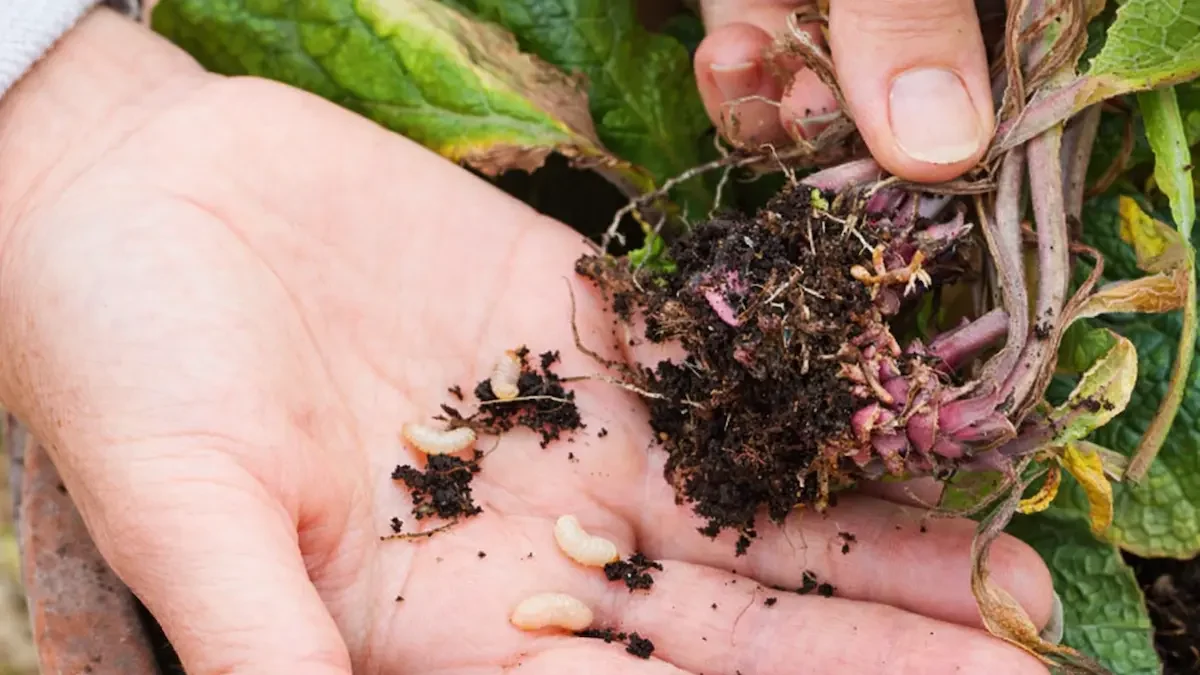
The real damage is done underground by larvae. These small, creamy-white grubs live in the soil and feed on roots continuously. In pots and containers, where root space is limited, even a small number of larvae can completely destroy a plant.
According to Royal Horticultural Society vine weevil guide, larvae are responsible for the most severe damage, particularly in container-grown plants.
The First Visible Sign: Notched Leaves
Adult vine weevils feed at night, creating distinctive damage along the edges of leaves.
Instead of random holes, you’ll see:
- Clean, scalloped notches along leaf margins
- Repeated patterns on multiple leaves
- Damage that appears suddenly over a few nights
This feeding rarely kills plants, but it is an early warning sign that adults are present — and laying eggs.
If you see this, assume larvae are already in the soil or will be soon.
Sudden Wilting — The Critical Warning
The most alarming symptom is sudden collapse.
A plant that looked healthy the day before may:
- Wilt rapidly despite moist soil
- Stop growing altogether
- Pull out of the soil easily with little root resistance
This usually means the root system has already been heavily damaged or destroyed.
At this stage, recovery is unlikely unless action is taken immediately.
Check the Soil — The Only Way to Confirm
Because larvae live underground, the only reliable way to confirm an infestation is to inspect the soil directly.
Gently tip the plant out of its container and look for:
- Small white grubs curled into a “C” shape
- Brown heads with soft, pale bodies
- Larvae clustered near the root zone
Even a few larvae in a pot can be enough to cause serious damage.
Why Pots Are at Higher Risk
Vine weevil is particularly dangerous in containers for one simple reason: confinement.
In open ground, plants can often tolerate some root damage. In pots:
- Root systems are limited
- Larvae are concentrated in a small volume
- Damage happens faster and more completely
This is why container-grown plants — especially ornamentals and soft fruit — are often the first to be affected.
When Vine Weevil Is Most Active
Understanding timing helps with early detection.
Adult weevils are most active from late spring through summer, when they feed and lay eggs. Larvae then develop through late summer and autumn, continuing to feed into winter.
This means:
- Leaf damage appears first (early warning)
- Root damage follows weeks later (serious stage)
By the time plants collapse, the infestation has been active for some time.
What to Do If You Spot Early Signs
If you notice leaf notching but plants are still healthy, act immediately.
Remove the plant from its pot and inspect the roots. If larvae are present, remove them manually and replace the compost.
Fresh compost breaks the cycle and removes the majority of the population.
For ongoing protection, biological controls such as nematodes are widely recommended. These microscopic organisms target larvae in the soil without harming plants.
The RHS biological control advice highlights nematodes as one of the most effective treatments for vine weevil in containers.
Prevention Is More Reliable Than Cure
Once larvae are well established, saving plants becomes difficult. Prevention is far more effective.
Key preventative strategies include:
- Avoid reusing contaminated compost
- Inspect new plants before introducing them
- Use biological controls during active periods
- Keep an eye out for early leaf damage
Even a simple habit — regularly checking leaves — can prevent major losses.
A Different Way to Think About the Problem
Vine weevil is not a sudden problem — it is a delayed one.
By the time plants show serious symptoms, the cause has already been present for weeks. The goal is not to react to damage, but to recognise the early signals.
Leaf notching is not cosmetic damage. It is a warning.
Long-Term Perspective
Once you learn to recognise vine weevil early, it becomes much easier to manage. Most experienced growers rarely lose plants because they act at the first signs, not the last.
In container gardening especially, vigilance matters more than treatment. A quick inspection at the right time can save weeks or months of growth.
The difference between a healthy container garden and repeated losses often comes down to this one skill: noticing the problem before it becomes visible in the soil.