
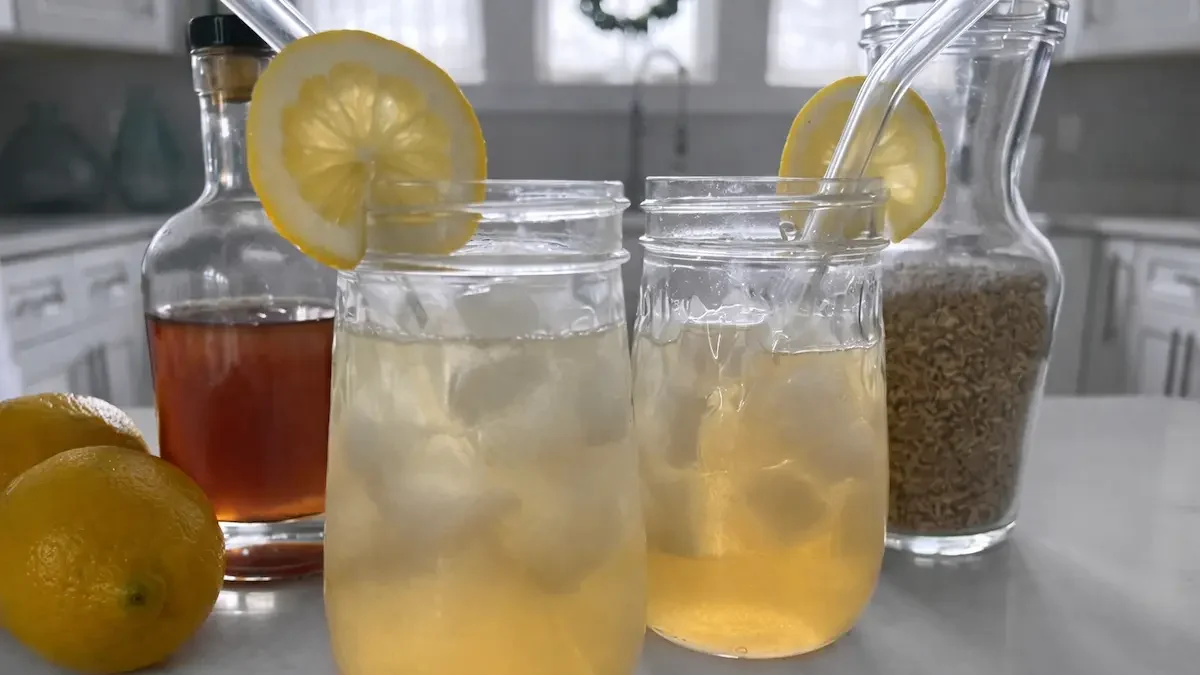
Elder is one of those rare plants that gives you two completely different harvests in a single season. In early summer, the flowers produce a light, aromatic cordial that tastes like bottled sunlight. A few months later, the same plant offers dark berries that turn into a deep, rich syrup built for storage and winter use.
The methods are simple, but the approach is different. Elderflower is about preserving something fragile, while elderberry is about extracting and stabilising something strong. As explained in River Cottage’s elderflower guide, handling the flowers gently is what keeps their delicate aroma intact.
Elderflower Cordial — Capturing the Short Season
The key with elderflowers is timing. You want them fully open, strongly scented, and freshly picked. If you harvest too early, the flavour is weak. Too late, and the scent fades quickly into something flat.
Always pick on a dry day, because rain washes away the pollen — and that’s where most of the flavour lives. Use the flowers the same day. Letting them sit even overnight noticeably reduces quality.
The process itself is simple. A warm sugar syrup is poured over the flowers along with sliced lemons, then left to infuse. During this time, the liquid slowly pulls out the floral oils and aroma. There’s no need for heat — in fact, heat damages the flavour you’re trying to preserve.
After 24–48 hours, strain carefully through cloth or a fine sieve. What you end up with is a pale, fragrant cordial that tastes far cleaner and brighter than anything shop-bought.
Elderberry Syrup — Turning Fruit Into Something Stable
Elderberries require a completely different approach. They are heavier, denser, and must always be cooked before use. According to NHS guidance on elderberries, raw berries can cause stomach upset if eaten in quantity, so proper cooking is essential.
Once fully ripe — deep purple and soft — the berries should be removed from their stems and gently simmered. As they heat, they break down and release a dark, concentrated juice.
This is where flavour develops. Unlike elderflowers, which lose character with heat, elderberries need it. The simmering process transforms them into something smoother, richer, and far more usable.
After cooking, strain the liquid and add sugar while it’s still warm. This not only balances the flavour but also preserves the syrup. The result is thick, deep in colour, and stores well for months.
The Real Difference Between the Two
Elderflower cordial is about capturing something fleeting. It depends on freshness, gentle handling, and restraint. Even small mistakes — too much heat, too much time — can flatten the flavour.
Elderberry syrup works the opposite way. It improves with cooking and reduction. Without enough heat, it never develops properly.
One is about preserving a moment. The other is about building something that lasts.
Where Most People Go Wrong
With elderflower, the most common mistake is overprocessing. People leave the flowers too long, use poor-quality blooms, or try to speed things up with heat. That’s how the flavour becomes dull or slightly bitter.
With elderberries, the issue is usually underprocessing. Not cooking long enough, adding too much water, or leaving stems in the mix all lead to a weak or unpleasant result.
In both cases, success comes down to understanding what each ingredient needs.
Why It’s Worth Doing
Elder fits naturally into the rhythm of the growing season. You harvest twice from the same plant, but for completely different purposes.
In early summer, you get something light, fresh, and immediate. By autumn, you’re producing something dense, long-lasting, and practical.
Few crops offer that kind of range for so little effort, which is why once people start using elder, it tends to become a permanent part of how they preserve food.