
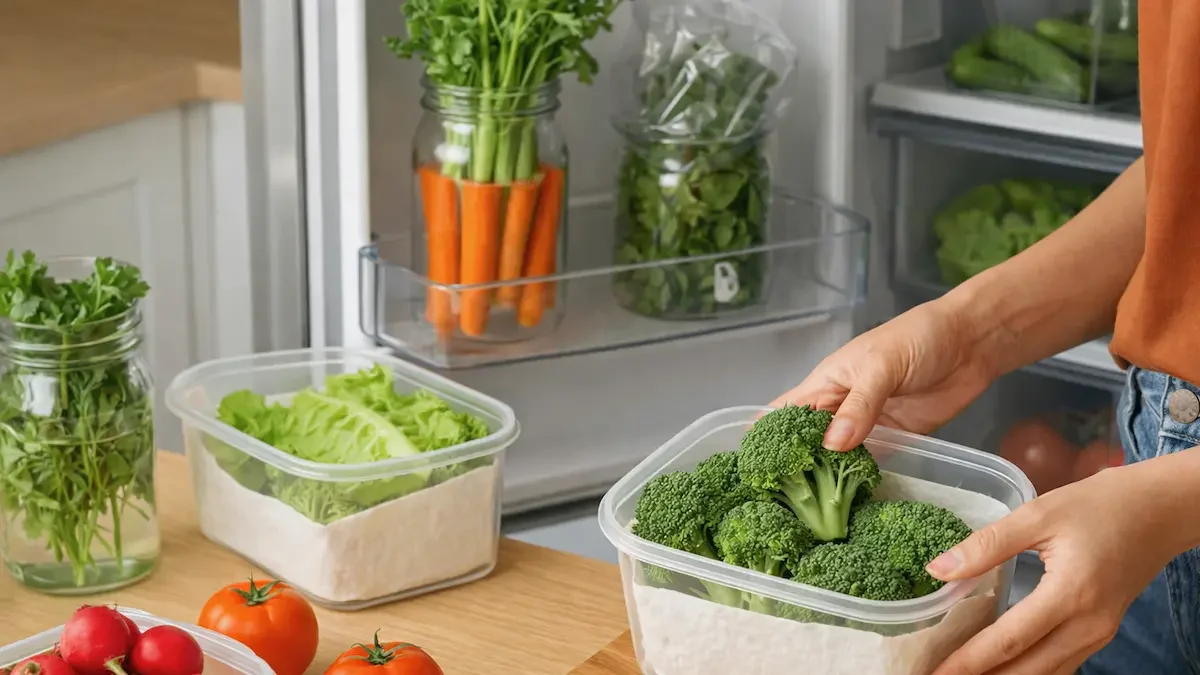
Most vegetable storage mistakes come down to three things: wrong temperature, wrong humidity, and ethylene gas from nearby fruit. Get all three right and your vegetables last two to four times longer — without losing the flavour or nutritional value you grew or bought them for.
Quick Answer
Most vegetables: refrigerator crisper drawer set to high humidity, 32–40°F (0–4°C). Store dry, wash only before eating.
Tomatoes, potatoes, onions, garlic, winter squash: room temperature or cool dark storage — never refrigerate these. Cold damages texture and kills flavour.
The single biggest mistake: storing ethylene-producing produce (onions, apples, pears) next to ethylene-sensitive vegetables (leafy greens, carrots, broccoli). Separate them — ideally different drawers or different rooms.
According to UC Davis Health dietitians, the high-humidity setting on a refrigerator crisper drawer is the most underused feature in home kitchens — and the most effective one for keeping vegetables crisp and nutrient-rich. Most refrigerators ship with both crisper drawers set to low humidity. Switching the vegetable drawer to high humidity slows moisture loss from leafy greens, broccoli, cauliflower, and root vegetables, extending the window before wilting and nutrient degradation begin. The low-humidity setting is correct for most fruit — keeping the two separate in different drawers, at different settings, is the simplest improvement most households can make to their produce storage.
The Four Storage Environments — and What Goes Where
Fridge — High Humidity
- Leafy greens (wrapped in paper towel)
- Broccoli, cauliflower, cabbage
- Carrots, beetroot, parsnips
- Courgettes, cucumber, peas
- Leeks, spring onions, asparagus
32–40°F (0–4°C) · High humidity crisper
Counter — Room Temp
- Tomatoes (cold ruins texture and flavour)
- Aubergines, peppers (until cut)
- Avocados (until ripe)
- Basil (water jar, not fridge)
- Winter squash (whole)
55–70°F (13–21°C) · Away from direct sun
Cool & Dark
- Onions (away from potatoes)
- Garlic (dry, ventilated)
- Potatoes (paper bag, no light)
- Sweet potatoes (dry, not bagged)
- Shallots, dried beans
40–50°F (4–10°C) · Dark, ventilated
Fridge — Upright in Water
- Fresh herbs (except basil): jar with 1–2 inches water, cover loosely
- Asparagus: trim ends, stand upright in water
- Spring onions: jar of water
Fridge door · Change water every 2 days
How Long Do Common Vegetables Last? A Realistic Guide
| Vegetable | Best Storage | Expected Life | Key Tip |
|---|---|---|---|
| Leafy greens (lettuce, spinach, kale) | High-humidity crisper, dry | 5–7 days | Wrap in dry paper towel before storing; moisture causes rot |
| Carrots | High-humidity crisper | 3–4 weeks | Remove tops before storing — tops draw moisture from the root |
| Broccoli & cauliflower | High-humidity crisper, unwashed | 5–7 days | Store dry; moisture between florets accelerates yellowing |
| Tomatoes | Counter, stem side down | 5–7 days | Never refrigerate whole tomatoes — cold converts sugars and destroys flavour |
| Potatoes | Cool, dark, paper bag | Several weeks | Keep away from onions; never store near apples or tomatoes |
| Onions | Cool, dry, dark, ventilated | Several weeks | Keep separate from potatoes — moisture and gases accelerate spoilage in both |
| Courgettes & cucumber | Crisper drawer or counter (short term) | 4–7 days | Sensitive to cold below 50°F — keep in the warmest part of the fridge |
The Ethylene Problem — and Why It Ruins Your Greens
Research from the University of Texas at Austin explains why keeping climacteric produce (apples, pears, onions, tomatoes) near ethylene-sensitive vegetables causes rapid deterioration. Ethylene is a ripening gas these items produce continuously. Leafy greens, broccoli, carrots, and asparagus respond by yellowing, softening, and wilting much faster. The fix is straightforward: high-ethylene items in one drawer, ethylene-sensitive vegetables in a separate drawer at high humidity. If you only store vegetables — no fruit — this problem largely does not arise.
✗ The Mistakes That Cost Flavour and Nutrients
- Washing vegetables before storing— moisture on the surface accelerates bacterial growth and rot.UC Davis Healthis clear: store dry, wash only immediately before eating
- Refrigerating tomatoes— cold temperatures break down the enzymes responsible for tomato flavour. A tomato kept at room temperature loses flavour far more slowly than a chilled one
- Keeping carrot tops attached— the feathery tops draw moisture from the root, softening it within days. Remove them immediately after harvest or purchase
- Storing onions and potatoes together—Purdue Extensionspecifically warns against this: onions emit moisture and gases that cause potatoes to sprout and soften faster
📅 Today
- Switch vegetable crisper drawer to high humidity
- Separate ethylene producers from sensitive greens
- Remove carrot and beetroot tops before storing
- Move tomatoes out of the fridge to the counter
📆 Every Shop or Harvest
- Store dry — wash only before eating
- Wrap leafy greens in dry paper towel before the crisper
- Stand fresh herbs in water in the fridge door
- Keep potatoes in a paper bag in a cool, dark cupboard