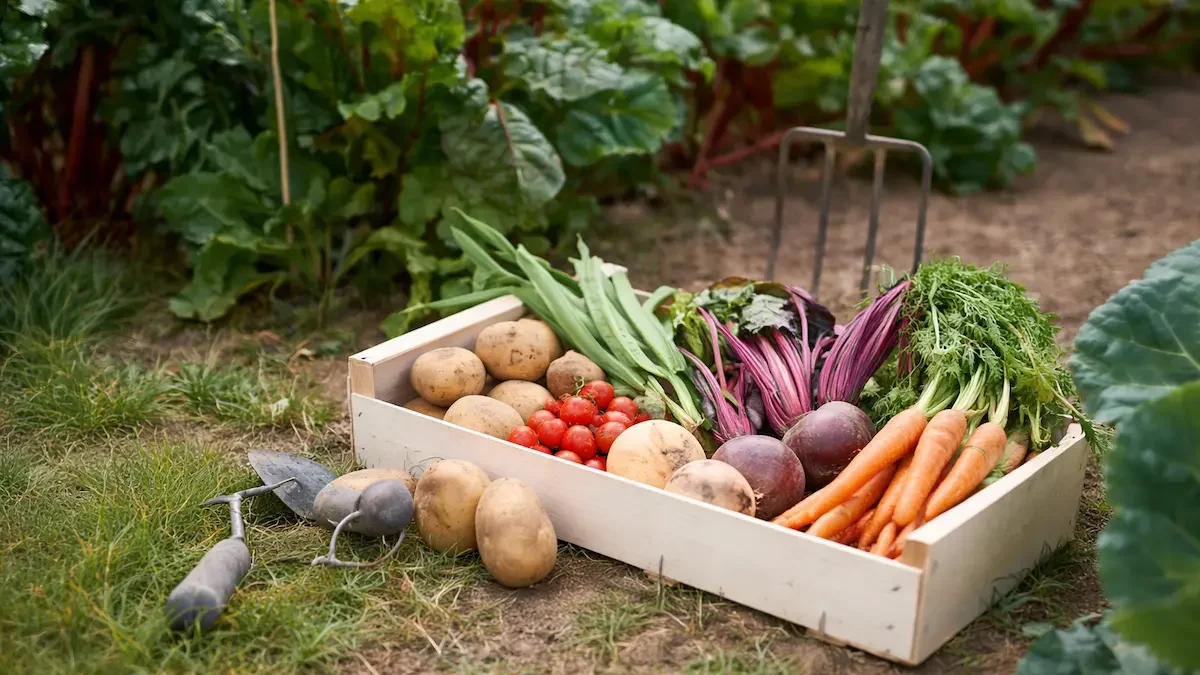
Most home growers eat the obvious part of each vegetable and compost the rest. But beet greens taste and cook like chard. Carrot tops replace parsley in a pesto. Broccoli stems make up roughly 40 percent of the plant by weight, and they roast, stir-fry, and slice just as well as the florets. The parts most people discard are edible, nutritious, and frequently more flavourful than the primary harvest.
Quick Answer
Tops of root vegetables — beet greens, carrot tops, turnip greens, and radish leaves are all edible. Remove tops immediately after harvest to prevent them drawing moisture from the root. Use within 1–2 days — they are more perishable than the roots.
Brassica stems — broccoli and cauliflower stems can be peeled and sliced, added to stir-fries, grated raw into slaws, or puréed into soups. They have the same flavour as the florets and a firmer texture.
Anything for stock — onion skins and roots, leek tops, celery leaves, herb stems, carrot tops, pea pods, and corn cobs all contribute flavour to vegetable stock. A bag kept in the freezer accumulates scraps until there is enough to make a pot.
According to the US Food and Drug Administration, food waste in the United States is estimated at 30–40 percent of the food supply — and the household is the largest single source. For home growers who have invested time and effort into producing food, discarding edible plant parts represents a compounded loss. The parts most commonly composted — tops, stems, leaves, flowers, and pods — are edible at every stage of the plant’s growth, and using them requires less effort than most preserving tasks.
Which Parts of Each Vegetable Are Edible
| Vegetable | What Most People Discard | What It Can Be Used For |
|---|---|---|
| Beetroot | Leaves and stems | Cook like chard — sauté with garlic, add to grain salads, or use raw in salad. Stems can be pickled. Remove greens immediately after harvest; they draw moisture from the root |
| Carrots | Tops (feathery leaves) | Earthy, slightly bitter flavour similar to parsley. Blend into pesto; chop finely into grain dishes; use as a garnish. Avoid very large quantities — mild toxicity in excess |
| Radishes | Leaves and greens | Peppery like the root. Use in salads, sauté lightly, or blend into pesto. Young leaves are most tender |
| Broccoli and cauliflower | Stems and outer leaves | Stems: peel outer layer, then slice, stir-fry, roast, or grate raw. They make up roughly 40% of the plant’s weight. Cauliflower leaves: roast whole at high heat, or add to soups |
| Courgettes | Male flowers | Edible raw in salads, stuffed with ricotta and baked, or lightly battered and fried. Harvest male flowers (no fruit at the base) without reducing yield |
| Peas | Pods and shoots | Empty pods: simmer into stock. Young pea shoots and tendrils: sweet and tender — use raw in salads or briefly stir-fry. They regrow from the pinched tip |
| Leeks | Dark green tops | Same flavour as the white stem. Slow-cook in soups and stocks, or slice finely and stir-fry. Tougher than the white part but entirely edible |
| Tomatoes | Green tops and stems | Do not eat tomato leaves or stems — they contain solanine and are toxic. Exception: small, fully cooked green tomatoes are safe |
Vegetable Stock — the Universal Use for Everything Else
Any vegetable part that would otherwise be composted can contribute to stock: onion skins and roots, carrot tops, leek tops, celery leaves, cauliflower cores, fennel fronds, herb stems, corn cobs, and pea pods all add flavour. Keep a bag in the freezer and add scraps as they accumulate. When full, simmer the contents in water for 45–60 minutes, strain, and use or freeze. Avoid large quantities of brassica stems and leaves — they make stock bitter — and keep potato peelings minimal as they cloud the liquid.
What to Do
- Remove root vegetable tops at harvest— beet, carrot, and turnip tops draw moisture from the root. Cut them off when lifting and use within 1–2 days, stored loosely wrapped in a damp cloth in the fridge
- Keep a scrap bag in the freezer— add all clean trimmings as you cook. When full, make stock. This single habit captures most of the edible value that would otherwise go to compost
- Harvest courgette male flowers in the morning— flowers are open and at their best early. Leave some males for pollination; harvest the rest
- Pinch pea shoot tips regularly— harvesting the tip encourages bushier growth and produces a continuous harvest of tender shoots throughout the season
What Is Not Edible — Know the Exceptions
- Tomato, pepper, and aubergine foliage— all nightshade leaves and stems contain solanine. Do not eat; do not add to stock or teas
- Rhubarb leaves— contain oxalic acid at toxic levels. The stem is edible; the leaves are not
- Green potato skin or flesh— greening indicates elevated solanine. Cut away all green areas generously before eating
At Harvest
- Remove beet, carrot, and turnip tops immediately
- Store tops in damp cloth in fridge — use within 2 days
- Harvest courgette flowers in the morning
- Pinch pea shoot tips for a continuous harvest
In the Kitchen
- Add all clean vegetable trimmings to the freezer scrap bag
- Sauté beet greens like chard; use radish leaves in salads
- Peel broccoli stems and roast or slice for stir-fries
- Make stock when the scrap bag is full — strain and freeze