
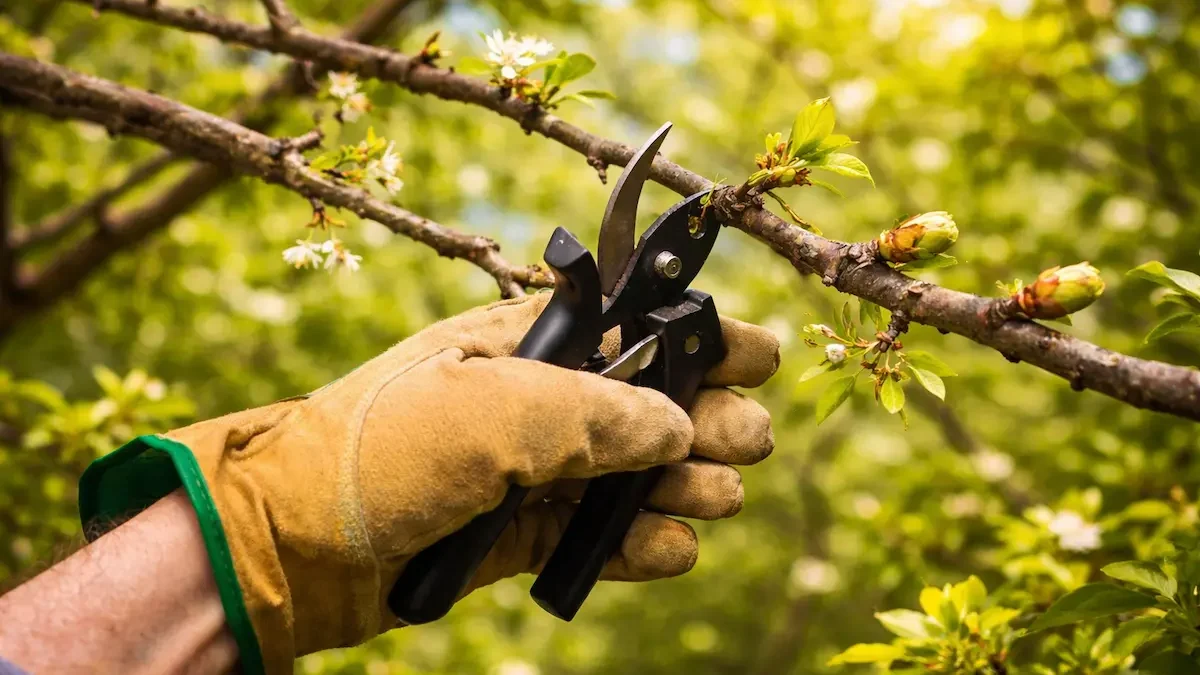
Walk outside this week and look at your apple, pear, or cherry tree. If the buds have started to swell — moving from tight and dark to visibly plump or showing the first hint of green — the pruning window has either just closed or is closing right now. According to Colorado State University Extension, pruning is best done in late winter or early spring just before bud break. The word “before” is doing a lot of work in that sentence. Once buds break and tissue is actively growing, every cut you make becomes a wet, open wound in warm spring air — exactly the conditions in which fire blight and other bacterial pathogens move fastest.
The short answer:
- Prune apple and pear trees at silver tip stage — buds swollen but not yet showing green
- Prune cherry, peach, and plum just before bloom, not before bud break — stone fruits are different
- Once green tissue is visible on apples and pears, stop — every cut now is a disease entry point
- In Zone 6, bud break on apple trees is arriving this week; Zone 5 has days, not weeks
What Bud Break Actually Looks Like — and Why It’s the Hard Stop
Most gardeners prune when the weather feels right, not when the tree signals it’s time. The tree gives clear visual signals if you know what to look for.
Apple and pear trees move through several bud stages in early spring. University of Vermont Extension identifies the correct pruning window as the silver tip stage — when buds shift from dark brown to a fuzzy silvery-gray, before any green tissue is visible. Once tips show green, the window for apple and pear is effectively closed.
The window closes for two reasons. First, open wounds on actively growing tissue stay wet — and bacterial pathogens, fire blight chief among them, need moisture to spread. Penn State Extension documents that once green tissue is present and temperatures exceed 60°F, any pruning cut on an apple or pear is a potential fire blight entry point. Second, cuts made before bud break heal faster. According to Mississippi State University Extension research, callus around spring wounds covers three to six times more area than around summer wounds by season’s end.
Stone Fruits: Different Rules, Different Timing
Peaches, plums, and cherries follow different pruning timing than apples and pears — and getting this wrong is just as costly.
University of Vermont Extension recommends pruning cherry, peach, and plum just before bloom through two weeks after petal fall. Stone fruits pruned too early in cold, wet conditions are more susceptible to bacterial and cytospora canker through fresh cuts. Waiting until near bloom means warmer, drier conditions and a faster wound response.
Oklahoma State University Extension notes that peach flower buds are often damaged by late frosts — assess that damage first before deciding how heavily to prune. In Zone 5 in 2026, prune peaches after the last frost date has passed.
By zone, right now:
- Zone 5: Apple silver tip stage arrives late March to early April — you likely still have a few days
- Zone 6: With spring running 1–2 weeks early in 2026, apple bud break is arriving now — check your trees today
- Zone 7: Apple pruning window has likely closed; focus on stone fruit timing
What to Do If You’ve Already Missed the Apple Window
Stop pruning structural branches — but two things are still worth doing. Dead, broken, or crossing branches can come out regardless of timing; these cuts are small and low-disease-risk. If fire blight damaged branches last season, Michigan State University Extension recommends waiting for a dry window, then cutting 8–12 inches below visible discoloration into two-year-old wood, disinfecting tools between each cut.
Major structural pruning missed this season waits until next February. One missed year is a setback. Pruning into active growth to compensate turns a setback into a disease problem.
What Not to Do
❌ Pruning apples and pears once green tissue is visible — this is the single most common timing mistake. Silver tip is the window. Green tip is not. The difference between the two stages can be as little as 4 to 5 days in a warm March.
❌ Using apple timing on stone fruits — peaches, cherries, and plums are pruned later, near bloom, not before bud break. Applying apple timing to a peach tree increases canker risk significantly.
❌ Applying wound dressing to pruning cuts — Colorado State University Extension found wound dressings provide no benefit and can harbor disease organisms. Clean cuts at the branch collar, left uncovered, heal faster.
❌ Postponing fire blight removal until summer — cankers from last season should come out before bud break while bacteria are dormant and confined to the cankered area. Summer removal requires cutting further back and carries higher spread risk.
This Week and Next 30 Days
This week — March 13–19:
- Check apple and pear buds daily — identify which stage they are at right now
- Zone 6: If silver tip stage, prune structural branches this week — window is closing
- Zone 5: You likely have 7–10 days; prioritize the trees with last season’s fire blight damage
- Remove any confirmed fire blight cankers from last season before green tissue appears
By April 10:
- All zones: Begin peach, cherry, and plum pruning as trees approach bloom — not before
- Disinfect all pruning tools before starting stone fruit work
- Assess frost damage on peach flower buds before deciding how heavily to prune
- Any structural pruning missed on apples this season waits until next February
Also read:
- March Garden Cleanup Before 50°F Kills Overwintering Beneficials: What to Leave
- Seed Starting Indoors: How to Grow Strong Seedlings Before Spring
- Direct Sowing Peas in March: Zone-by-Zone Timing Before They Bolt
- Container Gardening: Grow Fresh Vegetables on a Balcony or Patio
- Compost After Winter: 3 Steps to Activate a Dormant Pile This Week