
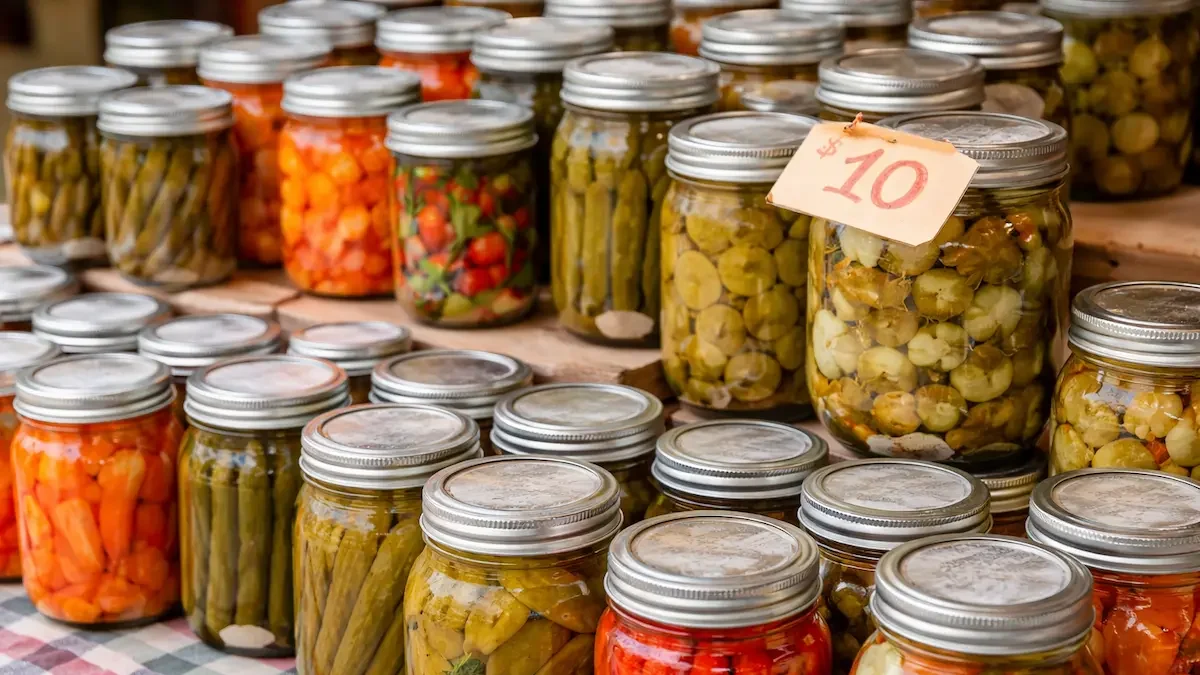
The first harvests of spring — radishes, lettuce, spinach, spring onions, early peas — are brief and often more abundant than you can eat fresh. These four methods require no specialist equipment and no electricity. They are how gardeners have extended the spring glut for centuries.
Quick Answer
Best method for most spring crops: lacto-fermentation for radishes, spring onions, cabbage, and carrots — salt only, no vinegar, no cooking, keeps for months refrigerated.
For leafy greens: blanch and freeze — the only method that reliably preserves colour, texture, and nutrients in spinach and kale beyond a few days.
For herbs: dry at room temperature in small bunches, stems up, in a warm airy spot. Ready in 1–2 weeks. Store in sealed jars away from light.
According to Virginia Tech Extension’s vegetable fermentation guide (reviewed April 2025), people have fermented vegetables for centuries to increase food stability and enhance flavour — and the method remains one of the most reliable ways for home growers to extend seasonal harvests without specialist equipment. For the spring garden, four methods cover almost everything you are likely to grow: lacto-fermentation, natural drying, blanching and freezing, and quick pickling. Each suits different crops and different shelf-life targets.
The Four Methods — At a Glance
🧂 Lacto-Fermentation
- Salt only — no vinegar, no cooking
- 2% salt by weight (dry) or 2–3 tbsp per litre (brine)
- Ferment 3–4 weeks at 68–72°F (20–22°C)
- Ready when pH ≤ 4.6 and bubbling stops
Best for: radishes, cabbage, spring onions, carrots, cucumber
☀️ Air Drying
- Tie herbs in small bunches, hang upside down
- Warm, airy, dark spot — 1–2 weeks
- For vegetables: thin slices, warm oven (lowest setting), 4–8 hrs
- Store in sealed glass jars away from light
Best for: all herbs, chillies, tomatoes (oven), spring onions
❄️ Blanch and Freeze
- Blanch 1–3 minutes in boiling water by crop
- Immediately plunge into ice water; drain and dry
- Freeze in single layer before bagging
- Lasts 8–12 months at 0°F (–18°C)
Best for: spinach, kale, peas, broad beans, broccoli
🫙 Quick Pickling
- Equal parts vinegar and water + 1 tbsp salt per cup
- Pour hot over vegetables in sterilised jar
- Refrigerate — ready in 24 hours
- Lasts 2–4 weeks refrigerated
Best for: radishes, spring onions, cucumber, young carrots
Lacto-Fermentation: The Most Useful Method for Spring
University of Minnesota Extension explains the mechanism: lactic acid bacteria (LAB), naturally present on vegetable surfaces, convert sugars into lactic acid in a salt environment. This lowers the brine pH to 4.6 or below, preventing harmful pathogens and preserving vegetables for months. No starter culture is needed — the bacteria are already there. Salt is the only input. Radishes, early cabbage, spring onions, and young carrots are ideal candidates: enough sugar to support active fermentation, and texture that holds well through the process.
The critical safety detail: Illinois Extension is explicit that vegetables must remain fully submerged under brine throughout fermentation — exposure to oxygen above the brine allows mould to grow. A small clean stone, a zip-lock bag filled with brine, or a fermentation weight solves this. Use non-iodised salt only: iodine inhibits LAB and can stall fermentation entirely.
Which Spring Crops Suit Which Method
| Crop | Best Method | Shelf Life | Notes |
|---|---|---|---|
| Radishes | Lacto-ferment or quick pickle | 2–4 months (ferment) / 2–4 weeks (pickle) | Lose texture if frozen; fermented radishes mellow in flavour considerably |
| Spinach & leafy greens | Blanch and freeze | 8–10 months | Wilt rapidly fresh; freezing is the only method that preserves colour and most nutrients |
| Peas and broad beans | Blanch and freeze | 10–12 months | Freeze on day of harvest for best flavour; sugar conversion begins immediately |
| Spring onions / scallions | Ferment, dry, or quick pickle | Variable | Dry the green tops; ferment or pickle the white bulb ends |
| Fresh herbs (parsley, chives, dill) | Air dry or freeze in ice cubes | 6–12 months (dry) | Chives freeze better than they dry; parsley and dill dry well |
| Young carrots | Lacto-ferment or cold storage | 2–3 months (ferment) | Remove tops before any storage; tops draw moisture from the root |
✗ Common Preservation Mistakes
- Using iodised table salt for fermentation— iodine inhibits the lactic acid bacteria that make fermentation work. Use canning salt, pickling salt, or pure sea salt only
- Fermenting at the wrong temperature— above 72°F (22°C), spoilage bacteria can outcompete LAB. Below 60°F (15°C), fermentation stalls or takes 6+ weeks.Illinois Extensiongives the target as 68–72°F
- Freezing leafy greens without blanching— enzymes continue breaking down colour, texture, and nutrients in unblanched greens even at freezer temperature. Always blanch before freezing
- Not checking pH before eating fermented vegetables— the ferment is safe when pH ≤ 4.6 and active bubbling has stopped. If it smells rotten rather than sour, discard it
📅 This Week
- Start a radish or spring onion ferment — salt only, into a jar
- Harvest herbs and hang to dry in a warm spot
- Blanch and freeze any surplus spinach or peas
- Label all jars with date and crop
📆 First Month
- Check ferments daily — press vegetables under brine if needed
- Taste ferments from day 7 — refrigerate when tang is right
- Dried herbs ready in 1–2 weeks — crumble test: should be brittle
- Quick pickles last 2–4 weeks; make in small batches