Squeezing in extra plants doesn’t increase yield — it splits it among plants that can’t develop properly. The most common spring gardening mistake costs you more harvest than any pest or disease. Here’s how to fix it before seeds go in.
Quick Answer
The rule: at full maturity, leaf tips of adjacent plants should just barely touch — no more. Any closer and you’re not fitting in more harvest, you’re dividing the same harvest among weaker plants.
Most sensitive to crowding: brassicas, beetroot, carrots, onions, courgettes. Most forgiving: salad leaves, spinach, spring onions — these can be grown cut-and-come-again at closer spacings.
The fix: measure before you plant. If transplants look small and the spacing feels wasteful, resist the urge to close the gap. They will fill the space — faster than you expect.
According to Vegetable Academy’s 2025 analysis of plant spacing and yield, overcrowded plants experience three compounding problems: restricted airflow that creates conditions fungal diseases require; root competition that limits nutrient uptake; and canopy shading that reduces the photosynthesis driving fruit and root development. None of these effects is dramatic in the first few weeks — which is why overcrowding is so easy to overlook until harvest, when the results are obvious and too late to reverse.
What Overcrowding Actually Does
Plants don’t know they’re crowded until roots meet competition or leaves hit shade. By then, the plant has committed its energy to height rather than yield — reaching for light rather than building fruit or root mass. Seed to Fork’s spacing guide puts it plainly: closer spacing doesn’t increase harvest per square foot, it reduces it. A crowded courgette produces small fruits and exhausts itself quickly. A well-spaced one produces all summer.
The one exception is catch cropping: planting fast-maturing crops like radishes or salad leaves between slower crops that haven’t filled their allocated space. UNH Extension describes this as interplanting — using space that won’t be needed until the main crop matures. This is legitimate intensive gardening. Permanent crowding is not.
Spacing Reference: Common Spring Vegetables
| Crop | Plant Spacing | Row Spacing | Sensitivity |
|---|---|---|---|
| Tomatoes | 18–24 inches | 36 inches | High — crowd them and you get blight and poor fruit set |
| Courgette / squash | 24–36 inches | 36–48 inches | High — each plant needs its full crown of space |
| Cabbage, broccoli, cauliflower | 15–18 inches | 24 inches | High — tight brassicas produce small, loose heads |
| Beetroot | 4 inches (after thinning) | 12 inches | High — unthinned rows produce no usable roots |
| Carrots | 2–3 inches (after thinning) | 12 inches | High — forked, stunted roots in crowded soil |
| Onions, leeks | 4–6 inches | 12 inches | Moderate — will bulb but remain small if crowded |
| Peas | 2–3 inches | 18–24 inches | Moderate — need airflow to prevent mildew |
| Lettuce (heading) | 8–12 inches | 12 inches | Moderate — heads won’t form if crowded |
| Lettuce (cut-and-come-again) | 4–6 inches | 6 inches | Low — intentional close spacing works here |
| Radishes | 2 inches (after thinning) | 6 inches | Low — must still be thinned or roots won’t form |
The Thinning Problem
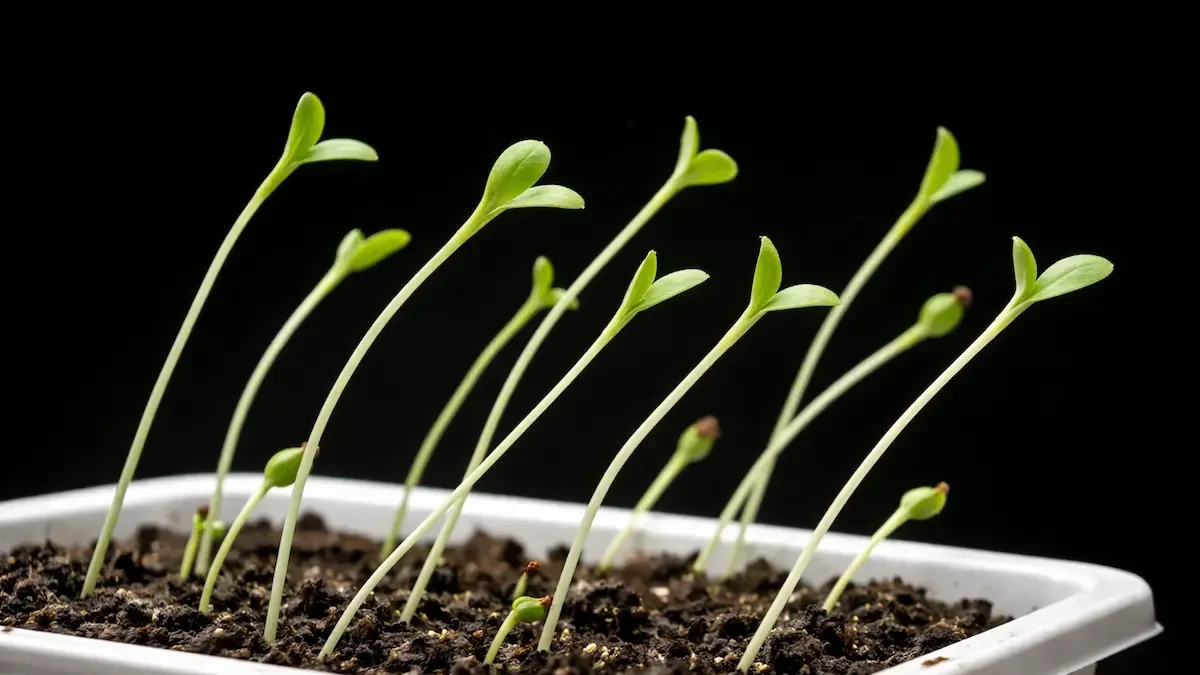
Direct-sown crops — carrots, beetroot, radishes, spinach — are almost always sown more thickly than they need to be, which is correct practice for germination rates. The problem is that most gardeners then fail to thin them. Thinning feels wasteful. It isn’t. Every seedling left in a crowded row competes against its neighbours for the same soil and light. Garden Betty’s spacing guide recommends thinning cabbage family crops from 4–6 inch sowing intervals down to 15–18 inch final spacings — the thinnings become microgreens, and the remaining plants develop properly.
✗ Common Spacing Mistakes
- Not thinning direct-sown rows— the single most common cause of failed beetroot, carrot, and radish crops
- Planting transplants too close because they look small— a courgette seedling at 4 inches will be 3 feet across in six weeks
- Ignoring row spacing in favour of plant spacing— both matter; crowded rows limit airflow even when individual plants are well separated
- Planting tall crops without accounting for shade— tomatoes and pole beans on the south side of shorter crops will block their light all season
This Week and Next 30 Days
📅 This Week
- Measure and mark beds before sowing — don’t estimate
- Check seed packets for final spacing, not just row spacing
- Plan tall crops (tomatoes, beans) on the north side of beds
- Sow salad leaves and radishes — these can go in closer
📆 Next 30 Days
- Thin direct-sown carrots and beetroot as soon as 1 inch tall
- Interplant radishes or salad between slower crops
- Resist crowding transplants — trust the final spacing on the label
- Remove thinnings and eat them — baby beet leaves, carrot tops, radish thinnings are all edible