
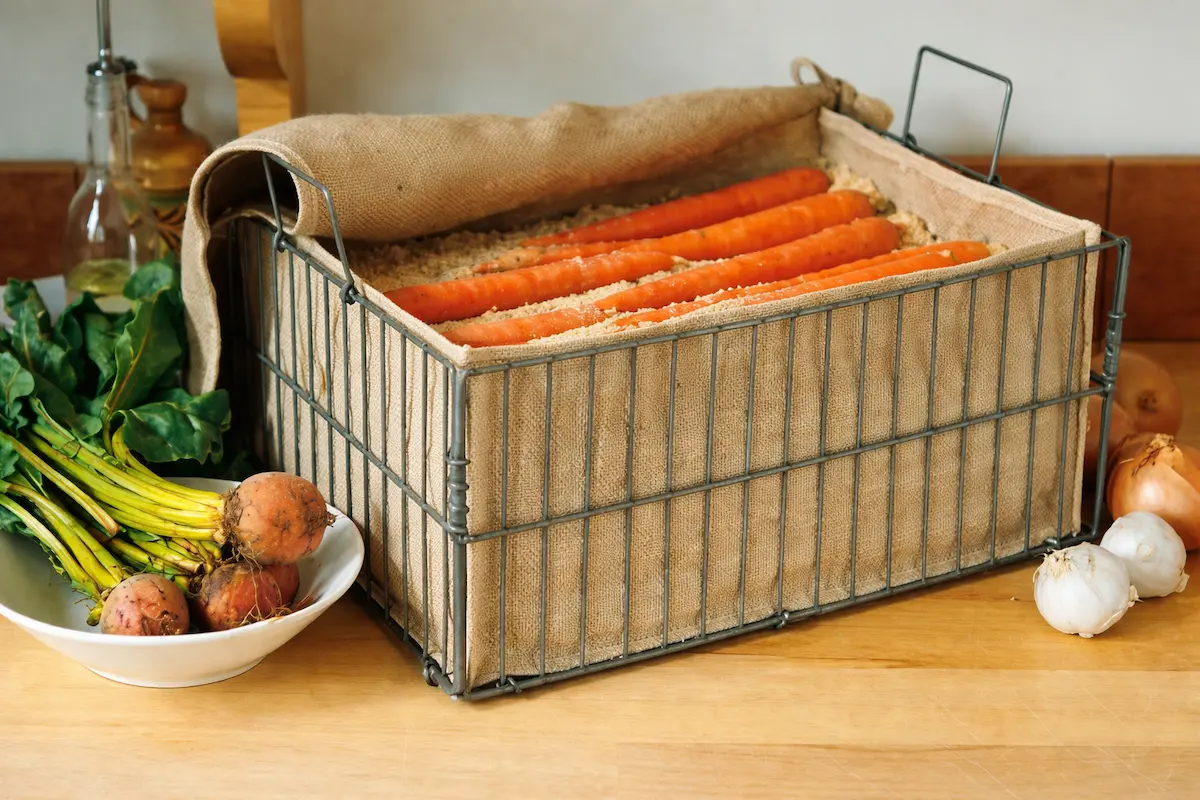
There is no single best container for storing homegrown produce. Container choice follows condition required — and each crop belongs to one of three distinct storage environments. Choosing the wrong container for the wrong crop accelerates deterioration even in a good storage location.
Quick Answer
Cold and moist (32–40°F, 90–95% RH): root vegetables — carrots, beetroot, parsnips, turnips. Best container: a wooden crate, plastic bin, or bucket packed with damp sand or damp sawdust. The packing material maintains humidity around individual roots without allowing them to touch each other.
Cold and dry (32–40°F, 60–65% RH): garlic, onions, shallots. Best container: mesh bags, slatted wooden crates, or net bags hung in a cool dry space. Air must circulate freely — sealed containers cause rot.
Cool and dry (50–60°F, 60% RH): winter squash, pumpkins, dried beans. Best container: open wooden shelves, cardboard boxes with ventilation holes, or loose hessian bags. These crops should not be sealed or packed in humid material.
According to University of Minnesota Extension, temperature and humidity are the main factors in produce storage — and shelf life shortens by up to 25 percent for every 10°F above the ideal temperature. This explains why produce stored in a warm kitchen or garage deteriorates so quickly: a few degrees of excess heat compounds over weeks. The correct container is the one that maintains the right humidity for the specific crop in the right temperature zone. No single container works for all crops.
The Three Storage Categories — and Why They Matter
MSU Extension’s home storage guide divides vegetables into storage groups based on temperature and humidity. In a home setting, three are practically achievable without a purpose-built root cellar. Cold and moist (32–40°F, 90–95% RH) is what most root vegetables need and hardest to achieve without specific technique. A home refrigerator runs at 40°F but only 50–60% humidity — too dry for carrots and parsnips, which desiccate within weeks. Cold and dry (32–40°F, 60–65% RH) suits alliums but is fatal to roots. Cool and dry (50–60°F, 60% RH) suits cured squash and dried legumes — crops that deteriorate rapidly in cold or humid conditions.
Which Container Works for Which Crop
| Crop | Condition Needed | Best Container | Expected Storage Life |
|---|---|---|---|
| Carrots, parsnips | Cold and moist (32–40°F, 90–95% RH) | Bucket or bin packed in damp sand or sawdust; roots must not touch. UMN Extension recommends perforated plastic bags as an alternative for fridge storage | Carrots: 8 months. Parsnips: 4 months |
| Beetroot | Cold and moist | Damp sand or peat in a crate; tops removed. Roots must not touch each other | Up to 5 months |
| Potatoes | Cold and moist — but not below 40°F for table use | Hessian or paper sacks in a dark, ventilated space. Light causes greening and solanine production | Up to 6 months after curing |
| Onions, garlic, shallots | Cold and dry (32–40°F, 60–65% RH) | Mesh bags, net bags, or slatted crates. Fully cure before cool storage. MSU Extension: hung netted bags give best air circulation | Onions: 8 months. Garlic: 6–8 months |
| Winter squash, pumpkins | Cool and dry (50–60°F, 60% RH) | Open wooden shelves or ventilated cardboard boxes. Do not stack; rest each fruit on a padded surface to prevent bruising at the contact point | Squash: 2–6 months. Pumpkins: 2 months |
| Dried beans, peas | Cool, dry, dark | Airtight glass jars in a cool dark location. Glass excludes moisture and insects better than any other option once produce is fully dried | 1–2 years in airtight glass |
What to Do
- Match the container to the condition required— ask “does this crop need moist or dry storage?” Container choice follows from the answer
- Pack roots in damp (not wet) sand or sawdust— the packing material should feel damp when squeezed but not release water. Wet packing causes rot; dry packing causes shrivelling
- Use perforated bags for fridge root storage— unperforated bags trap CO₂ and humidity, promoting mould. Punch holes every 6 inches with a pen or hole punch
- Cure before storing— potatoes need 2 weeks at 50–60°F; onions and garlic need 2–4 weeks at room temperature before cool storage. Uncured produce deteriorates rapidly regardless of container
- Inspect every 2–3 weeks—MSU Extensionadvises checking for shrivelling (humidity too low) or sprouting (temperature too high). Remove anything rotting before it spreads
Common Mistakes
- Storing onions and potatoes together— potatoes absorb ethylene gas from onions, which accelerates sprouting. MSU Extension is explicit: onions should not be stored near apples or potatoes
- Sealed airtight containers for root vegetables— roots need to breathe. Airtight seals trap CO₂ and moisture, creating conditions for rot rather than preventing it
- Storing produce that has not been cured— placing uncured squash, potatoes, or onions directly into cold or cool storage shortens shelf life substantially compared to cured produce
- Using the wrong temperature zone— a warm garage in autumn may drop to 50°F in winter, but if it peaks at 65–70°F on mild days, that temperature variation alone can cause premature sprouting and rot
Before Storing
- Identify which condition category each crop belongs to
- Cure squash, potatoes, and alliums before putting into storage
- Check humidity of your storage space with a hygrometer
- Remove any damaged or bruised produce — do not store it
During Storage
- Inspect every 2–3 weeks; remove anything rotting immediately
- Shrivelling roots: add moisture to packing material
- Sprouting alliums: temperature is too high — find a cooler location
- Use stored produce progressively — oldest and largest first