
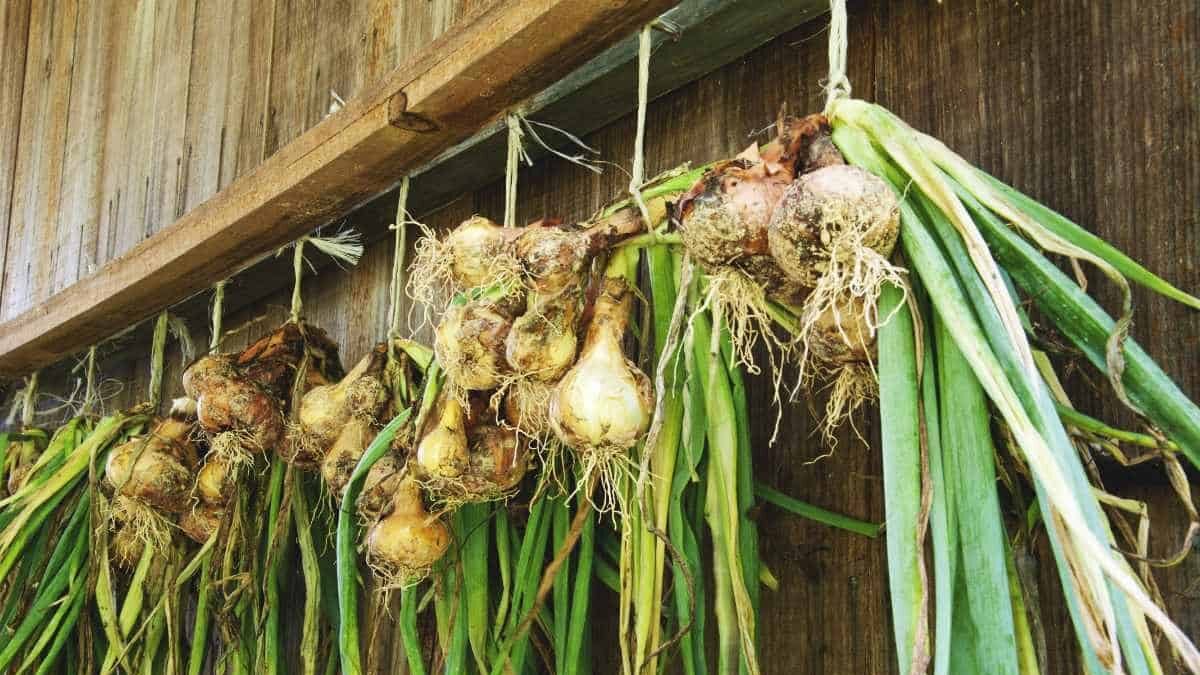
Curing and storing are not the same process — and they need opposite conditions. Curing uses warmth and humidity to heal harvest wounds and toughen skins. Storing uses cold and humidity to slow metabolism and prevent decay. Doing them in the wrong order, or skipping curing entirely, significantly reduces how long the crop keeps.
Quick Answer
Curing: a period of warm, humid, dark conditions immediately after harvest. It heals surface cuts and bruises, thickens the skin, and converts starches to sugars. Applies to: potatoes, sweet potatoes, winter squash, pumpkins, and onions. Duration: 7–14 days depending on the crop.
Storing: cool, humid, dark conditions for long-term holding. Applies to all root crops including those that do not require curing. Temperature for most root vegetables: 0–4°C (32–40°F) with 90–95% humidity.
Which crops need curing and which do not: potatoes, sweet potatoes, winter squash, and onions require curing before storage. Carrots, parsnips, beetroot, celeriac, and turnips go directly into cold storage without a curing period.
According to Oregon State University Extension (December 2025), curing newly harvested potatoes in a dark, well-ventilated space at moderate temperature and high humidity for 7 to 10 days helps extend storage life by allowing minor cuts and bruises to heal and the skin to thicken. The curing process triggers suberisation — the formation of a corky layer beneath any wound that seals the injury against the pathogens that cause rot during storage. Iowa State University Extension’s vegetable storage guide adds that each crop has specific requirements: potatoes cure at 10–15°C (50–60°F); sweet potatoes at 27–29°C (80–85°F) — a much warmer range that is difficult to achieve at home and can be approximated by storing them near a heat source for 10–14 days. Winter squash cure at 27–29°C (80–85°F) for 10 days.
Curing and Storage Conditions by Crop
| Crop | Needs Curing? | Curing Conditions | Storage Temp | Humidity | Shelf Life |
|---|---|---|---|---|---|
| Potatoes | Yes | 10–15°C (50–60°F), high humidity, dark, 7–10 days | 4°C (40°F) | 90–95% | 4–6 months; do not refrigerate — cold converts starch to sugar |
| Sweet potatoes | Yes | 27–29°C (80–85°F), 80–90% humidity, 7–14 days | 13–15°C (55–60°F) | 85–90% | 4–6 months; never refrigerate — chilling injury below 10°C |
| Winter squash / pumpkins | Yes | 27–29°C (80–85°F) for 10 days; not acorn types | 10–13°C (50–55°F) | 50–70% | 3–6 months depending on variety |
| Onions, garlic | Yes | Warm, dry, airy — 3–4 weeks until skins are papery | 0–4°C (32–40°F) | 65–70% (dry) | 5–8 months for yellow onions; garlic 6–8 months |
| Carrots, parsnips | No | — | 0–2°C (32–35°F) | 95–100% | 4–6 months in damp sand |
| Beetroot, celeriac, turnips | No | — | 0–4°C (32–40°F) | 90–95% | 1–5 months depending on crop |
Why Carrots and Parsnips Need Different Conditions From Potatoes
The most common storage mistake is treating all root vegetables the same. Carrots and parsnips are living roots that continue to respire after harvest — they need very high humidity (95–100%) to prevent moisture loss, and very cold temperatures (0–2°C / 32–35°F) to slow respiration and sugar conversion. SDSU Extension (June 2025) recommends burying carrots in slightly moist sand in layers, not touching each other. Potatoes, by contrast, need 4°C (40°F) — not as cold — and less humidity. Below 4°C, potatoes develop a sweet, starchy taste as cold triggers starch-to-sugar conversion, making them unsuitable for roasting or frying. Above 10°C they sprout and decay within weeks.
What to Do
- Cure potatoes in a dark, airy shed at 10–15°C for 7–10 days before storing— OSU Extension is explicit: this step alone extends storage life significantly by sealing harvest wounds against rot pathogens
- Store carrots in damp sand or sawdust at 0–2°C— the high humidity prevents the wilting and shrivelling that makes stored carrots rubbery; dry storage is the main cause of poor carrot texture after a few months
- Keep onions cool and dry after curing — not cold and humid— onions want different conditions from most other storage crops; high humidity causes rot; aim for 65–70% relative humidity rather than the 90–95% that suits carrots and beetroot
- Never store potatoes and onions together— onions emit ethylene gas that promotes potato sprouting; potatoes emit moisture that causes onion rot; always store separately
- Check stored crops every 2–3 weeks— remove any that show signs of rot immediately; one rotting potato or carrot spreads to those touching it within days
Common Mistakes
- Putting potatoes straight into cold storage without curing— uncured potatoes with harvest wounds rot from the cut surface inward; the 7–10 day curing period is the difference between a crop that lasts until April and one that rots by Christmas
- Refrigerating sweet potatoes— temperatures below 10°C cause chilling injury in sweet potatoes, producing hard patches and off-flavour; store at 13–15°C minimum
- Storing root vegetables in the light— light causes potatoes to turn green and produce solanine, which is toxic in quantity; all root crop storage must be dark
At Harvest
- Cure potatoes 7–10 days at 10–15°C before storing
- Cure onions 3–4 weeks in warm dry air until papery
- Carrots, beetroot, parsnips: no curing — straight to cold storage
- Brush off soil; remove damaged crops to use first
In Storage
- Potatoes: 4°C dark; keep away from onions
- Carrots: 0–2°C in damp sand, not touching each other
- Onions: cool and dry at 65–70% humidity in mesh
- Check every 2–3 weeks; remove any rot immediately