
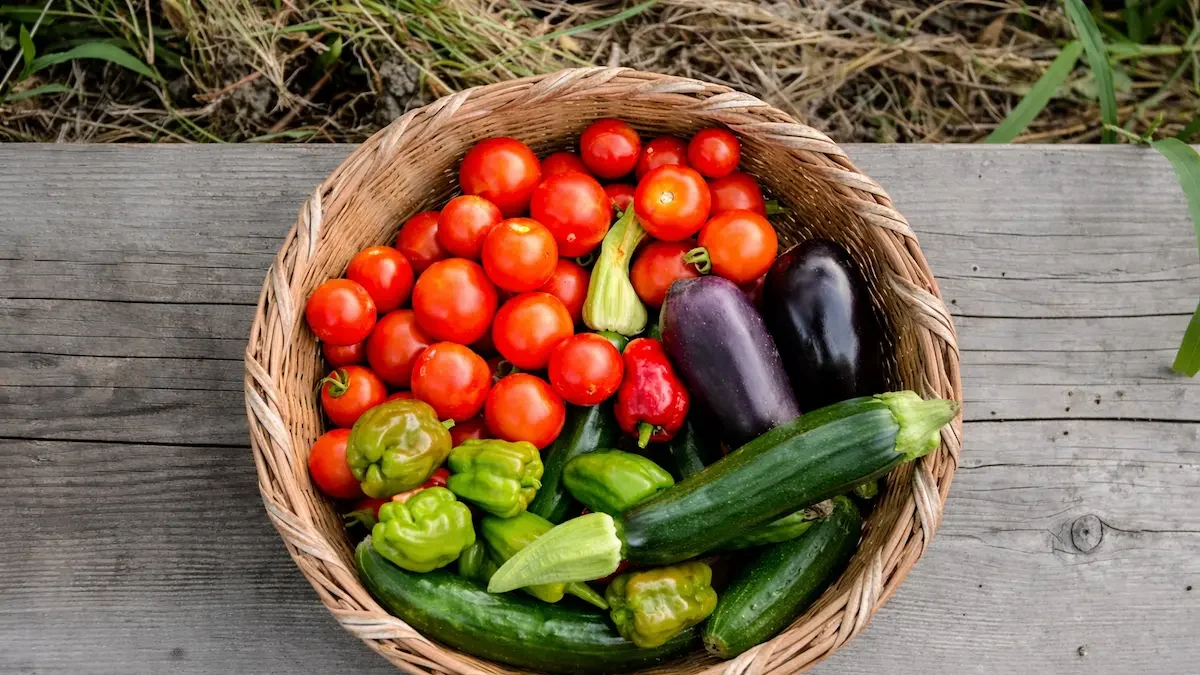
A glut is not a crisis, but it does require a decision — and quickly. The longer surplus produce sits after harvest, the fewer options remain. Some crops need to be dealt with the same day. Others give you a week. Knowing which is which is the first practical step.
Quick Answer
Fastest option for almost any vegetable: blanch and freeze. Blanching takes 10–15 minutes for a large batch; freezer storage lasts 8–12 months. This requires no specialist equipment and handles courgettes, beans, peas, spinach, broccoli, and most other common glut crops.
For tomatoes specifically: roast, reduce to passata, and freeze in portions. This concentrates flavour, requires no pressure canner, and the result is more useful than frozen raw tomatoes, which become watery on thawing.
The one thing that causes most glut waste: waiting to decide. A courgette left on the kitchen counter for four days while you research recipes has already lost significant quality. Process first; research recipes later.
According to Virginia Tech Extension specialist Lester Schonberger (July 2025), the cardinal rule for surplus produce is to process it as quickly as possible — starting with high-quality produce rather than waiting until a crop is near spoilage. Processing at peak produces a better result and takes less time. Schonberger’s practical order of priority: freeze first for simplicity and speed; pickle for short-to-medium term storage without specialist equipment; can for long-term shelf-stable storage when you have the time and right equipment.
What to Do Crop by Crop
| Crop | Fastest Option | Best Long-Term Option | Notes |
|---|---|---|---|
| Courgettes | Grate, squeeze dry, freeze in portions — 30 min/kg | Pickled slices in brine; chutney | Grated frozen courgette works in soups, fritters, bread, and pasta sauces. Frozen slices become soft on thawing — use in cooked dishes only |
| Tomatoes | Roast at 180°C for 45 min, blend, freeze as passata | Cooked and pressure-canned whole or as sauce; chutney | Roasted passata is far more versatile than frozen raw tomatoes, which go watery. Passata is the single most useful thing to put in a freezer from a summer garden |
| Beans (French, runner) | Blanch 2–3 min, cool, dry, tray-freeze — 20 min/kg | Pressure-canned in brine; pickled dilly beans | French beans freeze excellently and thaw into a useful vegetable. Runner beans go stringy if left too large — process before they are oversize |
| Peas (shelled) | Blanch 1½ min, cool, tray-freeze — 15 min/kg | Freeze in bulk; dried if leaving on plant to mature | One of the best vegetables to freeze. Process within hours of picking — pea sugar converts to starch quickly at ambient temperature |
| Cucumbers | Sliced into quick pickles (refrigerator pickles ready in 24 hrs) | Water-bath canned pickles in tested brine | Cucumbers do not freeze well — the high water content produces mush. Pickling is the primary option. Refrigerator pickles need no canning equipment and last 3–4 weeks |
| Spinach, kale, chard | Blanch 2 min, squeeze dry, freeze in portions — 20 min/large bag | Freeze in bulk; dehydrate for soups | Leafy greens reduce dramatically on blanching. 1 kg fresh produces roughly 200g frozen. Squeeze all water out before packing or the result is a solid block of ice |
| Beetroot | Boil until tender, peel, pickle in spiced vinegar | Whole in cold storage (see storage article); pressure-canned | Pickled beetroot in jars is the classic UK approach to a beet glut. Water-bath canning is suitable because of added vinegar acidity |
Three Methods Ranked by Effort
Southern Exposure Seed Exchange (November 2025) presents three options in a practical order: freezing requires the least equipment and skill; pickling requires vinegar and jars but no pressure canner; canning with a pressure canner produces shelf-stable goods without freezer space but demands the most time, equipment, and adherence to tested recipes. If you have freezer space, freezing handles most glut crops quickly. If your freezer is full, pickling and water-bath canning cover high-acid crops. Low-acid vegetables — beans, peas, carrots — require a pressure canner for safe shelf-stable storage, not a boiling water bath.
What to Do
- Decide and process the same day you harvest a large batch— quality declines quickly after harvest. A decision deferred is produce deteriorating on a worktop
- Freeze first if unsure— blanching and freezing handles almost any surplus vegetable quickly, requires no specialist knowledge, and leaves options open for later use
- Make passata from any tomato surplus immediately— roast, blend, freeze in 500ml portions. This is the single most versatile product from a summer garden surplus
- Give surplus away promptly— neighbours, food banks, and community fridges accept high-quality surplus. A bag of fresh beans given away the same day is more useful to everyone than the same beans composted a week later
- Use tested recipes for any canning—NCHFPand Virginia Tech Extension both stress that untested ratios in canning can result in under-acidified products and serious safety risk
Today
- Blanch and freeze beans, peas, spinach, courgette
- Roast and blend tomatoes into passata
- Make refrigerator pickles from cucumbers — no canner needed
- Give away anything you cannot process today
This Season
- Keep a freezer log — note what is in there and when it was processed
- Stagger harvests where possible to reduce peak gluts
- Pickle beetroot in vinegar for shelf-stable storage
- Process produce at peak quality, not when it is already deteriorating