
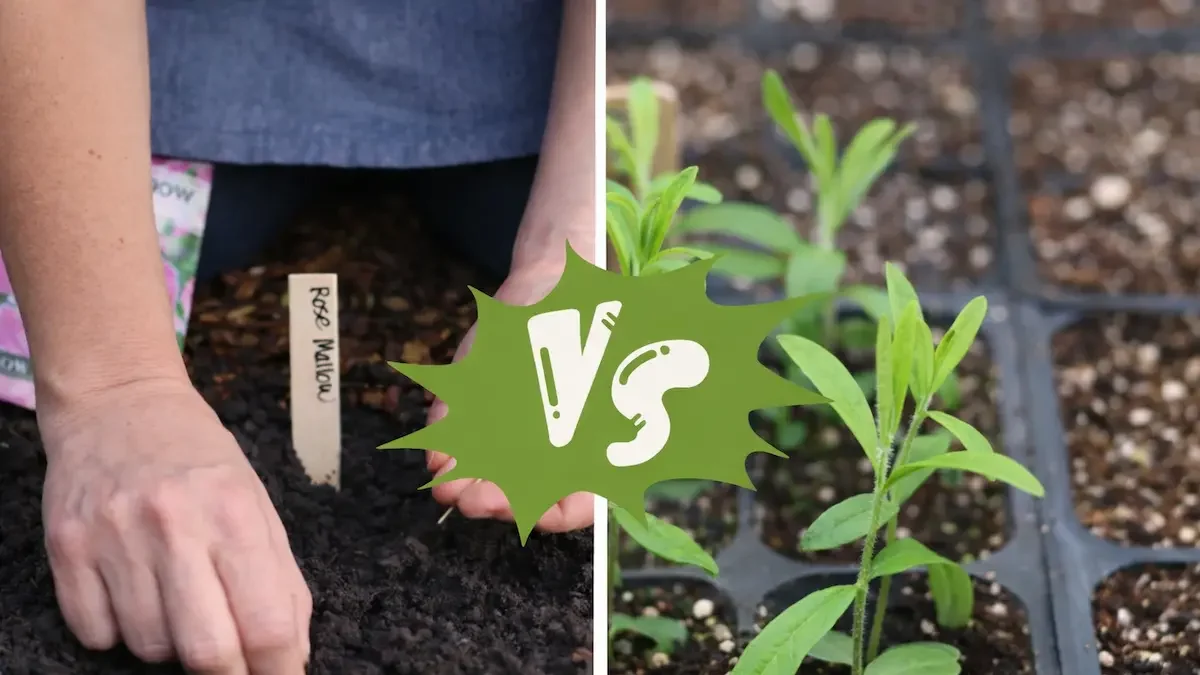
The decision is not about preference — it is about whether a crop has enough time to mature outdoors from a direct-sown seed. Two crops that cause the most confusion: courgettes (almost always better direct sown outdoors) and brassicas (almost always better started indoors, despite being cold-hardy).
Quick Answer
Start indoors when: the crop needs more weeks to mature than the UK growing season allows from direct sowing — or when it needs warmth to germinate that outdoor soil cannot provide until too late in the season. Tomatoes, peppers, aubergines, celeriac, and leeks all fall into this category.
Direct sow when: the crop germinates well in cool or cold soil, has a short maturity time, dislikes root disturbance, or produces a taproot that transplanting would damage. Carrots, parsnips, beetroot, peas, beans, and spinach all direct sow better than they transplant.
The timing rule for indoor sowing: count back from your last frost date by the number of weeks shown on the seed packet. Most crops need 6–10 weeks of indoor growing before they are ready to transplant.
According to University of Maryland Extension’s vegetable planting calendar, plants that have a long period from seed to harvest compared to their preferred growing season must be started indoors and transplanted outside as seedlings. Plants that do not transplant well should only be direct sown. This is the clearest framework for the decision: the question is not which method is easier, but which gives the crop enough growing time to produce a full harvest. Colorado State University Extension adds a useful secondary rule: crops whose roots are extremely intolerant of disturbance — cucumbers, squash, melons — perform best when direct sown, even though they are tender warm-season crops.
Which Method for Which Crop
| Crop | Method | Reason | UK Timing |
|---|---|---|---|
| Tomatoes, peppers, aubergines | Indoors only | Need 10–12 weeks before transplanting; cannot germinate at outdoor temperatures until too late | Sow indoors late Feb–March |
| Leeks, celeriac, celery | Indoors only | Very slow from seed; need a long head start to reach usable size by planting-out time | Sow indoors January–March |
| Brassicas (cabbage, broccoli, kale, sprouts) | Indoors preferred | Germinate better in warm soil; transplanting gives earlier, more reliable results | Sow indoors March–May depending on variety |
| Courgettes, squash, cucumbers | Either — with care | Roots intolerant of disturbance; if starting indoors, use individual pots and transplant before pot-bound. Direct sow is often simpler and equally productive | Sow indoors April; direct sow May after last frost |
| Peas, broad beans, French beans | Direct sow | Transplant poorly; cold-tolerant (peas/broad beans); short season from seed | March–May direct, depending on variety |
| Carrots, parsnips, beetroot | Direct sow only | Taproot crops — transplanting causes forking, stunting, or failure | March–June depending on crop |
| Lettuce, spinach, rocket | Direct sow preferred | Fast-maturing; cold-tolerant; transplant shock delays harvest with no benefit | March onwards, under fleece early |
| Onions, leeks from sets | Direct plant sets | Sets eliminate the slow seed stage; plant direct at recommended spacing | March–April |
The Indoor Sowing Mistake Most Growers Make
Starting seeds indoors at a windowsill without a grow light produces leggy, weakened seedlings that transplant poorly. Seeds ‘n Such notes that a windowsill provides indirect light — seedlings bend and stretch toward it, producing the thin, elongated stems that collapse at transplant. If you do not have a grow light or a polytunnel, direct sowing more crops and starting fewer indoors produces better results than weak windowsill seedlings of everything.
What to Do
- Use the seed packet as the primary guide— it states indoor or outdoor, weeks before last frost, and sowing depth; this information is specific to the variety and more reliable than general rules
- Count back from your last frost date for indoor sowing— most crops need 6–10 weeks indoors; sowing too early produces root-bound, overgrown transplants that establish slowly
- Direct sow all root crops without exception— carrots, parsnips, beetroot, radishes, and turnips should never be started in trays; the taproot disturbance causes forking, bolting, or total failure
- Direct sow courgettes and squash if you lack a grow light— sown in warm soil after the last frost, they germinate within 5–7 days and catch up with indoor-started plants within 2 weeks
- Never start seeds indoors on a windowsill without supplementary lighting— leggy windowsill seedlings transplant badly; direct sowing outdoors at the right time produces stronger plants than weak indoor ones
Common Mistakes
- Starting tomatoes too early— tomatoes sown in January become root-bound and stressed before transplant time; 8–10 weeks before last frost is the correct window, not 16
- Transplanting root crops from trays— carrots, parsnips, and beetroot sown in module trays and transplanted will fork or fail; they must be direct sown where they are to grow
- Assuming all tender crops need indoor starts— courgettes, cucumbers, and squash can all be direct sown successfully after the last frost; the indoor start is optional, not essential
Sow Indoors Now
- Tomatoes, peppers, aubergines — 8–10 weeks before last frost
- Leeks, celeriac — long season crops need head start
- Brassicas — warm germination, transplant later
- Use grow light or propagator — not a windowsill
Direct Sow When Soil Is Ready
- Peas and broad beans — March direct into ground
- Lettuce, spinach, rocket — March under fleece
- Carrots, beetroot — never transplant; direct only
- Courgettes, beans — direct sow after last frost