
The difference between a homegrown potato and a supermarket one is not primarily about freshness, though freshness matters. It is about what happens to a potato during long cold storage, which variety was grown, and whether sprout suppressants were used. All three factors affect flavour — and only variety and timing are in the home grower’s control.
Quick Answer
Cold-induced sweetening: commercial potatoes are stored at 2–4°C for months. Below 10°C, starch in the tuber converts to reducing sugars — glucose and fructose. This changes flavour, reduces the earthy, starchy quality of fresh potatoes, and causes dark discolouration when the potato is roasted or fried at high temperature.
Sprout suppressants: most commercial potatoes are treated with chlorpropham (CIPC) to prevent sprouting during storage. Chlorpropham has been banned for garden use in the UK and restricted in the EU, but its effect on flavour of treated supermarket potatoes is a secondary influence behind storage conditions and variety.
Variety: supermarket varieties are selected for yield, uniformity, and disease resistance. Home growers can choose flavour varieties unavailable commercially — Pink Fir Apple, Ratte, Anya, Maris Piper, Charlotte — and eat them within days of lifting.
According to research published in PMC, cold-induced sweetening (CIS) is a well-documented phenomenon in which potato tubers stored at low temperatures — typically 2–4°C in commercial facilities — accumulate reducing sugars as starch is broken down by enzymes including beta-amylase and vacuolar invertase. The sugars contribute to a sweeter, less earthy flavour. More significantly for cooking, the accumulated glucose and fructose react with amino acids during roasting and frying in a Maillard reaction that produces dark discolouration — the main reason supermarket potatoes do not crisp as effectively as fresh homegrown ones when roasted at high heat.
What Long Cold Storage Does to Flavour
A 2025 study in the Journal of Emerging Investigators measured the starch-to-sugar conversion in potato tubers at three temperatures over 96 hours: cold (4°C), ambient (20°C), and warm (37°C). Potatoes stored cold showed the highest rate of sugar accumulation, not the lowest. This is the counterintuitive mechanism at the core of cold-induced sweetening: refrigeration — which most people assume preserves quality — actually accelerates the enzyme activity that converts starch to sugar. The ideal storage temperature for a fresh-eating potato that retains its starchy flavour is not the fridge, but a cool dark location at around 8–10°C. This is why a potato bought from the supermarket and kept in the fridge before use may taste noticeably sweeter than the same variety stored at cool room temperature.
The Commercial Variety Problem
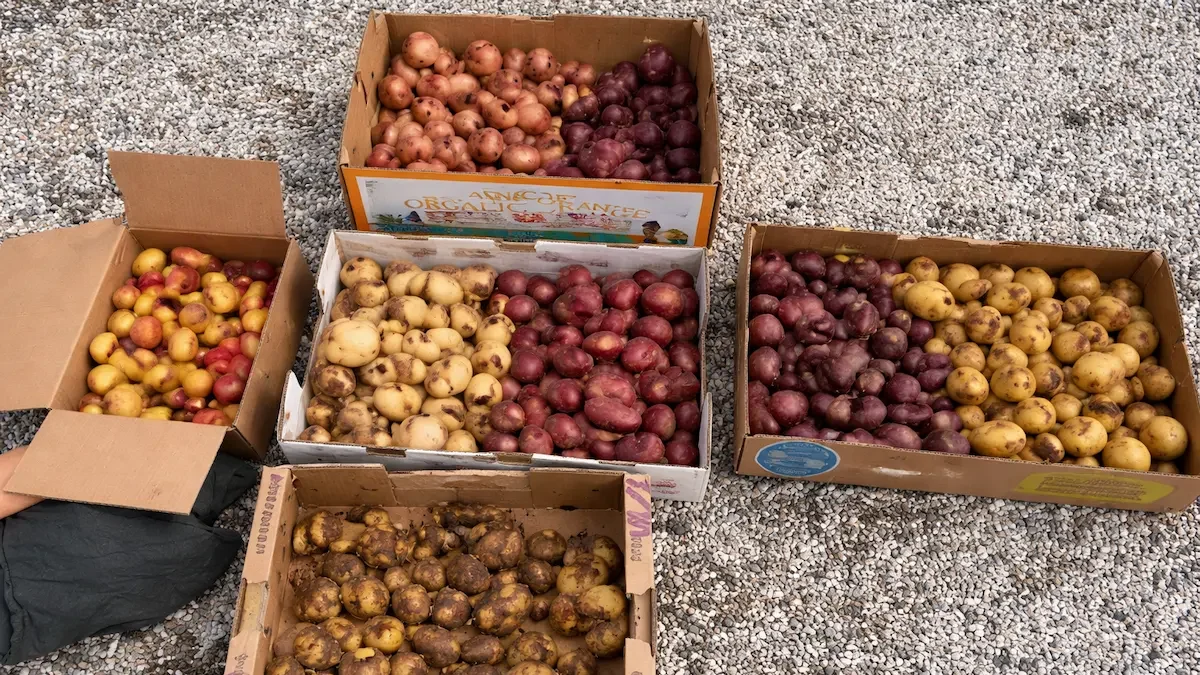
The majority of supermarket potatoes in the UK and US belong to a small number of high-yield, disease-resistant varieties selected for supply chain performance. Maris Piper dominates UK sales because it is high-yielding and stores well. Russet Burbank dominates US sales for the same reasons. Neither was bred primarily for flavour. Home growers can plant varieties unavailable commercially or found only at premium prices: Pink Fir Apple, Ratte, and Charlotte have a nutty, buttery flavour; heritage varieties such as Arran Victory have earthy complexity that commodity varieties lack. The flavour difference between a Pink Fir Apple lifted that morning and boiled within the hour and a Maris Piper that has spent three months in a cold store is not subtle.
Varieties Worth Growing at Home
| Variety | Type | Flavour Notes | Best Use |
|---|---|---|---|
| Pink Fir Apple | Late maincrop; waxy | Nutty, dense, earthy — widely regarded as one of the finest-flavoured varieties available | Boiled, cold in salads, roasted whole |
| Ratte | Maincrop; waxy | Chestnut and butter notes; holds shape perfectly when boiled | French-style salads, gratin, pan-frying |
| Charlotte | Second early; waxy | Clean, sweet, slightly buttery — one of the most versatile flavour varieties | Salads, boiling, roasting |
| Anya | Second early; waxy | Delicate nutty flavour; firm texture that holds during cooking | Salads, boiling whole |
| Orla | First early; waxy | Clean flavour; early harvest means it is eaten fresh with minimal storage | New potatoes boiled or steamed |
| Arran Victory | Maincrop; floury | Heritage variety with deep earthy flavour and purple skin; rarely found commercially | Baking, mashing |
What to Do
- Choose flavour varieties, not yield varieties— Maris Piper and King Edward are available in any supermarket. Grow Pink Fir Apple, Ratte, Charlotte, or Anya instead. These are the varieties that justify growing your own
- Eat new potatoes within hours of lifting— flavour is at its peak immediately after harvest. New potatoes eaten the same day have a sweetness and freshness that diminishes within 48 hours even in good storage
- Store maincrop at 8–10°C, not in the fridge— a cool, dark, ventilated location minimises cold-induced sweetening. A fridge accelerates starch-to-sugar conversion and produces sweeter, less earthy potatoes
- Cure before storage— allow freshly dug potatoes to dry in the sun for 2–3 hours to toughen the skin. Then move to cool dark storage. This reduces moisture loss and prevents early deterioration
At Harvest
- Lift on a dry day; leave on the surface for 2–3 hours to dry
- Brush off soil; do not wash before storage
- Eat new potatoes the same day if possible
- Check for green patches — discard any that are greening
In Storage
- Store maincrop at 8–10°C in paper sacks or hessian, in the dark
- Never store in the fridge — accelerates starch-to-sugar conversion
- Keep away from onions — ethylene causes early sprouting
- Inspect every 3–4 weeks; remove any with rot or heavy sprouting