
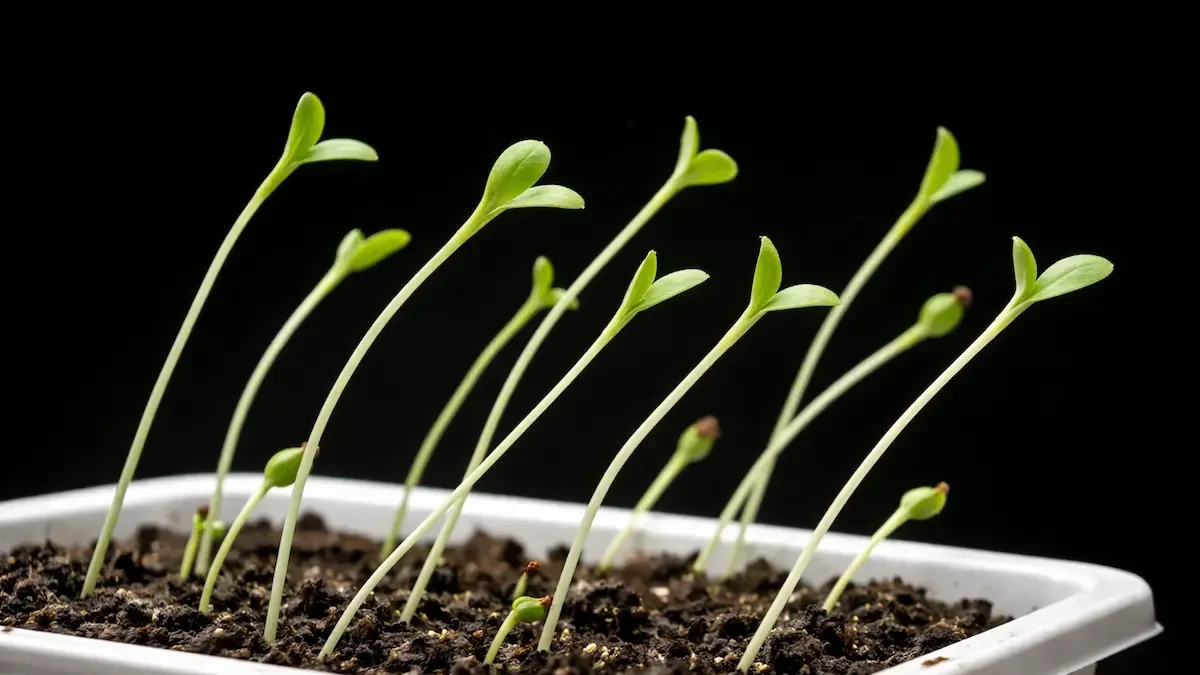
Every March and early April, gardeners across USDA Zones 4–8 notice the same problem on their seed-starting shelves: tomato, pepper, and brassica seedlings suddenly stretch into tall, thin stems that collapse when touched. The plants look green and alive—but they are structurally weak.
This condition is called leggy growth, and it almost always occurs in the first 10–14 days after germination. Once a seedling stretches excessively, it cannot fully reverse the damage. However, the cause can still be corrected before the rest of your trays develop the same problem.
According to seed-starting guidelines from Cornell Cooperative Extension and Purdue Extension , legginess is almost always caused by a combination of insufficient light, excessive heat, and overly dense planting conditions.
Gardeners who correct these factors immediately can still produce transplant-ready seedlings before May planting.
Quick Answer
If your seedlings are tall, thin, and leaning toward the light, the most likely causes are:
• Grow lights positioned too far above the plants
• Indoor temperatures above 75°F after germination
• Seedlings planted too densely in trays
• Lack of airflow strengthening stems
• Excess nitrogen fertilizer too early
Correcting these conditions within the first two weeks after sprouting prevents further stretching and helps remaining seedlings develop stronger stems.
Cause 1: Light Too Far From Seedlings
The most common cause of leggy seedlings is weak light intensity. A bright window is rarely enough for vegetable seedlings in early spring because the sun angle is still low in March.
When light is insufficient, seedlings stretch upward in search of stronger light. This process, called etiolation, produces thin stems that cannot support the plant.
Purdue Extension recommends placing grow lights 2–3 inches above seedlings and adjusting the height as plants grow.
LED shop lights are sufficient for most home seed-starting setups as long as they remain close to the canopy. Lights positioned more than 6–8 inches above seedlings will almost always produce leggy growth.
Cause 2: Indoor Temperatures Too High
Warm temperatures accelerate stem growth faster than root development. Many homes remain above 72–75°F, which is warmer than ideal for most seedlings after germination.
Cornell Extension recommends reducing temperatures after seedlings emerge:
• Tomatoes: 65–70°F daytime
• Peppers: 70°F daytime
• Brassicas: 60–65°F daytime
Cooler temperatures slow vertical growth and allow stems to thicken properly.
If using heat mats, remove them immediately after germination.
Cause 3: Seedlings Planted Too Close Together
Dense seed trays force seedlings to compete for light. As neighboring plants shade each other, stems elongate rapidly.
This is particularly common with lettuce, brassicas, and herb seedlings.
Thin seedlings early. When plants reach 1–2 inches tall, remove weaker seedlings so each plant has space and light.
For standard 1020 trays, most vegetables should have 1–2 inches of spacing between seedlings once thinned.
Cause 4: No Air Movement
Outdoor plants develop stronger stems partly because wind causes slight mechanical stress. Indoors, seedlings often grow in completely still air.
Without airflow, stems remain soft and elongated.
A small oscillating fan placed several feet away from seed trays can simulate natural airflow. Purdue horticulture trials show that gentle airflow for 8–10 hours per day significantly increases stem strength in vegetable seedlings.
The airflow should be light enough that seedlings move slightly but are not bent continuously.
Cause 5: Early Nitrogen Fertilization
Seed-starting mixes contain very little fertilizer by design. However, some gardeners add liquid fertilizer immediately after germination.
Too much nitrogen at this stage pushes rapid leafy growth before roots and stems develop properly.
Cornell Cooperative Extension recommends waiting until seedlings develop their first true leaves before applying diluted fertilizer.
Use a quarter-strength balanced fertilizer at that point.
What NOT to Do
❌ Raising grow lights higher to “give plants room”
Lights must stay close to seedlings or stretching will worsen.
❌ Leaving heat mats on after germination
Heat mats should only be used to trigger germination.
❌ Fertilizing seedlings in the cotyledon stage
Early nitrogen accelerates weak stem growth.
❌ Trying to “fix” leggy seedlings with more water
Water does not strengthen stems and may worsen problems.
Checklist Before April Transplant Growth
- Lower grow lights to 2–3 inches above seedlings
- Remove heat mats after germination
- Thin trays so plants are 1–2 inches apart
- Add gentle airflow using a small fan
- Wait for true leaves before fertilizing
Correcting these factors now ensures seedlings will be strong enough for outdoor hardening in April and transplanting after the final frost.
Bottom Line
Leggy seedlings almost always result from conditions in the first two weeks after germination. Weak light, excessive warmth, and overcrowding cause plants to stretch before stems develop strength.
Gardeners who correct these factors early can still produce sturdy seedlings ready for transplanting once outdoor soil temperatures warm later in spring.
For gardeners in USDA Zones 4–8, fixing these issues in March and early April is the key to strong tomato, pepper, and vegetable transplants before the May planting window.