
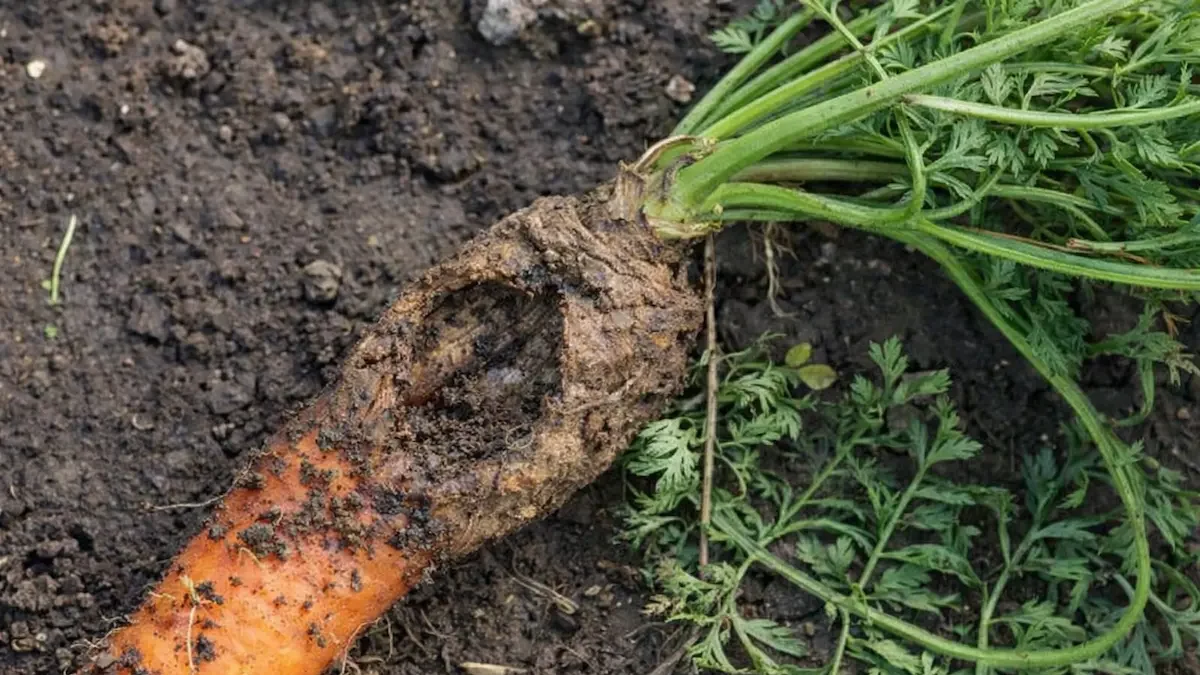
Parsnips are usually a reliable, low-maintenance crop — until you pull them up and find brown, sunken lesions covering the roots. This condition, known as canker, can turn an otherwise healthy crop into something barely usable. The frustrating part is that canker often develops quietly underground, only becoming visible at harvest.
The good news is that it’s highly predictable. Once you understand what causes it, you can prevent most cases entirely.
What Parsnip Canker Actually Is
Canker isn’t a single disease. It’s a general term for damage to the root caused by a combination of fungi, bacteria, and environmental stress.
The symptoms typically include:
- Brown or black sunken patches on the root
- Cracked or rough skin
- Areas that become soft or rot over time
According to Royal Horticultural Society parsnip growing guide, canker is often linked to poor soil conditions and inconsistent growing environments.
It’s not just a disease problem — it’s a system problem.
The Real Cause: Stress and Damage
Canker develops when the root is weakened or damaged, allowing pathogens to enter. This damage usually comes from growing conditions rather than pests.
The most common triggers are:
- Stony or compacted soil
- Fluctuating moisture levels
- Poor drainage
- Root disturbance during growth
Parsnips need a smooth, uninterrupted path to grow. Any obstacle or stress point increases the risk of canker forming.
Soil Structure Is the Biggest Factor
Parsnips are deep-rooting crops. If the soil is heavy, clumpy, or full of stones, the root is forced to twist, split, or slow down.
These small physical stresses create entry points for disease.
Light, well-prepared soil is essential. Ideally:
- Deeply loosened soil
- Free of stones and debris
- Fine, even texture
Many experienced growers prepare dedicated parsnip beds or use deep containers filled with fine compost to avoid this issue entirely.
Water: Consistency Matters More Than Amount
Irregular watering is one of the biggest hidden causes of canker.
Cycles of dry soil followed by heavy watering cause the root to expand unevenly. This leads to small cracks in the skin, which become entry points for pathogens.
Parsnips prefer steady, moderate moisture. Not wet, not dry — consistent.
Mulching helps stabilise soil moisture and reduce these fluctuations.
Fresh Manure Is a Common Mistake
Applying fresh manure before sowing is one of the fastest ways to increase canker risk.
Fresh organic matter:
- Encourages excessive, uneven growth
- Creates unstable soil conditions
- Can increase pathogen presence
Instead, use well-rotted compost applied well in advance of planting.
Sowing Into Poor Conditions
Parsnips are often sown early in the season when soil is still cold and wet. While they tolerate cool conditions, poorly drained soil at this stage increases the risk of early root stress.
Sowing into slightly warmer, well-drained soil improves establishment and reduces later problems.
Variety Choice Makes a Difference
Some varieties are more resistant to canker than others. While no variety is completely immune, choosing resistant types can significantly reduce losses.
The RHS recommended parsnip varieties list includes several varieties selected for reliability and disease tolerance.
What to Do If You Already Have Canker
If canker appears, the damage is already done, but the crop is not necessarily lost.
Affected areas can often be cut away, and the remaining root is still usable.
However, severely affected roots:
- Don’t store well
- May continue to rot
- Should be used quickly
Canker is more of a quality issue than a total crop failure — unless it is widespread.
Prevention Is Mostly About Preparation
The key to avoiding canker is not treatment — it’s prevention through better conditions.
Focus on:
- Deep, stone-free soil
- Consistent watering
- Good drainage
- Avoiding fresh manure
- Minimal root disturbance
Once these are in place, canker becomes far less common.
A More Practical Way to Think About It
Parsnips don’t tolerate interruption. They need a smooth, steady growing environment from seed to harvest.
Canker is not random — it’s a response to disruption.
If the root grows without stress, it stays clean and healthy. If it’s forced to adapt constantly, problems develop.
Long-Term Perspective
Once you refine your soil and watering approach, parsnips become one of the most dependable crops in the garden. Many experienced growers rarely see canker because their system avoids the triggers entirely.
It’s not about reacting to disease — it’s about removing the conditions that allow it to start.
Get the conditions right, and canker largely disappears as a problem.