
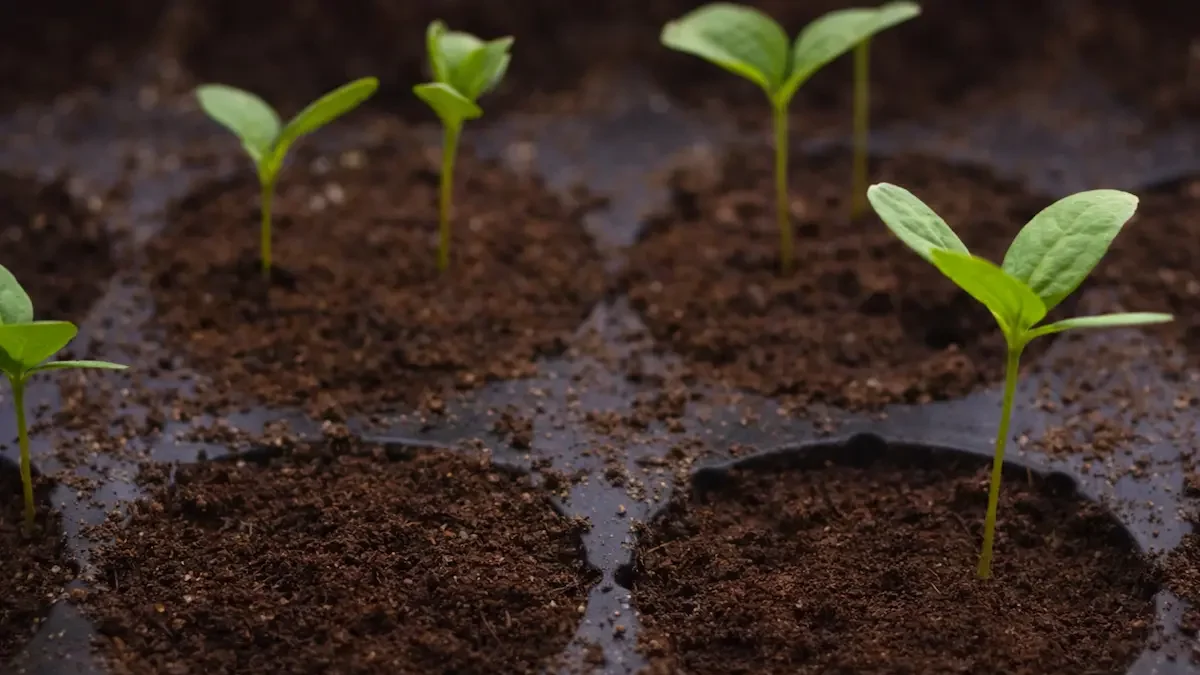
Seeds need four things to germinate: the right soil temperature, consistent moisture, adequate oxygen, and correct sowing depth. Most failed germination traces back to one of these four. The challenge is that two of the most common causes — cold soil and overwatering — produce identical symptoms on the surface.
Quick Answer
Check soil temperature before anything else. Most warm-season crops — tomatoes, courgettes, cucumbers, beans — will not germinate below 10°C (50°F). Outdoor soil in a UK spring is frequently below this even when air temperatures feel mild. Push a soil thermometer 5cm down before resowing.
The two symptoms that look the same but have opposite causes: seeds that sit in the ground for weeks without appearing can mean either the soil is too cold (seeds are dormant but viable) or the soil is too wet (seeds have rotted). Dig up one seed before deciding what to fix. A firm, unchanged seed = cold. A soft, discoloured seed = rot from overwatering or poor drainage.
The rule for sowing depth: plant at a depth 2 to 3 times the seed’s diameter. Most failures from depth come from sowing too deep, not too shallow — the seedling runs out of stored energy before it reaches the surface.
According to Penn State Extension’s seed and seedling biology guide, four conditions must be met simultaneously for germination: temperature within the viable range, moisture at around 50–75 percent of field capacity, adequate oxygen for seed respiration, and correct sowing depth. Seeds respire throughout germination, producing CO₂ as a byproduct — if soil is overwatered or compacted, that gas cannot dissipate and seeds effectively suffocate. This is the mechanism behind one of the most common spring failures: regular watering of trays already sitting in cool, dense, poorly-draining compost.
Diagnose Before You Resow
University of Maryland Extension recommends a simple pre-resow check: dig up one or two seeds from the bed or tray and examine them. A seed that is firm, plump, and unchanged has not yet attempted germination — it is likely too cold or too dry. A seed that is soft, discoloured, or has a foul smell has rotted — overwatering, a drainage problem, or damping-off disease. A seed that shows a small white radicle (emerging root tip) but has not pushed through the soil surface was germinating but ran out of energy — typically a sowing depth problem. Each diagnosis points to a different fix.
| Symptom | Most Likely Cause | What to Check | Fix |
|---|---|---|---|
| No emergence after 2× expected days; seeds firm when dug up | Soil too cold | Measure soil temperature at 5cm depth | Move trays to warmer location or use a heat mat; do not resow until soil is warm enough |
| No emergence; seeds soft, discoloured, or rotted | Overwatering or damping-off | Check drainage; smell the compost | Improve drainage; reduce watering; do not incorporate fresh organic matter before resowing |
| Germination started (white tip visible) but seedling never emerged | Sown too deep | Measure actual sowing depth | Resow at 2–3× seed diameter depth; use vermiculite topping for fine seeds |
| Germination patchy — some emerged, some not | Uneven moisture or temperature | Check edges of trays (dry faster) and south vs north side of bed | Ensure consistent watering; cover with fleece to even soil temperature |
| No germination; seeds are from last year or older | Seed viability loss | Do a germination test: 10 seeds on damp paper towel, 5–7 days | Discard low-viability seed; buy fresh for main crops |
Minimum Soil Temperatures by Crop
The most actionable single piece of information for a gardener with failing germination is soil temperature. Alabama Cooperative Extension’s soil temperature guide provides minimum, optimal, and maximum germination temperatures for common vegetables. Air temperature consistently reads several degrees above soil temperature on a spring morning — what feels like a warm day may still have soil below the minimum for warm-season crops.
| Crop | Minimum Soil Temp | Optimum Soil Temp | Typical Days to Germination at Optimum |
|---|---|---|---|
| Lettuce | 2°C (35°F) | 18–24°C (65–75°F) | 2–3 days |
| Peas | 4°C (40°F) | 16–24°C (60–75°F) | 6–10 days |
| Carrots | 7°C (45°F) | 24–30°C (75–85°F) | 6–10 days |
| Beetroot | 10°C (50°F) | 21–29°C (70–85°F) | 5–10 days |
| French beans | 10°C (50°F) | 24–30°C (75–85°F) | 5–8 days |
| Courgettes | 15°C (60°F) | 24–35°C (75–95°F) | 3–5 days |
| Tomatoes | 10°C (50°F) | 24–29°C (75–85°F) | 5–7 days |
| Cucumbers | 15°C (60°F) | 29–35°C (85–95°F) | 3–5 days |
Common Mistakes
- Watering on a schedule rather than by feel— compost in seed trays does not dry at a consistent rate. Check with a finger before watering; the surface should feel barely moist, not wet. More seeds are lost to overwatering than underwatering in spring
- Sowing parsnips, carrots, or celery from old seed— these are among the shortest-lived seeds. Parsnip seed older than one year has sharply reduced viability; older than two years is largely useless. Buy fresh each season
- Leaving lettuce and celery seed in darkness— these require light to germinate. UMD Extension notes that lettuce and celery seed should not be covered; press onto the surface and leave exposed to light
- Resowing without diagnosing— sowing fresh seed into the same cold or waterlogged conditions produces the same failure. Fix the conditions first, then resow
Before You Resow
- Measure soil temperature at 5cm depth — not air temperature
- Dig up one failed seed and examine it
- Check drainage — can water move freely through the compost?
- Verify sowing depth against seed packet guidance
Improve Conditions
- Use a heat mat for warm-season crops started indoors
- Cover outdoor beds with fleece to raise soil temperature
- Switch to fresh compost with good drainage for resowing
- Test old seed with paper towel germination test before relying on it