A mild afternoon means nothing if the soil is still cold, wet, and slow. Iowa State Extension notes that cool-season vegetables that are direct-sown can go in once soil temperatures reach about 50°F, and it explicitly warns not to work garden soil when it is overly wet. That matters because early spring failures are often not about bad seed. They come from forcing seed into poor beds or forcing tender plants into cold weather too soon.
Warm-season crops are even less forgiving. South Dakota State Extension says tomatoes and peppers are intolerant of frost and cool spring winds, and warns that even a week of daytime temperatures below 55°F can stunt tomatoes if planted out too early. That is exactly why early spring impatience wrecks so many gardens. The weather feels better before the growing conditions actually are.
What to Start Indoors Now
For most gardeners in Zones 4–8, the strongest indoor-start crops right now are:
- tomatoes
- peppers
- broccoli
- cabbage
- cauliflower
- Brussels sprouts
Wisconsin Extension says the third to fourth week of March is a good time in southern Wisconsin to start warm-season crops like tomatoes and peppers. Minnesota Extension also includes early brassicas and warm-season vegetables in the indoor-start plan, and Georgia Extension ties indoor seed starting to the weeks leading up to transplant season rather than to a generic monthly rule.
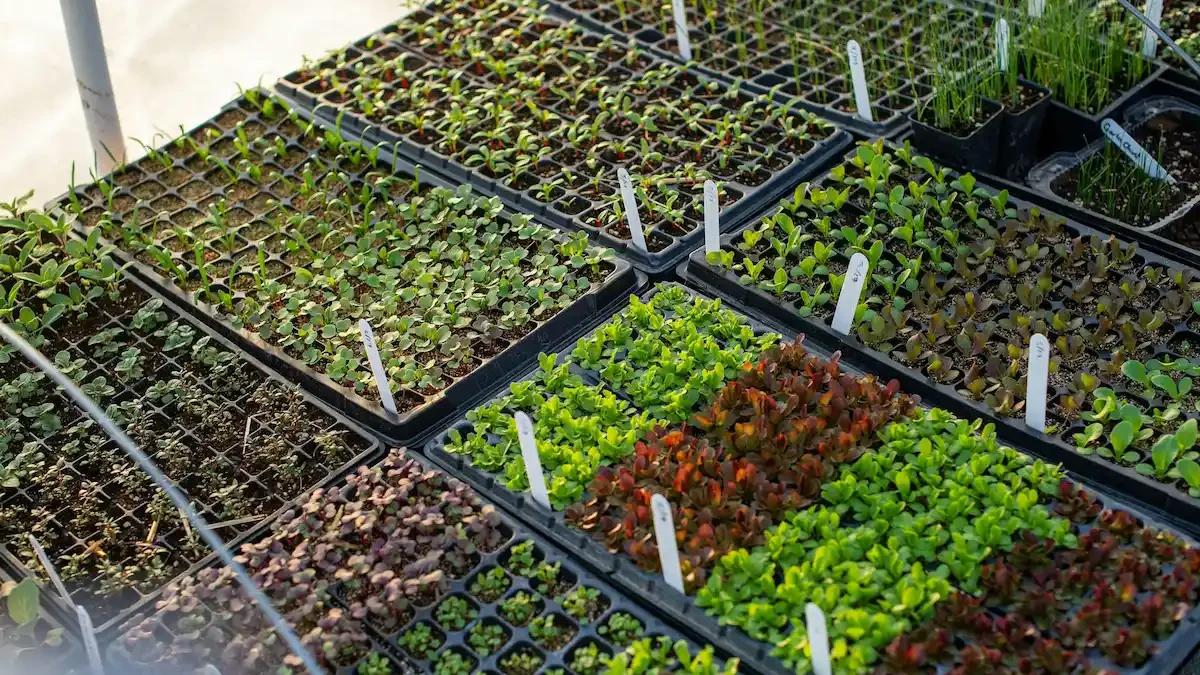
Indoor starts only work if the setup is serious enough. Use a seed-starting mix, trays with drainage, labels, and strong light. Minnesota Extension emphasizes correct sowing depth and labeling, while North Carolina Extension highlights moisture management, airflow, and avoiding overwatering. A weak windowsill setup is how gardeners end up with stretched, soft seedlings that look alive but perform badly later.
What to Sow Outdoors Now
Direct sowing makes more sense for crops that tolerate cool conditions and either dislike transplanting or simply do not need it. The best outdoor candidates right now usually include:
- carrots
- radishes
- peas
- spinach
- beets
- leaf lettuce
Penn State Extension gives germination temperature ranges for early vegetables, including lettuce at 40–80°F and peas at 45–75°F. Maryland Extension lists peas and radishes as mid-March direct-sown crops, and North Carolina Extension notes that root crops such as beets, carrots, radishes, and turnips are almost always sown in place and do not need transplanting.
But crop choice is only half the job. The bed still has to be ready. If the soil is sticky, compacted, or waterlogged, direct sowing becomes a gamble. Iowa State Extension is blunt on this point: do not work overly wet soil. That one mistake can damage structure and reduce germination before the season has really begun.
What to Do Now
First, split your seed list into two groups: indoor starts and direct sow crops. Do not decide that in the garden with muddy boots on. Decide it before you plant.
Second, check your average last frost date and count backward for indoor crops. Cornell Cooperative Extension and Georgia Extension both frame planting around frost timing, not vague seasonal feeling. If you start too early, you create oversized seedlings before outdoor conditions are ready.
Third, prepare only the beds you can actually use now. One workable bed for peas, radishes, or spinach is better than opening half the garden too early.
Fourth, start warm-season crops indoors only if you can give them real conditions: light, drainage, airflow, and follow-up care. Otherwise you are just manufacturing weak transplants. North Carolina Extension specifically points to airflow and moisture control as part of successful indoor starting.
What Not to Do
Do not start everything indoors. Root crops usually do not need the hassle, and some resent transplanting enough that the extra step adds work without adding yield. North Carolina Extension makes this point clearly for carrots, radishes, and other root crops.
Do not plant tomatoes and peppers outside just because the days feel warmer. South Dakota State Extension warns that these crops are frost-intolerant and sensitive to cool spring conditions.
Do not skip hardening off. Penn State Extension, Nebraska Extension, and UC ANR all recommend gradually acclimating seedlings over about one to two weeks before planting out. Moving indoor seedlings straight into wind, sun, and cold nights is amateur-hour stupidity.
Next 7 Days / Next 30 Days
Over the next 7 days, start or continue tomatoes, peppers, and selected brassicas indoors. At the same time, prep one outdoor bed for cool-season direct sowing if the soil is workable. Over the next 30 days, the difference between good timing and bad timing will become obvious: well-timed indoor starts will stay compact and usable, while rushed sowings and early-transplanted tender crops will show stress fast. Clemson’s March 2026 garden guidance also flags this period as the right time to start spring seeds, especially warm-season crops such as tomatoes and peppers.
Bottom Line
In early spring across USDA Zones 4–8, the right answer is not “indoors” or “outdoors” by default. It is using the right method for the right crop at the right moment. Start long-season tender crops indoors. Direct sow cool-season crops when the bed is ready. Let frost timing and soil condition control the pace, not impatience.
Read also: Slug Prevention Before Spring Planting: 4 Methods Ranked by Cost (Zones 4–8)